
Resources and Crops Management / Socioeconomics Division

The Resources and Crops Management and Socioeconomics Division (RCM/SE) is a scientific division crafted during the Ghana Grains Development project in the 1990s. RCM/SE is one of the eleven (11) divisions of the CSIR-Crops Research Institute. The goal of the Division is to develop technologies and innovations for sustainable agriculture production. The division considers whole farm situations including socioeconomics and environmental factors in the development of interventions.

The division develops and provides research-based information on soil, crop and cropping systems management practices that impact soil health, greenhouse gas emissions, crop productivity and environmental services. The division therefore delivers suitable and safe approaches to agricultural development in Ghana.

Areas of Specialization
The division specializes in the development of improved agronomic and climate smart crop technologies to complement the crop varieties’ developments in the Institute. It also focuses on providing feedbacks for policy formulations on end users of agricultural technologies.  Specific areas of specialization are:

  • Identification of crop production constraints with stakeholders
  • Conducting on- farm research to verify improved crop management practices
  • Conducting on-farm trials on improved crop varieties
  • Development and dissemination of agricultural mechanization and irrigation equipment for improved crop production
  • Development and dissemination of climate smart technologies for improved productivity
  • Development of crop production training manuals
  • Conducting baseline, adoption and impact surveys
  • Conducting economics analysis on developed technologies and farming practices
  • Conducting market surveys on developed technologies

Research Outputs/Technologies

  • Developed diverse cropping systems including cereal-legume rotation and tree-crop integration for climate change adaptation and increased productivity.
  • Developed fertilizer requirements and recommendations for cereals, legumes, root and tubers and horticultural crops.
  • Developed planting distances and spatial arrangement of crops for improved yield
  • Developed economic data on on-farm trials and on station trials
  • Live-staking and reduced staking options for sustainable yam production
  • Mechanized ridging as alternative to mounding for yam production
  • Integrated soil fertility management options for sustainable yam production
  • Sett size and planting density for manipulation of yam tuber sizes
  • Produced data on adoption rates, impact analysis on agricultural technologies
  • Produced gender mainstreaming documents in agricultural development
  • Produced training materials

Research Interests
The division is interested in understanding the mechanisms by which plants respond to changes in the soil environment; increase understanding of the soil–plant–water relationships; integrated crop and nutrient management (NQ); climate smart agriculture practices for mitigation and adaptation and how this knowledge can be exploited to maximize productivity. The division is very much involved in resource use efficiency research such as irrigation scheduling and deficit irrigation.

We conduct research in agricultural and resource economics, prepare reports, and formulate plans to aid in solution of economic problems arising from production and distribution of agricultural products and services. We collect and process economic and statistical data using econometric and sampling techniques. We also conduct research in gender integration in agricultural production using qualitative and quantitative techniques.  We use the predictions obtained from research to inform, influence, and improve the decisions of end users and agricultural organizations.
Plant Health Division

The Plant Health Division’s main aim is to find sustainable and environmentally friendly solutions to pests and diseases problems/challenges on mandate food and industrial crops.

Areas of specialization

The division specializes in the following disciplines:

  • Plant pathology (mycology)
  • Plant Virology
  • Nematology,
  • Entomology
  • Biological control
  • Weed Science

Research outputs and technologies
The division’s primary focus is the management of pests and diseases that affect the Institute’s mandate crops. Some technologies developed by the division include healthy seed yam production using neem leaf powder. Other technologies developed in collaboration with breeders include the development of diseases and pests resistant crop varieties which are currently being used by Ghanaian farmers as well as the identification of diseases and pest hotspots for breeding of crop varieties.

The division also researches into optimization of various protocols for laboratory and field detection of disease pathogens and pests in the country.


Research interests
Plant pathology (mycology): Detection of causal organisms of plant fungal diseases, management and epidemiological studies.
Virology: Plant viral diseases detection, management and epidemiological studies, especially on mandate crops.
Nematology: Research on plant parasitic nematodes on vegetables, food and industrial crops with emphasis on integrated management and exploitation of entomopathogenic nematodes for managing insect pests
Entomology and biological control: Research on pests and other beneficial organisms to manage crop pests. Appropriate use of insecticides for integrated crop pests and disease management in an environmentally sustainable manner.
Weed Science: Research on obnoxious and other weeds for improved crop productivity in a sustainable environment.

Areas for collaboration/partnership

The division collaborates with the other divisions in a wholistic manner to discharge the overall mandate of the Institute through joint and inter-discipline research programmes. The division also collaborates with external organizations and institutions to address pests and disease issues of general interests for the benefit of all stakeholders.

The division has a divisional head. Each section is also headed by a sectional head. The division can also boast of research scientists, principal technologists, technical Officers and technical Assistants in addition to National Service personnel and NABCO staff who assist in diverse ways.
The Division is currently headed by Dr. Yaw Danso, Research Scientist.

BRIEF ON CSIR-CROPS RESEARCH INSTITUTE

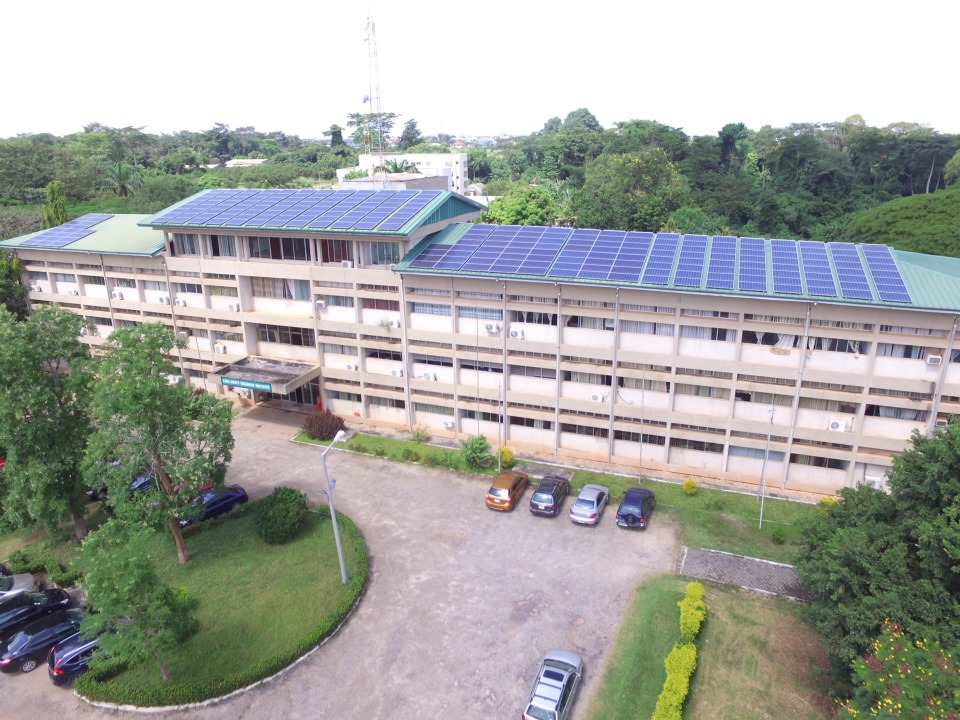
The Council for Scientific and Industrial Research (CSIR) is the foremost national science and technology organization in Ghana. Established in 1964, the CSIR-Crops Research Institute (CSIR-CRI) is the largest of the thirteen (13) institutes of the CSIR. The Institute provides innovative research and research-related services to the general public as well as other institutions.

The CSIR-CRI’s mission is to develop and disseminate demand-driven technologies
and build capacity for sustainable food and industrial crop productivity, with the vision
to become a Centre of Excellence for agricultural research, innovation and capacity
building for development.

The Institute’s core mandate is to conduct research and develop improved food and
industrial crop varieties and their production technologies to enhance food security
and poverty reduction. The mandate crops include: legumes (cowpea, soybean,
groundnut, canning beans and bambara groundnut), cereals (maize and rice), roots
and tubers (yam, cocoyam, cassava, taro and sweet potatoes), vegetables (pepper,
garden eggs, tomato, onion, okra and leafy vegetables), tropical fruits (citrus, mango,
avocado, cashew, pineapple, and pawpaw), and industrial crops (rubber and
sugarcane).

With Excellence, Fairness, Commitment, Transparency, Accountability and
Teamwork as our core values, the Institute aims to
• develop and disseminate appropriate technologies that are demand-driven and
acceptable to end-users.
• promote and strengthen strategic partnerships with relevant stakeholders to
enhance the generation of solutions to challenges in agricultural research,
technology development and transfer.
• improve institutional capability to undertake effective research and service
delivery to enhance agricultural productivity.
• enhance research and technology delivery through efficient mobilization and
management of funds
• improve the management and operating procedures and systems as a means
of ensuring efficiency in research delivery.

In addition to our core mandate, the Institute also offers several services to various
stakeholders. These include but are not limited to the production of foundation seeds
for the National Seed Industry, the supply of healthy planting materials of citrus,
avocado, mango, plantain and banana cassava, cocoyam, sweetpotato, taro and
yam, the establishment of farms (tree crop plantations), , the production of extension
materials and advise on the use of appropriate experimental designs for field studies.