
Ladies Club
CSIR-Crops Research Institute’s Ladies Club
VISION: Our vision is to build and support confident women to deliver on the mandate of the CSIR-Crops Research Institute and influence society at large.
MISSION: Our mission is to build a sustainable structure that supports professional, social and personal wellbeing of female staff of CSIR-Crops Research Institute.
VALUES:
1 We value honesty, integrity and recognise our unique contribution in delivering the mandate of the CSIR-Crops Research Institute.
2 We value and recognise the social and personal responsibilities of women in society.
3 We value accountability and encourage personal reflection and improvement.
4 We promote equality and gender responsiveness in agricultural research and development.
5 We recognise our worth as women and seek to serve as role models for young girls in our society.
AIMS AND OBJECTIVES
Aim 1: To provide a responsive and supportive service to the CSIR-Crops Research Institute
Objectives
i. Deliver well on our responsibilities as female staff of the CSIR-Crops Research Institute
ii. Provide a gender lens and bring our expertise to bear in promoting gender responsive agricultural research
iii. Improve the visibility of the CSIR-Crops Research Institute through strategic promotion of the activities of the institute, networking and collaboration
iv. Seek opportunities to develop and maintain inter gender interactions at the institute
Aim 2: To be a catalyst for the promotion and development of female staff at the CSIR-Crops Research Institute
Objectives
i. Recognise, value and promote the expertise of female staff of the institute
ii. Build the resilience of women in the agricultural research environment
iii. Identify and share opportunities for continuous professional and personal development of female staff
iv. Encourage and empower women by promoting their involvement at all levels of institutional management and decision making
v. Organise role modelling activities to encourage and empower young girls in our society
Aim 3: To support the social and personal wellbeing of female staff of the CSIR-Crops Research Institute
Objectives:
i. Organize entertaining and educational activities for the wellbeing of female staff of the CSIR-Crops Research Institute
ii. Support female staff in cases of social and personal events such as funerals, childbirth, marriage, etc
iii. Act as mediator and support system in cases of conflict intra and inter gender conflicts at the institute
iv. Assist in building a safe, secure and fit for purpose working environment for female staff of the CSIR-Crops Research Institute
Horticulture Division
Horticulture is a major segment of agriculture, which deals with intensively cultured plants. The abundance of vegetables, fruits and other nutrient-rich horticultural products has a high potential of improving the health and well-being of the population. In recent times, there’s been a tremendous interest and increase in the demand for horticultural products due to awareness of the benefits derived from them.
The Horticulture Division is one of the eleven (11) divisions of the CSIR-Crops Research Institute (CSIR-CRI) aimed at developing and disseminating improved varieties and technologies of horticultural crops for sustainable production. The Division conducts basic and applied research to increase resistance of such crops to adverse environmental conditions.
The Division is made up of three sections namely “Vegetables”, “Tree/Fruit Crops”, and “Plantain/Banana”. The “Vegetables” as well as the “Tree/Fruit Crops” sections are located at Kwadaso while the “Plantain/Banana” section is located at the Head office of the Institute, Fumesua, all in the Ashanti region of Ghana.
Area of Specialization
The Division conducts research on vegetables (tomato, pepper, garden egg/eggplant, onion, okra, African Indigenous vegetables, carrots, cabbage, lettuce garlic etc.), tree and fruit crops (mango, citrus, pawpaw, avocado pear, pineapple, guava, cashew etc.) as well as Plantain and banana.
Specific areas of specialization are:
- Genetic improvement, production, processing, preservation and marketing of tropical fruit crops, vegetables, spices and medicinal plants.
- Dissemination of information and transfer improved technologies on horticultural crops
- Coordination of all research on horticultural crops and as a repository of scientific information relevant to the development of horticulture in Ghana.
Research Interest
The Division’s research interest includes:
- General improvement of vegetables such as tomato, pepper, eggplant, okra etc spanning the development of crop varieties that are demand-led and employs good agricultural practices for increased productivity
- Improvement in the genetic potentials of Tree and fruit crops including plantain and Banana
- Development of appropriate economic and husbandry practices for the production of horticultural crops.
- Development and improvement of existing methods of harvesting, packaging, storage, processing of specific horticultural crops.
- Study on the ecology and biology of pests and diseases of horticultural crops in the country and devise effective and appropriate control measures.
- Equipping farmers, extension personnel, exporters, NGOs and others interested in fruit and vegetable crops production through training and the provision of information.
The division has a current staff strength of 46 comprising scientists, technicians and field staff. The various sections (vegetable/tree and fruit crops/Plantain and banana) are each headed by a sectional head and the entire division is led by a Head of Division.
Scientific Support Services Division
The Scientific Support Services Division is one of the divisions of the CSIR-Crops Research Institute. It is made up of a multi-disciplinary team captured in the various sections. The division supports research through coordination and management of information and data systems and communicating research results to end users. The division is divided into five (5) sections/units.
Library Section
The library supports the research programmes of the Institute through the provision of information. It also manages Information (Evaluation of contents and dissemination of research results). Other library services the unit provides include:
• Printing, scanning, photocopying, typesetting and binding of documents on commercial basis
• Training of library users in electronic information access and management tools
• The Library has in stock over 5000 textbooks, journals, newsletters, annual reports from partner organizations, staff theses (on all academic levels i.e. University Diploma, Bachelor, MSc, /MPhil/MA, PhD) available for students to have access. The library also has The Essential Electronic Agricultural Library (TEEAL). TEEAL is an offline digital library of research in the agricultural and related sciences where users can search and browse to access the full-text articles from over 425 journals, as well as research from the Gates Foundation, AGRA and ATA.
• In addition, the Institute’s Digital repository is available for users to have access to peer review full-text articles from the Institute’s renowned research scientists. The articles are also available in print format.
• The Library subscribes to over 25 agricultural and other science related databases/journals such as Research4life where users have access to full text.
Training, Communication and Publication Unit (TCPU)
The Training, Communication and Publication Unit (TCPU) promotes improved technologies through the development and publication of training materials for increased crop productivity. The unit has two (2) fully air-conditioned conference centres with audio-visual equipment, projectors and flip charts etc. It is an ideal venue for business meetings, residential conferences, presentations, workshops, seminars, book launch etc.
The Unit is responsible for:
• Coordinating training programmes, meetings, seminars, conferences as well as the hiring and maintenance of the conference rooms.
• The unit further coordinates with the Public Relations (PR) unit to represent the Institute at fairs, workshops, Farmers Day Celebrations and other agricultural related exhibitions.
• Assisting other scientists in technology transfer activities
• Assisting other scientists in Technology Transfer Activities
• Liaising constantly with other scientists to capture (videos & still pictures) important field activities/events
• Liaising with other scientists to develop or review existing training manuals, production guides, fact sheets, flyers etc.
• Conducting field research and publishing in refereed journals papers.
• Commercializing research activities for internal revenue generation
• Mass media awareness creation on available technologies at the Institute especially on rapid multiplication of plantain/banana
• Training of Agricultural Extension Agents (AEAs) on new technologies and the establishment of Innovation Platforms (IPs).
• Trained Scientists, technicians and other users in electronic information access and management tools
Public Relation Unit
The Public Relations office is headed by the Institute’s Public Relations Officer and is primarily responsible for improving the Institute’s visibility by coordinating media activities of the Institute.
• The unit is the official mouthpiece of the Institute and engages the public on any issues of national interest.
• The unit is also responsible for arranging radio and television programmes for scientists of the institute to educate farmers and other stakeholders on current research activities.
• The unit leads in the organization of programmes such as “Open Days”, “Renaissance Days” and seminars and also represents the Institute at exhibitions, fairs etc.
Scientific Secretary’s Office
The core duties of the Scientific Secretary’s Office are communication, information management and documentation. The office is also responsible for compiling and publishing quarterly and annual statutory reports, and organises scientific meetings such as the annual In-house Review and Research Planning (IRREP) and field visits and monitoring. Assessing, processing and packaging promotion documents for senior members are also the responsibility of the scientific secretary’s office. The office manages all the social media platforms of the Institute and generates content for its website
Information and Communication Technologies (ICT)
The services the unit provides includes but not limited to the following:
• Hardware and software support services.
• Liaising with the Institute’s internet service provider (ISP) to provide good internet services and also maintain the Institute’s Local Area Network both wireless and cable.
• Liaising with the Institute’s web hosting company to maintain the domain name and website hosting and also updates the Institute’s website information regularly.
• The unit also collaborate with the Scientific Secretaries Office to manage the Institute’s social media platforms
• Downloading and analyzing data from the clocking machine for management is also part of the unit’s responsibility.
• The unit maintains and downloads weather data from the weather station and makes them available for staff.
• The unit further provides support services during business meetings, residential conferences, presentations, workshops and seminars by setting up the halls ready for use.
Research Output/Technologies
• Trained over 100 research technicians and agricultural extension agents from nine African countries in crop management research.
• Conducted collaborative courses in seed production and marketing for over 100 participants from 12 West African countries.
• Developed and conducted local collaborative courses in roots and tubers (cassava, cocoyam, sweet potato and yam) for over 150 participants from MOFA, CRI and SARI.
• Produced and distributed over 100,000 instructional and extension materials (Crop production guides, Flip Charts, Farmers’ Hand books, Fact sheets and Video clips) among farmers, NGOs, MOFA staff and Institutional libraries.
• Produced and supplied almost 89, 600 planting materials of plantain to various stakeholders including Ghana Rubber Estate Ltd.
• Trained 182 registered farmers and 326 non-registered farmers on Good Agricultural Practices under KAFACI-ENAES activities.
• Trained 24 IP Facilitators (from 15 Districts across 6 Regions of Ghana) on Soft Skills.
• Trained 99 IP members from Pusiga, Garu –Tempane and Bawku Municipal on IPM and marketing.
• A large amount of data is generated from research carried out
• Students/Scientists are able to apply statistical methods to their research accordingly(After receiving training from the unit)
• Scientists can analyse their data and interpret results on their own after they have been trained them on the use of statistical tools and soft wares
Research Interests
• Agronomy to postharvest issues on the Institutes mandate crops.
• Paradigm shift of agricultural extension from the usual technology transfer process to the provision of information along a commodity value chain including marketing extension, farmer empowerment and facilitating formation of self-motivated farmers’ groups.
• Demand-driven pluralistic and decentralised agricultural extension services and the use of Information and Communication Technology (ICT) for enhancing efficiency in Agriculture and technologies dissemination. This new extension approach includes the application of information technology in extension processes, improving communication process, placing emphasis on participatory research.
• The Division creates new experimental designs and models to meet emerging data demands.
• Enhancement of visibility through media related matters of the Institute and its developed technologies among the general public.
• E-Agriculture system
Areas for Collaboration/partnership
The Division has been collaborating with its numerous stakeholders in the areas of:
• Commercializing of research activities for internal revenue generation
• Training in new technologies developed,
• Training in ICT and statistical software packages
• Training on how to establish Innovation Platform and its sustainability
• Training of field staff on field layouts and pegging.
• Training in electronic resource access and management tools
• Radio, television and print media awareness creation
• Publication of crop production guides/manuals, fact sheets, flyers etc.
• Updating old crop production guides, fact sheets, flyers etc.
• Establishment of learning/demonstration fields
• Video documentary/still pictures on technologies and field activities
Divisional Structure

Staff Strength
The current staff strength of the division is twenty-two (22); comprising of seventeen (17) permanent staff and five (5) National Service/NABCO personnel.
Root and Tuber Division
Roots and tubers are exceptionally important crops due to their food and nutritional security and income generation attributes. The Roots and Tubers Division (R & T Division) is one of the eleven (11) divisions and one of the four (4) technical Programmes of CSIR-CRI.
The R & T Division evolved from the National Roots and Tuber Project, which was a Specialized Commissioned Project of the Government of Ghana. With its Head Office in Fumesua, The R & T Division’s vision is to become a Centre of Excellence for innovative and quality agricultural research on roots and tubers for development. It therefore, aims at developing and disseminating appropriate end-user preferred technologies for higher and sustainable production and utilization of roots and tuber crops both at the national and international levels. The division hosts the CORAF’s Roots and Tubers Regional Center of Excellence at the Institute.
Areas of Specialization
The division specializes in the improvement of cassava, cocoyam, taro, sweetpotato and yam and the dissemination of technologies developed through research on these crops.
Specific areas of specialization are;
- Development, release and dissemination of high yielding end-user preferred roots and tuber crop varieties tolerant to biotic and abiotic stresses.
- Production of quality-declared planting materials
- Capacity development of stakeholders or actors along roots and tubers value chain
- Enhanced balance between gender in R & T research, technology development, dissemination and capacity development
- Effective monitoring and evaluation system in R & T research, technology development and dissemination
- Effective communication of research results and delivery of technologies to clients
- Project proposal development and submission for research fund
- Development of strategic partnership with corporate and research agencies in Ghana and beyond.
Research Outputs/Technologies
The division has released fifty (50) improved crop varieties as at November 2018. These consist of eighteen (18) cassava varieties, three (3) cocoyam varieties, four (4) taro varieties, eighteen (18) sweetpotato varieties and seven (7) yam varieties. These varieties are higher yielding, highly preferred by end-users and tolerant to major biotic and abiotic stresses. These varieties also have varied domestic uses and applications in industry. The Division has also produced numerous refereed journal articles in reputable journals and many technical reports to development partners, donors, agencies and clients.
Research Interests
- Holistic improvement in cassava, cocoyam, taro, sweetpotato and yam spanning the development of crop varieties acceptable by end-users, and the use of good agricultural practices to ensure high productivity and good quality produce of root and tuber crops.
- Characterization of local root and tuber crops.
- Quantitative variability and expected genetic gain from selection for root and tuber crops
- Exploitation of genetic variability through hybridization and selection aimed at improving earliness to maturity, storage roots/tuber yield, quality traits enhancement and resistance/tolerance to major diseases and pests.
Areas of Collaboration
- Development, release and dissemination of high yielding end-user preferred roots and tuber crop varieties tolerant to biotic and abiotic stresses.
- Production of quality-declared planting materials
- Capacity development of stakeholders or actors along roots and tubers value chain
- Effective monitoring and evaluation system in R & T research, technology development and dissemination
- Effective communication of research results and delivery of technologies to clients
- Project proposal development and submission for research fund
The R & T Division is organized into four (4) Technical Units/Programmes each headed by a Head of Programme. The Units/Programmes are the Cassava Improvement Programme, Cocoyam Improvement Programme (Colocasia esculenta and Xanthosoma sagittifolium), Sweetpotato Improvement Programme, and the Yam Improvement Programme. The Division is Head by a Head of Division.
The division currently has a staff strength of 37 comprising scientists, principal technologists, technical staff as well as NABCO and national service persons.
Resources and Crops Management / Socioeconomics Division
The Resources and Crops Management and Socioeconomics Division (RCM/SE) is a scientific division crafted during the Ghana Grains Development project in the 1990s. RCM/SE is one of the eleven (11) divisions of the CSIR-Crops Research Institute. The goal of the Division is to develop technologies and innovations for sustainable agriculture production. The division considers whole farm situations including socioeconomics and environmental factors in the development of interventions.
The division develops and provides research-based information on soil, crop and cropping systems management practices that impact soil health, greenhouse gas emissions, crop productivity and environmental services. The division therefore delivers suitable and safe approaches to agricultural development in Ghana.
Areas of Specialization
The division specializes in the development of improved agronomic and climate smart crop technologies to complement the crop varieties’ developments in the Institute. It also focuses on providing feedbacks for policy formulations on end users of agricultural technologies. Specific areas of specialization are:
- Identification of crop production constraints with stakeholders
- Conducting on- farm research to verify improved crop management practices
- Conducting on-farm trials on improved crop varieties
- Development and dissemination of agricultural mechanization and irrigation equipment for improved crop production
- Development and dissemination of climate smart technologies for improved productivity
- Development of crop production training manuals
- Conducting baseline, adoption and impact surveys
- Conducting economics analysis on developed technologies and farming practices
- Conducting market surveys on developed technologies
Research Outputs/Technologies
- Developed diverse cropping systems including cereal-legume rotation and tree-crop integration for climate change adaptation and increased productivity.
- Developed fertilizer requirements and recommendations for cereals, legumes, root and tubers and horticultural crops.
- Developed planting distances and spatial arrangement of crops for improved yield
- Developed economic data on on-farm trials and on station trials
- Live-staking and reduced staking options for sustainable yam production
- Mechanized ridging as alternative to mounding for yam production
- Integrated soil fertility management options for sustainable yam production
- Sett size and planting density for manipulation of yam tuber sizes
- Produced data on adoption rates, impact analysis on agricultural technologies
- Produced gender mainstreaming documents in agricultural development
- Produced training materials
Research Interests
The division is interested in understanding the mechanisms by which plants respond to changes in the soil environment; increase understanding of the soil–plant–water relationships; integrated crop and nutrient management (NQ); climate smart agriculture practices for mitigation and adaptation and how this knowledge can be exploited to maximize productivity. The division is very much involved in resource use efficiency research such as irrigation scheduling and deficit irrigation.
We conduct research in agricultural and resource economics, prepare reports, and formulate plans to aid in solution of economic problems arising from production and distribution of agricultural products and services. We collect and process economic and statistical data using econometric and sampling techniques. We also conduct research in gender integration in agricultural production using qualitative and quantitative techniques. We use the predictions obtained from research to inform, influence, and improve the decisions of end users and agricultural organizations.
Plant Health Division
The Plant Health Division’s main aim is to find sustainable and environmentally friendly solutions to pests and diseases problems/challenges on mandate food and industrial crops.
Areas of specialization
The division specializes in the following disciplines:
- Plant pathology (mycology)
- Plant Virology
- Nematology,
- Entomology
- Biological control
- Weed Science
Research outputs and technologies
The division’s primary focus is the management of pests and diseases that affect the Institute’s mandate crops. Some technologies developed by the division include healthy seed yam production using neem leaf powder. Other technologies developed in collaboration with breeders include the development of diseases and pests resistant crop varieties which are currently being used by Ghanaian farmers as well as the identification of diseases and pest hotspots for breeding of crop varieties.
The division also researches into optimization of various protocols for laboratory and field detection of disease pathogens and pests in the country.
Research interests
Plant pathology (mycology): Detection of causal organisms of plant fungal diseases, management and epidemiological studies.
Virology: Plant viral diseases detection, management and epidemiological studies, especially on mandate crops.
Nematology: Research on plant parasitic nematodes on vegetables, food and industrial crops with emphasis on integrated management and exploitation of entomopathogenic nematodes for managing insect pests
Entomology and biological control: Research on pests and other beneficial organisms to manage crop pests. Appropriate use of insecticides for integrated crop pests and disease management in an environmentally sustainable manner.
Weed Science: Research on obnoxious and other weeds for improved crop productivity in a sustainable environment.
Areas for collaboration/partnership
The division collaborates with the other divisions in a wholistic manner to discharge the overall mandate of the Institute through joint and inter-discipline research programmes. The division also collaborates with external organizations and institutions to address pests and disease issues of general interests for the benefit of all stakeholders.
The division has a divisional head. Each section is also headed by a sectional head. The division can also boast of research scientists, principal technologists, technical Officers and technical Assistants in addition to National Service personnel and NABCO staff who assist in diverse ways.
The Division is currently headed by Dr. Yaw Danso, Research Scientist.
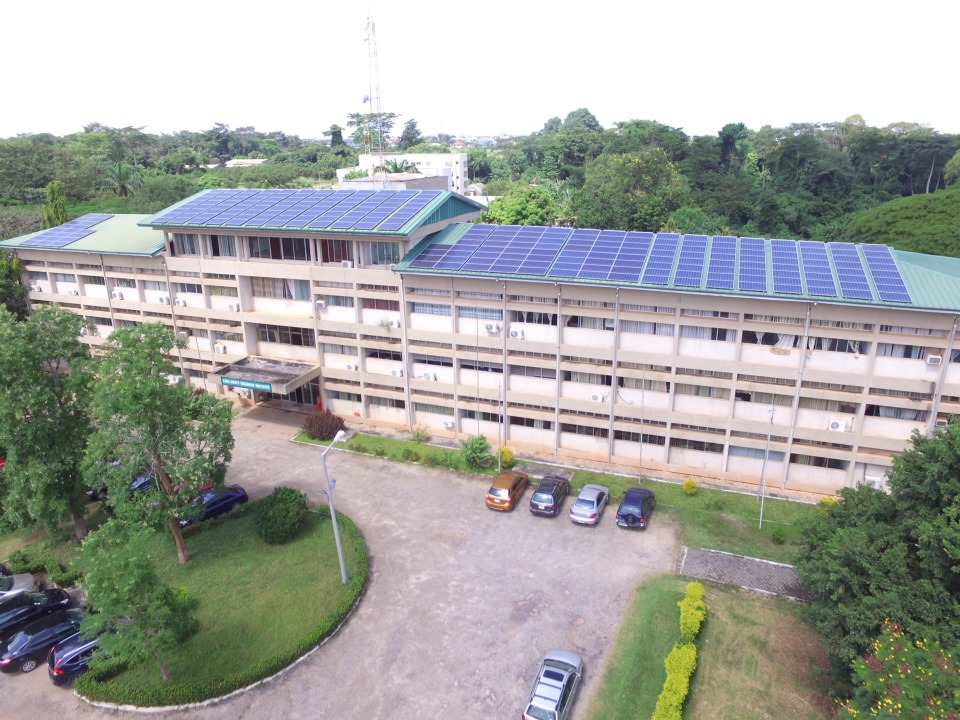
BRIEF ON CSIR-CROPS RESEARCH INSTITUTE
The Council for Scientific and Industrial Research (CSIR) is the foremost national science and technology organization in Ghana. Established in 1964, the CSIR-Crops Research Institute (CSIR-CRI) is the largest of the thirteen (13) institutes of the CSIR. The Institute provides innovative research and research-related services to the general public as well as other institutions.
The CSIR-CRI’s mission is to develop and disseminate demand-driven technologies
and build capacity for sustainable food and industrial crop productivity, with the vision
to become a Centre of Excellence for agricultural research, innovation and capacity
building for development.
The Institute’s core mandate is to conduct research and develop improved food and
industrial crop varieties and their production technologies to enhance food security
and poverty reduction. The mandate crops include: legumes (cowpea, soybean,
groundnut, canning beans and bambara groundnut), cereals (maize and rice), roots
and tubers (yam, cocoyam, cassava, taro and sweet potatoes), vegetables (pepper,
garden eggs, tomato, onion, okra and leafy vegetables), tropical fruits (citrus, mango,
avocado, cashew, pineapple, and pawpaw), and industrial crops (rubber and
sugarcane).
With Excellence, Fairness, Commitment, Transparency, Accountability and
Teamwork as our core values, the Institute aims to
• develop and disseminate appropriate technologies that are demand-driven and
acceptable to end-users.
• promote and strengthen strategic partnerships with relevant stakeholders to
enhance the generation of solutions to challenges in agricultural research,
technology development and transfer.
• improve institutional capability to undertake effective research and service
delivery to enhance agricultural productivity.
• enhance research and technology delivery through efficient mobilization and
management of funds
• improve the management and operating procedures and systems as a means
of ensuring efficiency in research delivery.
In addition to our core mandate, the Institute also offers several services to various
stakeholders. These include but are not limited to the production of foundation seeds
for the National Seed Industry, the supply of healthy planting materials of citrus,
avocado, mango, plantain and banana cassava, cocoyam, sweetpotato, taro and
yam, the establishment of farms (tree crop plantations), , the production of extension
materials and advise on the use of appropriate experimental designs for field studies.