
SHE CHOSE NUMBERS AND NUMBERS CHANGED EVERYTHING: The Inspiring Story of Harriet Achiaa Dwamena: (PhD, Biometrician, Scientist, Mentor)
A Message To Every Girl Doubting Herself
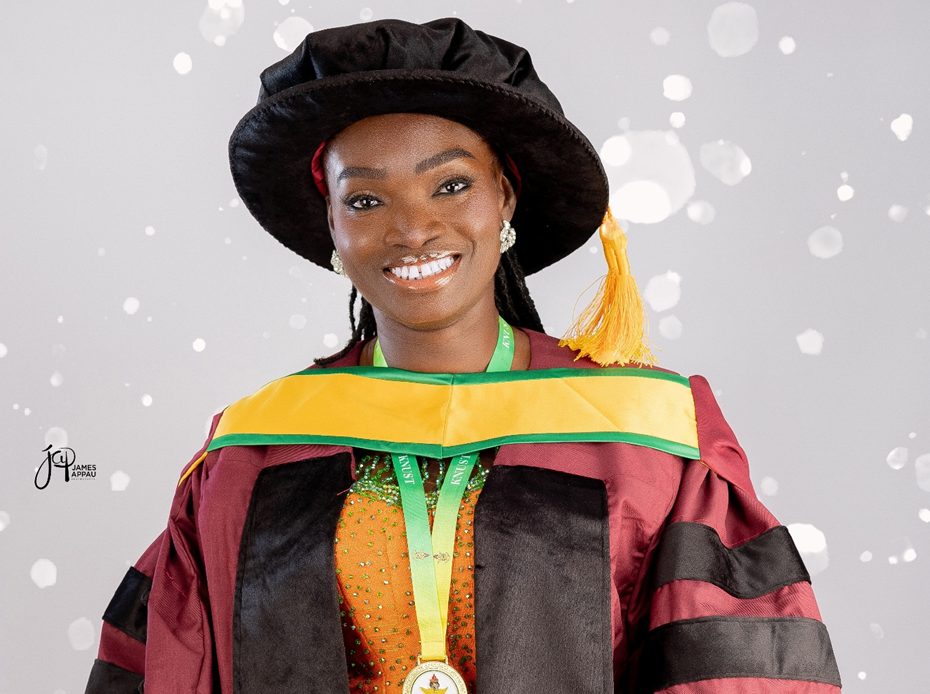
Before you read this, know one thing: the woman at the centre of this story once scored 50% in Mathematics. She was not born exceptional. She was not handed her success. She chose it, fought for it, earned it — one equation, one experiment, one breakthrough at a time. And now she holds a PhD in Mathematical Statistics, works with a team of scientists, and is helping put Ghana on the global map of mathematical innovation.
This story is for you — the girl at the back of the class who thinks she is not smart enough. The girl who loves science but has been told it is not her place. The girl who dares to dream big in a world that sometimes urges her to dream smaller. Her story is proof that you are enough. And then some.
The Girl Who Scored 50%
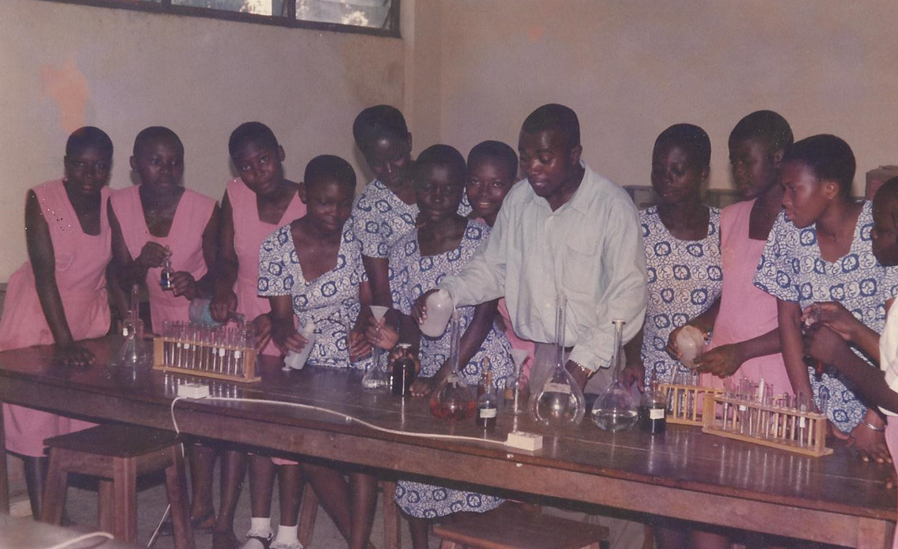
There is a classroom somewhere in Ghana where a little girl sat staring at a Mathematics paper — and did not like what she saw. Harriet Achiaa Dwamena was very good with Science and English. She excelled at those naturally with very little effort. Mathematics, however, felt like a wall she could not climb. Her best score? Fifty percent. To many, that would be the end of the mathematics story. But for Harriet, it was only the beginning.
It was one primary school teacher who changed everything. Not with magic, not with extra resources — but with a simple, powerful act: belief. He challenged her, encouraged her and refused to let her walk away from something she had barely tried to conquer.
Guess what, it worked! That moment unlocked something in the heart of a young girl that would eventually change everything. She did not just improve in Mathematics — she fell completely in love with it. And when you love something that deeply, you begin to see the world differently.
Dear young girl reading this: your current score is not your final score. Your current chapter is not your last chapter. All it takes is one person to believe in you — and sometimes, that person has to be yourself.
Family, Faith and A Foundation Built in Tarkwa
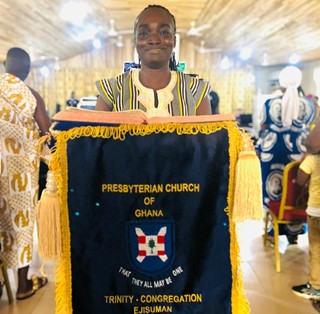
Harriet attributes her success first and foremost to the Almighty God, whose divine grace and mercies have sustained her throughout her life journey. She ascribes all that has unfolded in her life to her faith and Christian upbringing. As a devoted Christian and a Presbyter—as well as the church treasurer—of the Presbyterian Church of Ghana (Trinity Congregation, Ejisu District), she acknowledges the profound role her faith in God has played in shaping her life.
“Through it all, God carried me. When I was weak, He gave me strength. When I felt lost, He reminded me of my purpose. When I wanted to give up, He surrounded me with people who lifted me up and refused to let me walk away from my dream”.
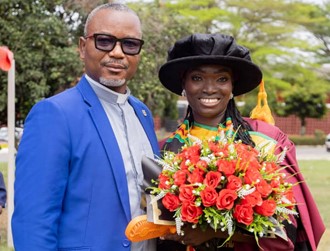
Her deep Christian devotion can perhaps be traced to her upbringing in a faith-centered home, where her parents openly lived out their beliefs. Her late father, Mr. Stephen Yaw Dwamena, a former headmaster of Prempeh College, was a committed member of the Peyer Memorial Presbyterian Church (PMPC) in Bantama, Kumasi. He served diligently as Assistant Secretary and later as the substantive Secretary of the Church’s Local Bible Study and Prayer
Group (BSPG) for many years. Her mother, Madam Felicia Durowaa, a retired nurse and devoted member of the Presbyterian Church, raised her and her four siblings with love and discipline—values that have been instrumental in shaping Harriet’s character throughout her life.
Harriet went on to study at the Kumasi Girls’ Secondary School — one of Ghana’s finest institutions for young women — where she grew not just academically but personally. The values of discipline, excellence, and sisterhood that those walls instilled would follow her for the rest of her life. Then came the University of Mines and Technology (UMaT) in Tarkwa, where she pursued a Bachelor of Science in Mathematics from 2006 to 2010. At UMaT, she began to see the sheer versatility of the subject she had once feared.
“With mathematics, you don’t limit yourself to one area. You can take it to health, engineering, or agriculture.”
She graduated with a vision: to use numbers not just as abstractions, but as tools for solving real human problems. She did not know yet exactly which problems. But she was ready to find out.
Numbers Meet the Soil
After graduation, Harriet was posted to the CSIR-Crops Research Institute (CSIR-CRI) — Ghana’s foremost agricultural research institute, for her national service. It was here, among crop scientists and agricultural researchers, that her Mathematical gifts found their first great purpose. She began designing experiments, analyzing data from fields, and interpreting research results that would eventually shape how Ghana grows its food. She helped compile reports. She advised researchers. She translated the language of the soil into the language of statistics — and back again.
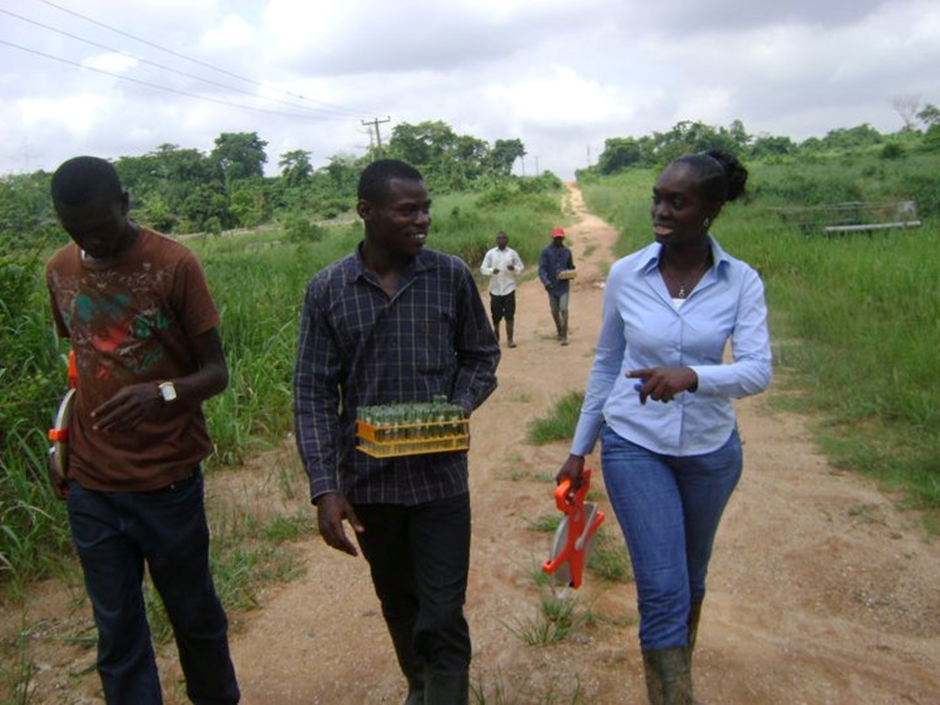
Something about this world spoke to her deeply. Africa, she observed, was spending 95% of its agricultural investment on food production — and only 5% on postharvest management. Crops were being grown and then lost to poor storage. Farmers were working hard and not reaping the full reward of their labour.
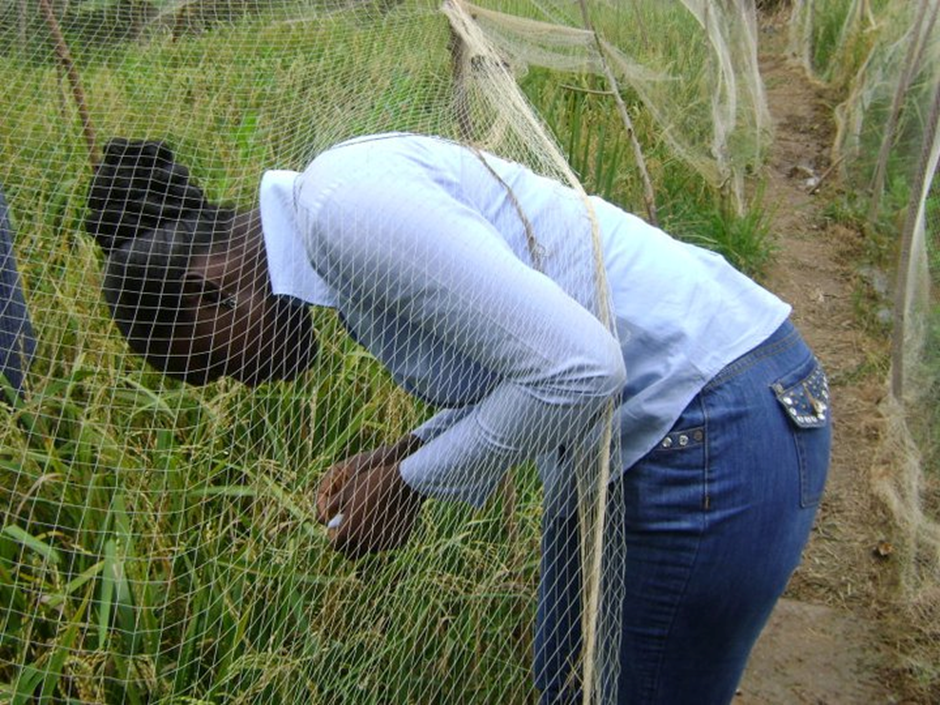
“It worries me that food is wasted. I would like to ensure that farmers reap maximum benefits from their crops — even when they are not in season.”
She had found her calling: to build mathematical models that could protect harvests, reduce waste, and improve the lives of farming families across the continent.
The Only Woman in the Room
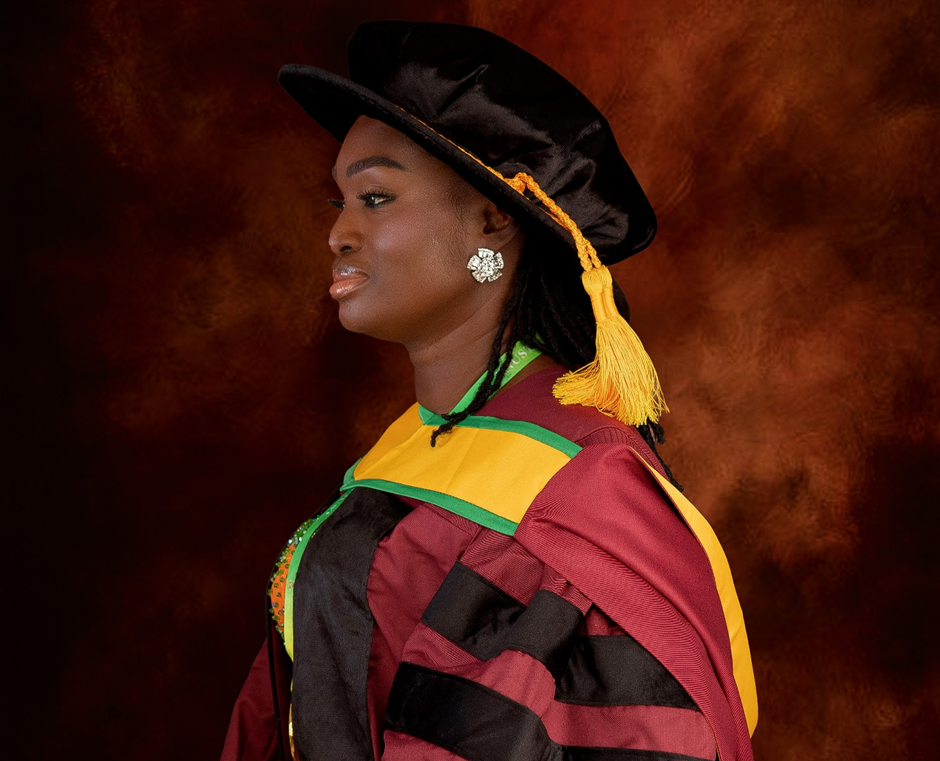
In 2013, Harriet returned to KNUST to pursue her MPhil in Applied Mathematics. She balanced her studies with her growing responsibilities at CSIR-CRI-designing experiments, training junior staff, and consulting on agricultural projects. Three years later, she graduated with a Master’s degree in Applied Mathematics at KNUST — one of just two students to complete the programme that year-she and one male colleague.
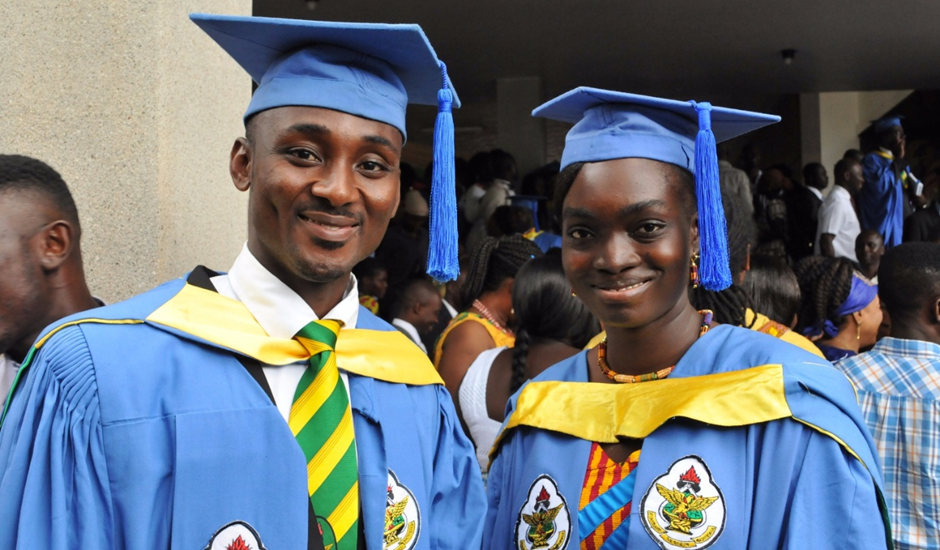
In a field where women are still vastly underrepresented, she did not just show up — she stood her ground, did the work, and crossed that finish line. Think about what that means. Out of everyone who may have started, only two made it through. And one of them was a woman. A woman who had once scored 50% in primary school maths. That is not just achievement — that is transformation.
Her thesis introduced a time series model for predicting grain yield in maize. Her mathematics was not sitting on a shelf. It was in the field, at work, helping Ghanaian farmers.
“I developed a statistical model for predicting grain yield in a maize case study at the CSIR-Crops Research Institute.
To the young woman who sometimes feels like she is the only one, or one of very few, in her science class or research programme: that is not a reason to leave. That is a reason to stay. Your presence in that room is already breaking a barrier. Finish what you started.
AWARD Fellowship — Growing into Leadership
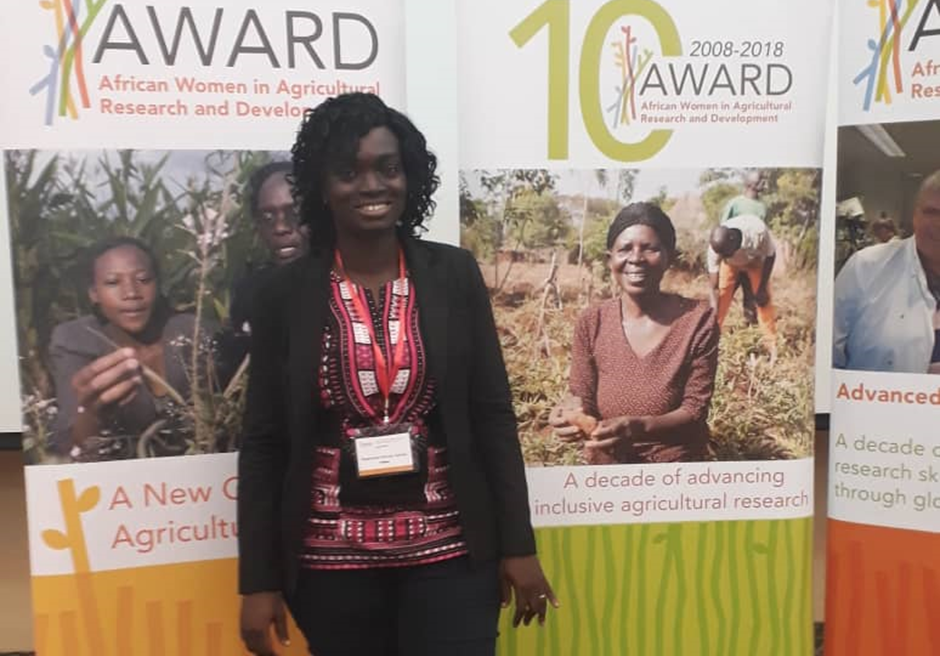
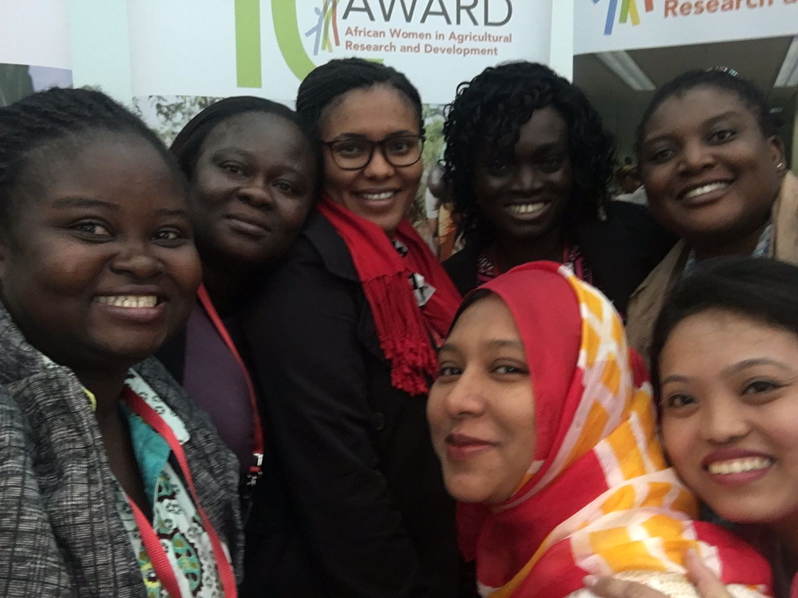
In 2018, Harriet was selected as a fellow under the prestigious and highly competitive African Women in Agricultural Research and Development (AWARD) program. She was the first biometrician at CSIR to participate, and she promised to encourage others to follow. The fellowship changed her in ways she did not expect. Yes, it expanded her scientific networks. Yes, it sharpened her proposal-writing and science communication skills.
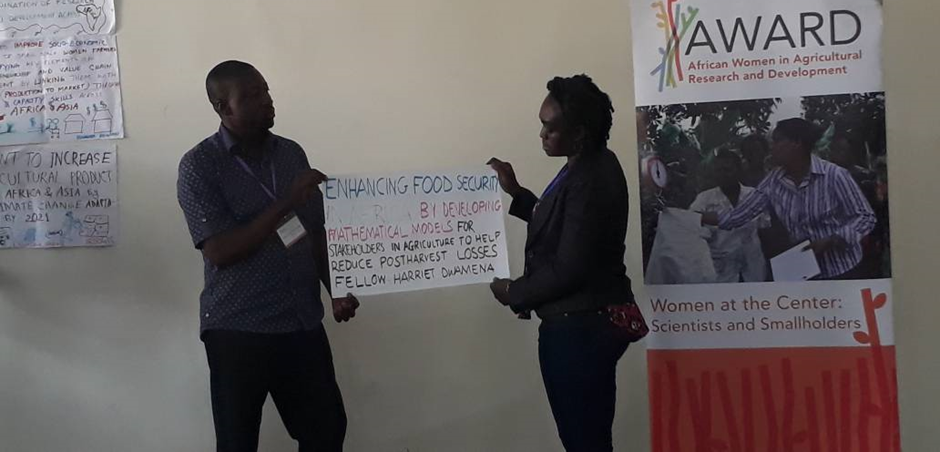
But perhaps the most powerful transformation was personal. Here was a brilliant scientist — already designing experiments used by national researchers — who had been shrinking herself into silence. The fellowship gave her permission to take up space. To speak. To lead.
She joined the African Women in Mathematics and the International Biometrics Society — communities of like-minded women who refuse to let gender determine what is possible in science.
Young girl, you are allowed to be quiet and brilliant. But you are also allowed to be loud and brilliant. You are allowed to ask for what you deserve, to disagree with what is wrong, and to stand firmly in the space you have earned. Your voice is an instrument of change.
Mentee, Mentor, Mother
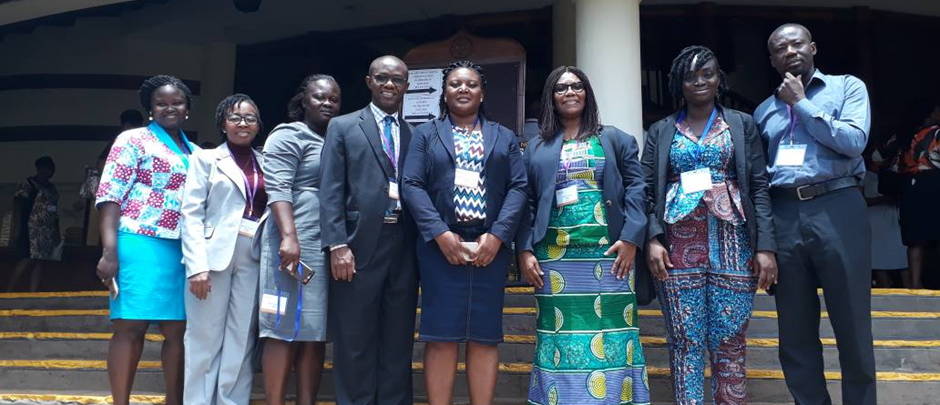
Harriet acknowledges the roles other people have played in bringing her this far. She is deeply grateful to her mentors, whose guidance, patience, and belief in her kept her grounded and focused. Their wisdom shaped not only her research but also the person she has become. To her friends who became family, she expresses heartfelt thanks for the late-night conversations, the encouragement, the laughter, the prayers, and for standing by her through both the highs and the lows. They held her hand when the journey felt lonely, and she will forever cherish them.
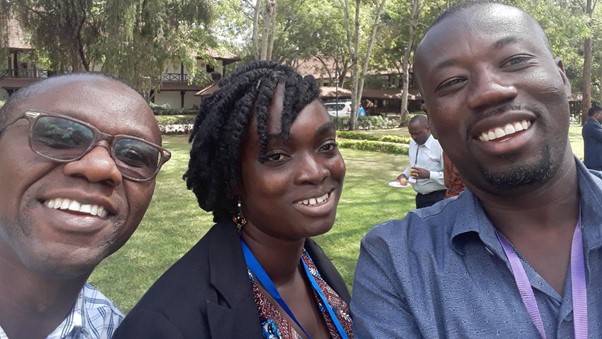
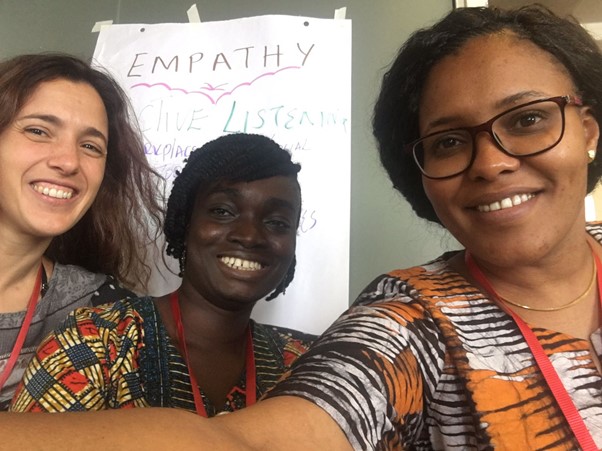
One of the most beautiful things you can do is turn around and reach back-Dr. Harriet Achiaa Dwamena has done exactly that — and done it consistently, generously, and with deep intentionality. As a lecturer at the CSIR College of Science and Technology (CCST), a postgraduate school being managed by the CSIR, she teaches Statistics and Biometry to postgraduate students — guiding them through the complex art of experimental design, data collection, and research analysis. Her classroom is not just a transfer of knowledge; it is an act of investment in Ghana’s scientific future.
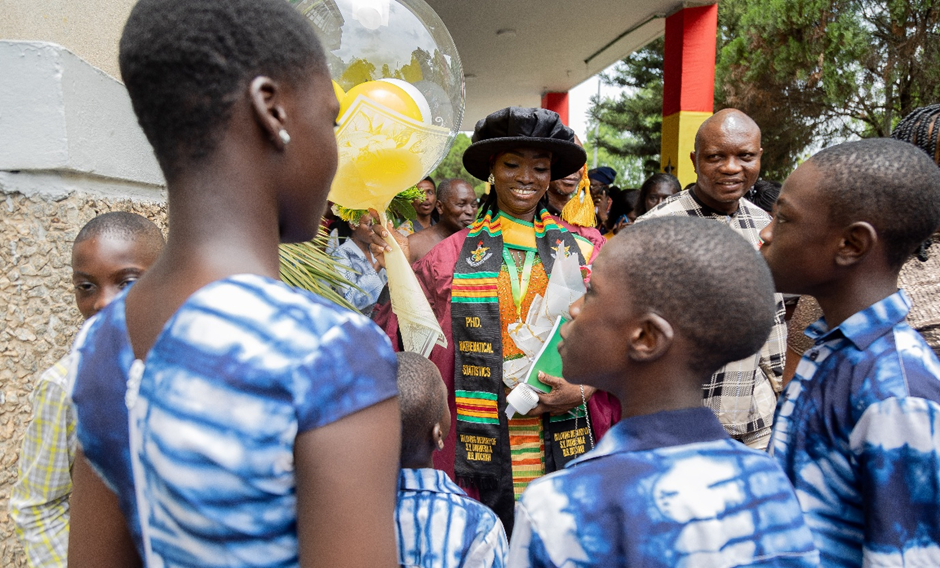
She has trained countless scientists and technical staff in the use of statistical software — STATA, SPSS, SAS, Genstat, R, and Python — giving them tools to conduct rigorous, credible research. She has served as a statistical consultant on projects stretching across crop science, climate-smart agriculture, and machine learning applications.
But beyond the lecture halls and training rooms, Harriet has mentored young women directly — sitting with them, listening to their doubts, and helping them find their path in science. She knows what it feels like to be underestimated. She knows what one encouraging word can do. And so, she gives that word, freely and often.
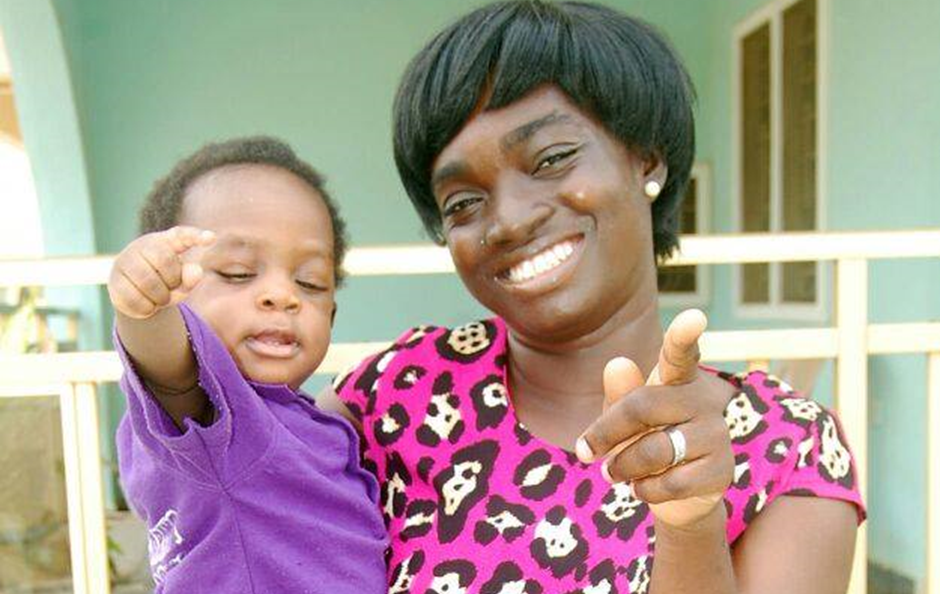
She does all of this as a mother. A mother of four — three boys and a girl. She wakes up every day and shows her children, through example, what it looks like to chase a dream without
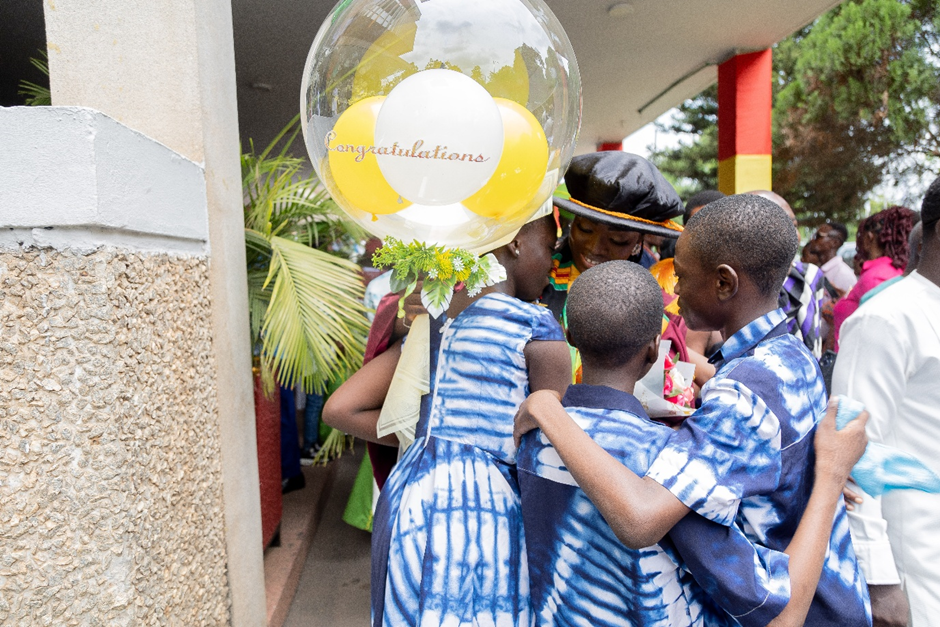
apology. Her daughter grows up watching a woman who leads scientists by day and comes home to be mummy by evening. That is mentorship. That is legacy.
To every young woman who has been fortunate enough to cross Harriet’s path: you are not just a student. You are her investment in Ghana’s future, her contribution to a continent that needs more women at the forefront of science and innovation.
Bonjour! The World Opens Up
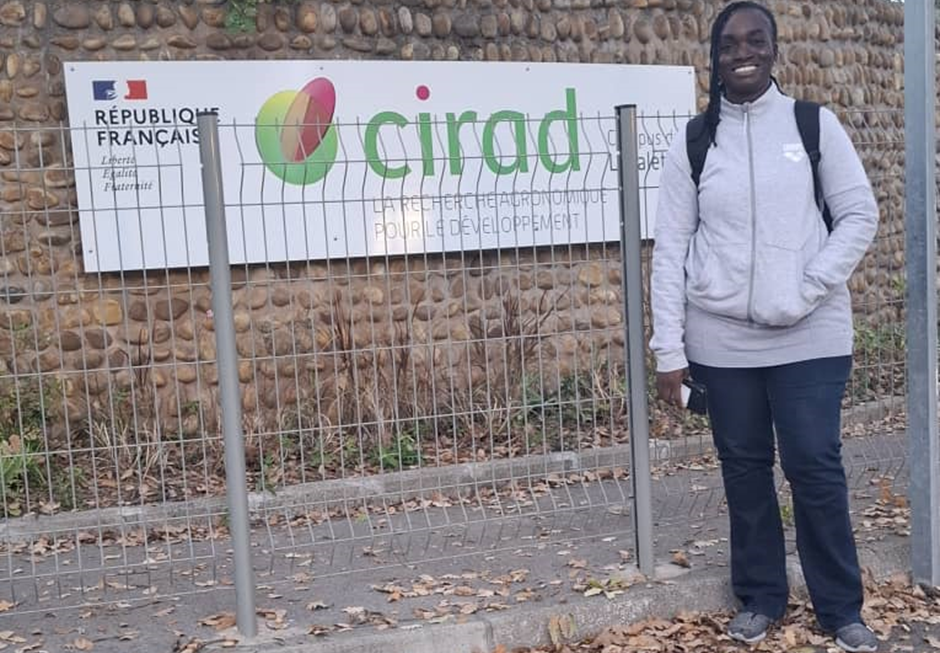
In September 2024, Harriet packed her expertise into a suitcase and travelled to Montpellier, France, where she served as a Visiting Scientist at CIRAD — the French Agricultural Research Centre for International Development, one of Europe’s most respected institutions for global agricultural science. This opportunity came through the AWARD Advanced Science Skills programme, generously sponsored by the Agropolis Foundation in France — an organisation dedicated to supporting world-class research in agriculture, food, and biodiversity. It was a testament not only to Harriet’s individual brilliance, but to the power of international partnerships that believe in African women scientists and invest in their growth.
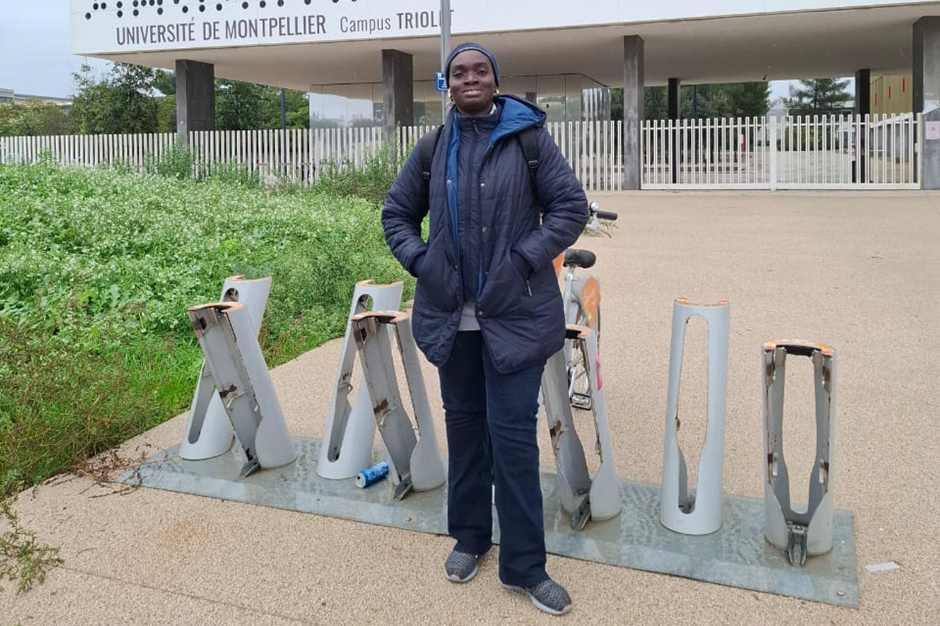
For four months, she brought her Ghanaian expertise, her African agricultural insight, and her mathematical brilliance to an international stage. She collaborated with researchers whose work spans continents. She represented not just herself, but every Ghanaian woman who was ever told that the world’s top tables were not for her. She came home with wider networks, deeper skills, and an even bolder vision for what mathematical science can achieve on the African continent.
To the girl who dreams of one day working internationally, of one day sitting in a room with the world’s best minds: do not shrink that dream. Chase it with everything you have. Harriet’s passport is proof that excellence has no borders.
The Summit — A PhD Completed
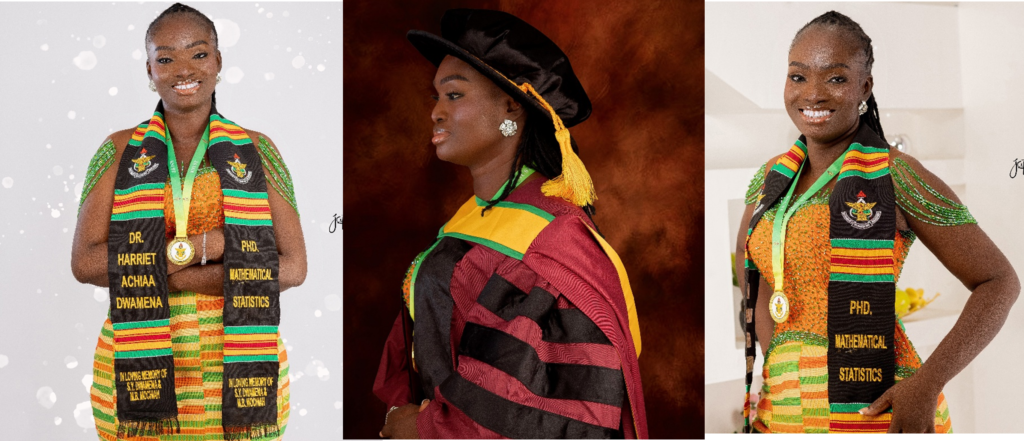
In 2021, while raising four children, leading the Biometrics and Statistics Section at the CSIR-CRI and still teaching at CCST, Harriet enrolled in a PhD programme in Mathematical Statistics at KNUST. Sounds crazy huh? Yeah, But she did. She decided to add the quest for a terminal degree to all that. That’s how crazy she is. She did not wait for the perfect moment. She created it.
And then, in the second semester of her coursework, life handed her something she had not planned for. She slipped. Her ankle ligaments tore. And for eight long months, she could not walk.
Eight months. Most people would have deferred the PhD programme. Many would have quit. Harriet did neither. She lay there — healing, resting, unable to stand — and she kept going. She studied from her bed. She engaged with her research. She refused to let a torn ligament tear apart the dream she had worked so hard to build.
That injury, as painful and disruptive as it was, became one of the most powerful chapters of her PhD story. It is easy to persist when things are going well. It takes a different kind of strength entirely to persist when your body has let you down, when the road is not just steep but physically impossible to walk.
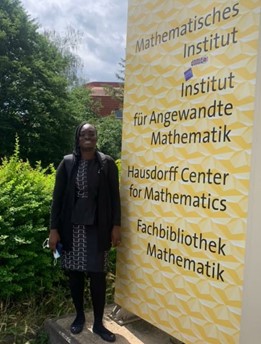
And yet — in that very same year, even as she healed — Harriet had been selected to attend the HCM Summer School on Foundational Methods in Machine Learning at the Hausdorff Center for Mathematics, University of Bonn, Germany. The Hausdorff Center is one of the most respected mathematics research institutions in the world, and their summer school draws talented scientists from across the globe. Eventually, the academic community noticed. From the 2021/2022 academic year through to the 2022/2023 academic year, Harriet was awarded the prestigious KNUST College of Science Scholarship — a two-year scholarship recognising her outstanding academic promise and commitment to advancing mathematical science.
In the middle of one of the busiest seasons of her life, she was not just surviving her PhD — she was excelling at it.
To every girl who wonders whether anyone will invest in her education: excellence attracts opportunity. Keep showing up. Keep doing the work. The recognition will follow.
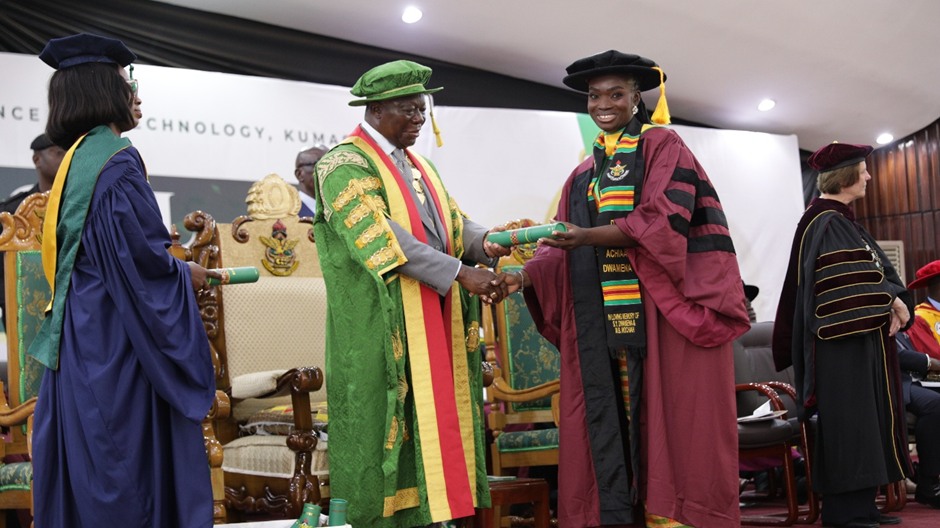
In 2026, Dr. Harriet Achiaa Dwamena successfully completed her PhD in Mathematical Statistics. Her doctoral research introduced the world to VN-ASCA — Variance-Normalized ANOVA-Simultaneous Component Analysis — a breakthrough statistical method designed to handle heteroscedastic and unbalanced multivariate experimental data. In plain language: she built a better mathematical tool for making sense of messy, complex, real-world scientific data.
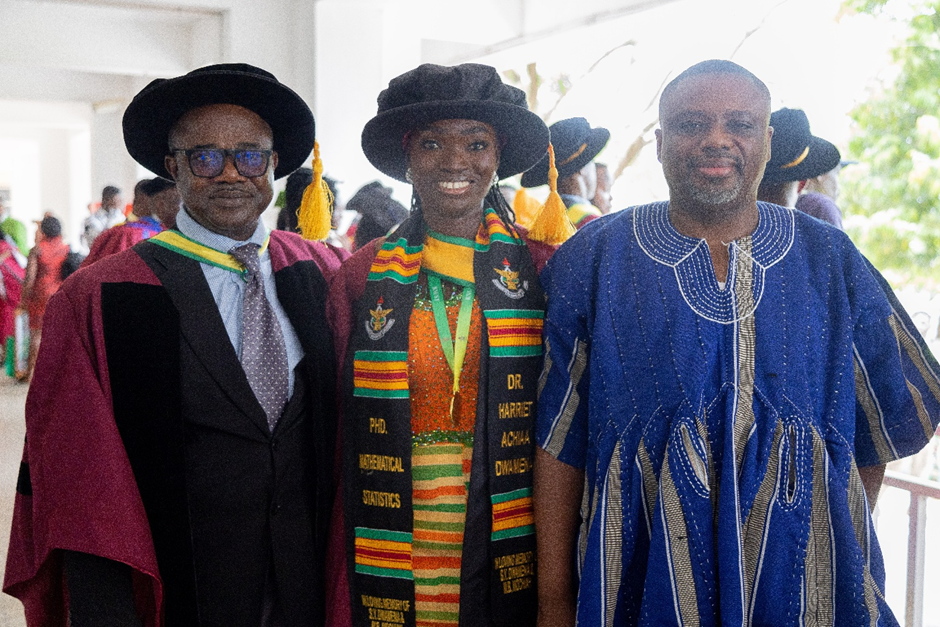
This is no child’s play. Statistical methodology underpins how science works — how drugs are tested, how crops are improved, how climate data is interpreted, how policies are made.
Dr. Dwamena’s VN-ASCA will be used by researchers long after her, in contexts she may never know about, solving problems she has never encountered. That is the power of rigorous science.
The girl who scored 50% in primary school now holds a doctorate in Mathematical Statistics and has contributed an original method to the global body of scientific knowledge! She has more than 15 peer-reviewed journal publications to her name — on topics ranging from crop productivity and agricultural biometry to machine learning applications in fraud detection. Her work does not whisper. It speaks.
A Final Word to Every Young Girl
Dr. Harriet Achiaa Dwamena’s story is not a fairy tale. There was no lucky break, no shortcut, no knight on a white horse. There was a young girl who struggled with mathematics, and a teacher who refused to give up on her. There was hard work, late nights, juggled responsibilities, and a quiet, persistent refusal to be defined by anyone else’s expectations.
She is a wife, and a mother of four lovely children. She works with research teams. She teaches the next generation. She mentors young women. She has published research used by scientists across Africa. She has worked in France. She has a PhD. And she started at 50%.
So wherever you are starting — start. Whatever room you are in — stay. Whatever dream you carry — carry it all the way. The world of science needs more women like Harriet and it needs more women like you.
“Math is not mysterious. It is just about applying the principles. I really love it — everything about it.”
Link to Dr. Harriet’s Profile
