CSIR-CRI STRENGTHENS CAPACITY OF OKRA SEED PRODUCERS THROUGH INTENSIVE TRAINING PROGRAMME
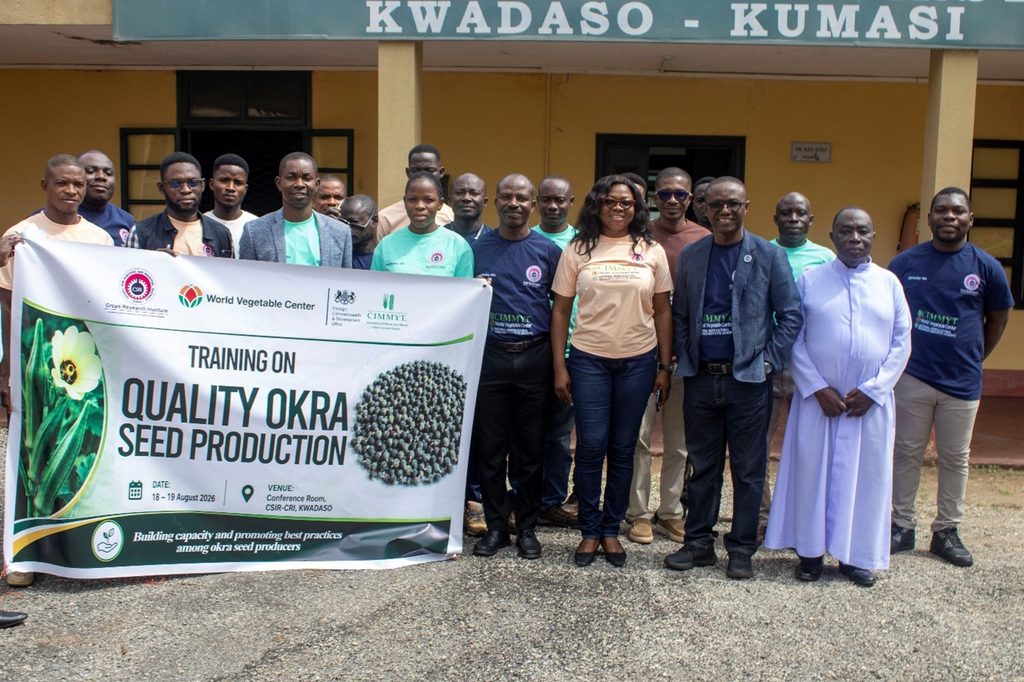
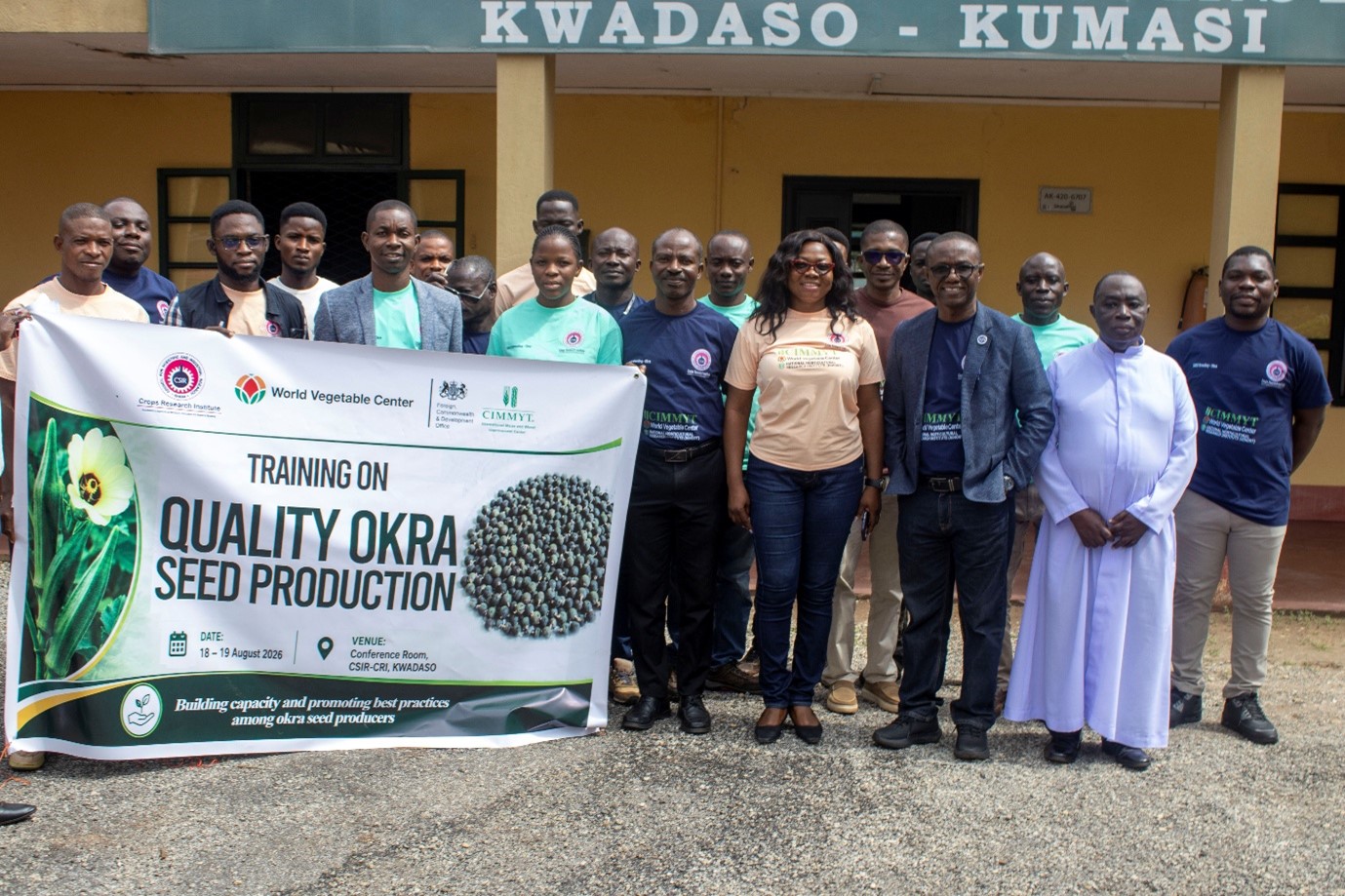
The CSIR-Crops Research Institute (CSIR-CRI) has intensified efforts to strengthen vegetable seed sector in Ghana through a two-day training programme for registered seed producers and members of seed cooperatives from across the country.
The training, held at the CSIR-CRI Kwadaso Station in Kumasi, focused on equipping participants with the knowledge and practical skills required to produce high-quality, reliable and market-oriented okra seeds. This initiative is implemented by the Vision for Adapted Crops and Soils (VACS) Okra Breeding Program, funded by the CGIAR/CIMMYT–FAO VACS Partnership, hosted at CIMMYT, and supported by a coalition of 10 government donors, 27 non-governmental organizations, private sector champions, and 4 flagship implementing organizations. Similar trainings would be conducted at World Vegetable Center, Benin and National Horticulture Institute, Nigeria.
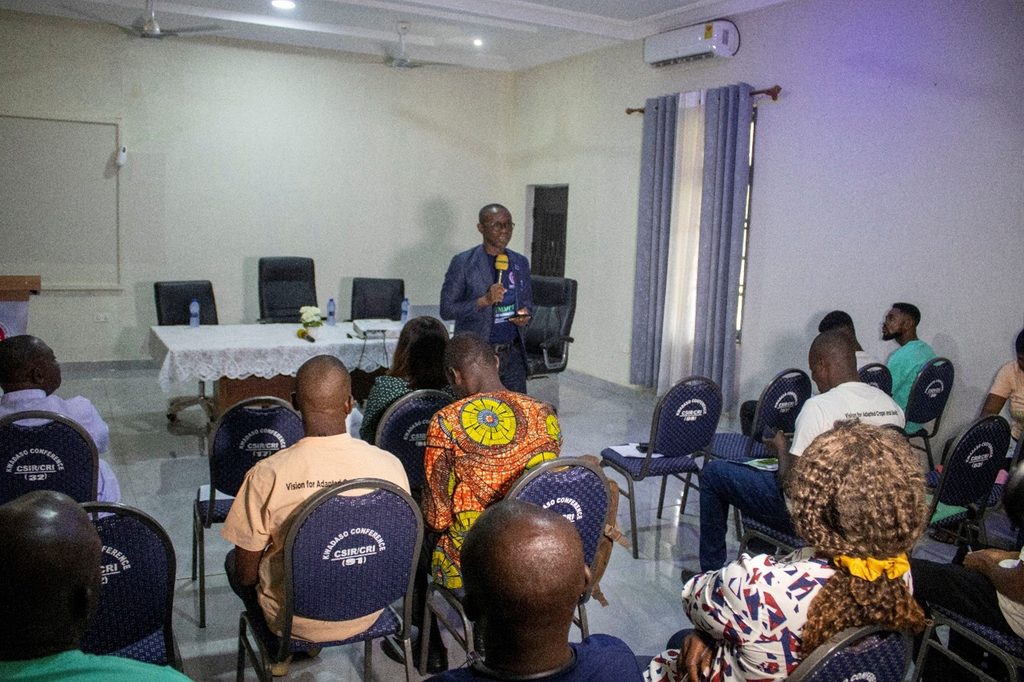
In his welcome address, Prof. Maxwell Darko Asante, highlighted the need for a very robust vegetable seed system to curtail imports and improve the livelihoods of farmers. “Okra is a crop with real economic promise for Ghana, but that promise depends entirely on the quality of the seed we start with. This training, and the new screenhouse and irrigation facility we have commissioned, are practical steps toward closing the gap between what our farmers need and what our local seed system can currently deliver,”, he stressed.

Why Okra?
Opening the programme with a look at the crop itself, Dr. Jacinta Adoma Opoku, the project coordinator at the CSIR-CRI, made the case for why okra seed deserves this level of attention. Okra is more than a familiar vegetable in Ghanaian kitchens — it is a powerhouse of nutrients with recognised health benefits, a crop that shows notable resilience to environmental stresses, and an increasingly important economic commodity. Beyond fresh consumption, okra feeds into pharmaceuticals as a natural tablet binder, cosmetic formulations, food stabilisers, and even paper, rope, coarse textiles and jute bags, while supporting a value chain of input suppliers, farmers and farm labourers, aggregators, retailers, wholesalers and processors — generating fast cash flow and driving financial independence at the household level.
Yet the numbers presented pointed to a significant untapped opportunity. Ghana produces an estimated 67,128 tonnes of fresh okra annually but exports only about 4.7 tonnes, worth roughly US$890 at an average price of US$0.685 per kilogramme. Against a global fresh okra export market worth approximately US$7.88 billion, the gap — and the opportunity — is substantial. The question posed to participants set the tone for the training ahead: can Ghana produce consistent, high-quality okra at the right time and in sufficient volumes, and deliver it efficiently to markets where a clear supply gap exists?
That question, in turn, explained why the training was necessary in the first place. Quality seed is the foundation of good crop production, and market intelligence gathered in 2025 pointed to rising demand for reliable okra seed, alongside the release of new improved varieties that seed producers would need the technical capacity to multiply. With Ghana importing an estimated US$3.36 million worth of vegetable seed, there was a clear case for strengthening the skills of local producers and promoting good seed production practices from the outset.
The overall objective of the training programme was to build the capacity of okra seed producers to produce high-quality seed and to promote good practices across the full chain from production and quality assurance to processing, storage and market delivery to farmers.
More specifically, participants who were drawn from okra-producing areas within all the six agroecological zones` of Ghana, were expected to leave with a stronger understanding of the principles of quality okra seed production; the ability to apply good crop and seed production practices; improved skills in field management and seed harvesting; a clear grasp of seed quality assurance requirements; the capacity to identify and address common production challenges; stronger seed handling, processing and storage skills; and a broader network of fellow producers with whom to share experience going forward. To get there, the programme combined technical presentations with practical demonstrations, group discussions, question-and-answer sessions and opportunities for participants to share their own experiences. Seed kits of two released okra varieties from Benin, i.e., Konni and AVOK 1504 as well as one of the yet to be released okra varieties developed by CSIR-CRI were given to each participant to produce to go and practice them at their various areas. They are encouraged to involve all actors along the okra value chain at every stage of the seed production to increase the rate of adoption. Field days will be conducted on all the participants field during the reproductive state for other stakeholders to ascertain the quality of the fresh fruits of these varieties.
Building a Strong Foundation for Quality Seed Production
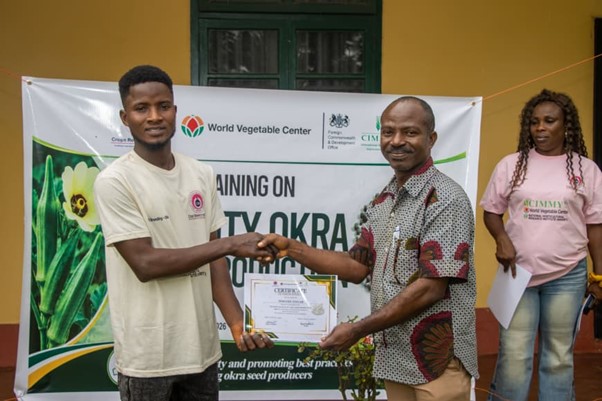
The training underscored the critical role of quality seed in improving agricultural productivity and strengthening Ghana’s vegetable value chain. Participants were reminded that quality seed production extends beyond selecting a good variety. It requires careful attention to production practices, genetic purity, field inspection, testing, certification, processing, packaging, labelling and storage.
High-quality seed contributes to good germination, uniform crop establishment and improved yield potential, while poor-quality seed can result in mixed varieties, weak crop stands, increased disease pressure and financial losses for farmers.
A significant component of the programme therefore focused on Ghana’s regulatory framework for seed production. Dr. Hillary Mireku Botey, Dr. Emmanuel Asamoah Adjei and Mr. Michael Arthur, seed scientists at the CSIR-Crops Research Institute, took participants through the National Seed Policy, the 2015 National Seed Plan and the Plants and Fertilizer Act, 2010 (Act 803).
Participants were also introduced to Ghana’s three-generation seed class system comprising breeder, foundation and certified seed. The system provides a structured pathway for maintaining genetic purity as seed moves from the breeder through multiplication stages to farmers. The role of the Ghana Seed Inspection Division under the Ministry of Food and Agriculture’s Plant Protection and Regulatory Services Directorate in registration, field inspection, sampling, testing and certification was also highlighted.
Promoting Market-Oriented Seed Production
The training further emphasised the importance of understanding the market before producing seed. A representative of the World Vegetable Center, Mr. Lys Aglinglo, introduced participants to market intelligence, market segmentation and target product profiling as important tools for ensuring that varieties and seed produced respond to the needs of growers, processors and consumers.
He subsequently addressed practical considerations for establishing quality okra seed production fields. These included selecting climatically adapted and high-yielding varieties, choosing suitable well-drained and adequately exposed sites, observing appropriate isolation measures and removing off-type plants throughout the crop’s development.
Particular attention was given to the risk of cross-pollination in okra. Because insects such as bees, butterflies and beetles can transfer pollen between plants, appropriate spatial, temporal or physical isolation is necessary to protect varietal purity. Participants were also encouraged to conduct regular roguing from the vegetative stage through flowering and before harvesting. Field data presented during the training showed the potential of improved production practices, with the BENGO-03 variety recording an average seed yield of 946.1 kg per hectare.
From the Field to the Seed Store
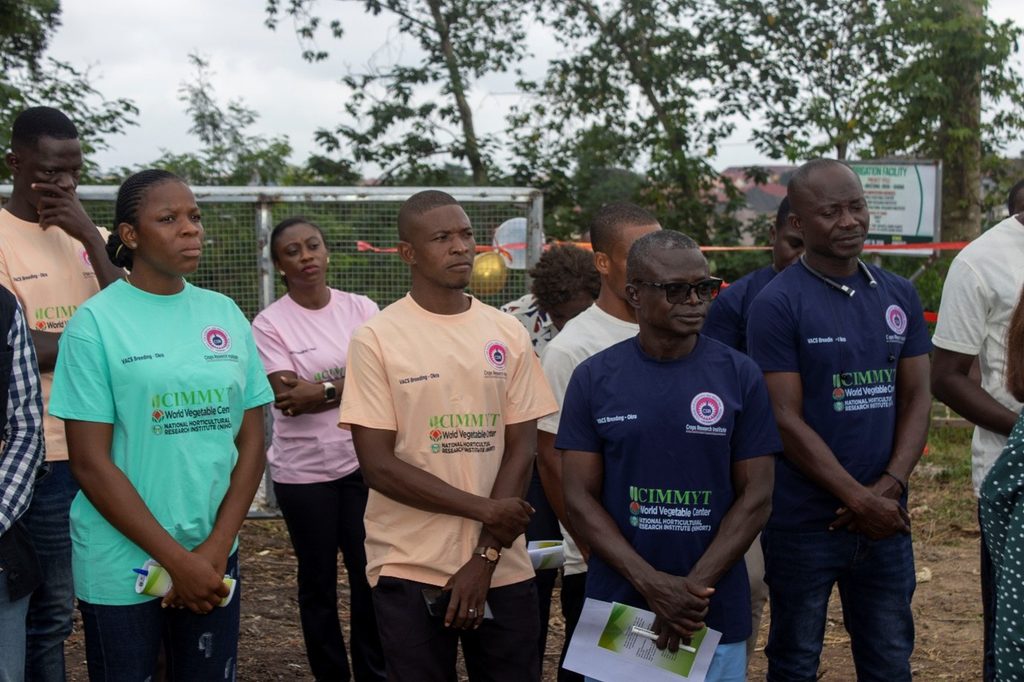
Attention was also given to pest and disease management, with Dr. Kofi Frimpong-Anin, an entomologist and a Senior Research Scientist at the CSIR-CRI, guiding participants on managing major threats to seed production fields. Dr. Emmanuel Asamoah Adjei subsequently took participants through the postharvest management of okra seed. The session covered harvesting at the appropriate stage—approximately 30 to 35 days after flowering, when pods turn brown and begin to split—followed by sorting, threshing, winnowing, drying, treatment, packaging and storage.
Participants considered both manual and mechanical approaches to seed processing and were introduced to the key information that must appear on certified seed packages, including the variety name, lot number, germination percentage, purity level, moisture content and certification information.
Turning Seed Production into a Sustainable Business
Beyond technical production, the training addressed the business dimensions of seed production. Dr. Asamoah Adjei highlighted the significant opportunity for local seed producers arising from Ghana’s dependence on imported vegetable seed. According to information presented during the training, more than 85 percent of commercial hybrid vegetable seed sold in Ghana is currently imported, creating opportunities for locally produced, certified seed that is adapted to Ghanaian growing conditions and competitively priced.
Participants were therefore introduced to the importance of maintaining proper fields, processing, storage and financial records to support regulatory compliance, cost management and traceability. Discussions also covered pricing, packaging and strategies for reaching customers through agro-dealer networks, demonstration plots and direct sales.
Practical Learning and Action Planning
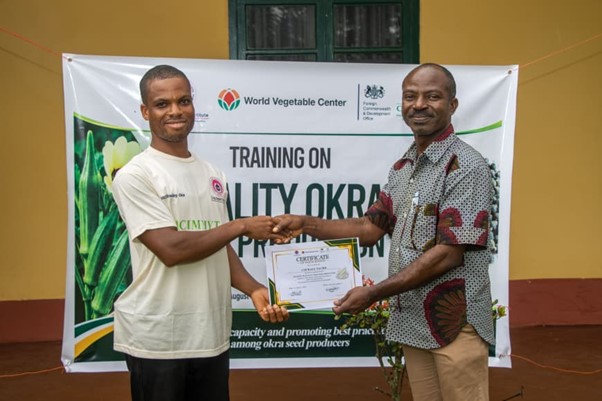
The programme combined classroom-based instruction with practical activities. Participants had the opportunity to undertake hands-on exercises covering seed extraction, drying, cleaning, treatment and storage during round at the seed processing center of CSIR-CRI. The training concluded with action planning, evaluation and the presentation of certificates to participants. The initiative represents an important step towards strengthening Ghana’s local vegetable seed system. By bringing together technical experts, researchers, seed producers and cooperative members, the VACS Okra Breeding Project is helping to bridge the gap between research, regulation, field-level seed production and commercial enterprise development.
For CSIR-CRI, the training reinforces its commitment to supporting a more reliable and sustainable seed sector in Ghana—one capable of supplying farmers with quality seed while creating viable business opportunities for local seed producers.
About VACS Okra Breeding Project
The project aims to accelerate the development and dissemination of adapted, nutritious and climate-resilient okra varieties across Africa by establishing full-fledged okra breeding programmes that apply innovative technologies and methodologies for continuous varietal improvement. It also seeks to deliver market-preferred varieties that enhance livelihoods and nutrition, stimulate greater private-sector investment in okra breeding and seed systems, and strengthen the capacity of seed producers and the next generation of okra breeders.
Focusing on Benin, Nigeria, and Ghana the project seeks to improve the efficiency and effectiveness of okra breeding programmes to routinely develop and deliver market-driven varieties that meet the needs and preferences of farmers and consumers. Ultimately, these efforts will promote wider adoption of improved okra varieties, increase consumer acceptance and strengthen okra value chains across the participating countries.
Contributors: Bernard Sakyiamah. Jacinta Adoma Opoku, Dennis Gyasi Boakye, Enoch Bobie Agyemang
