
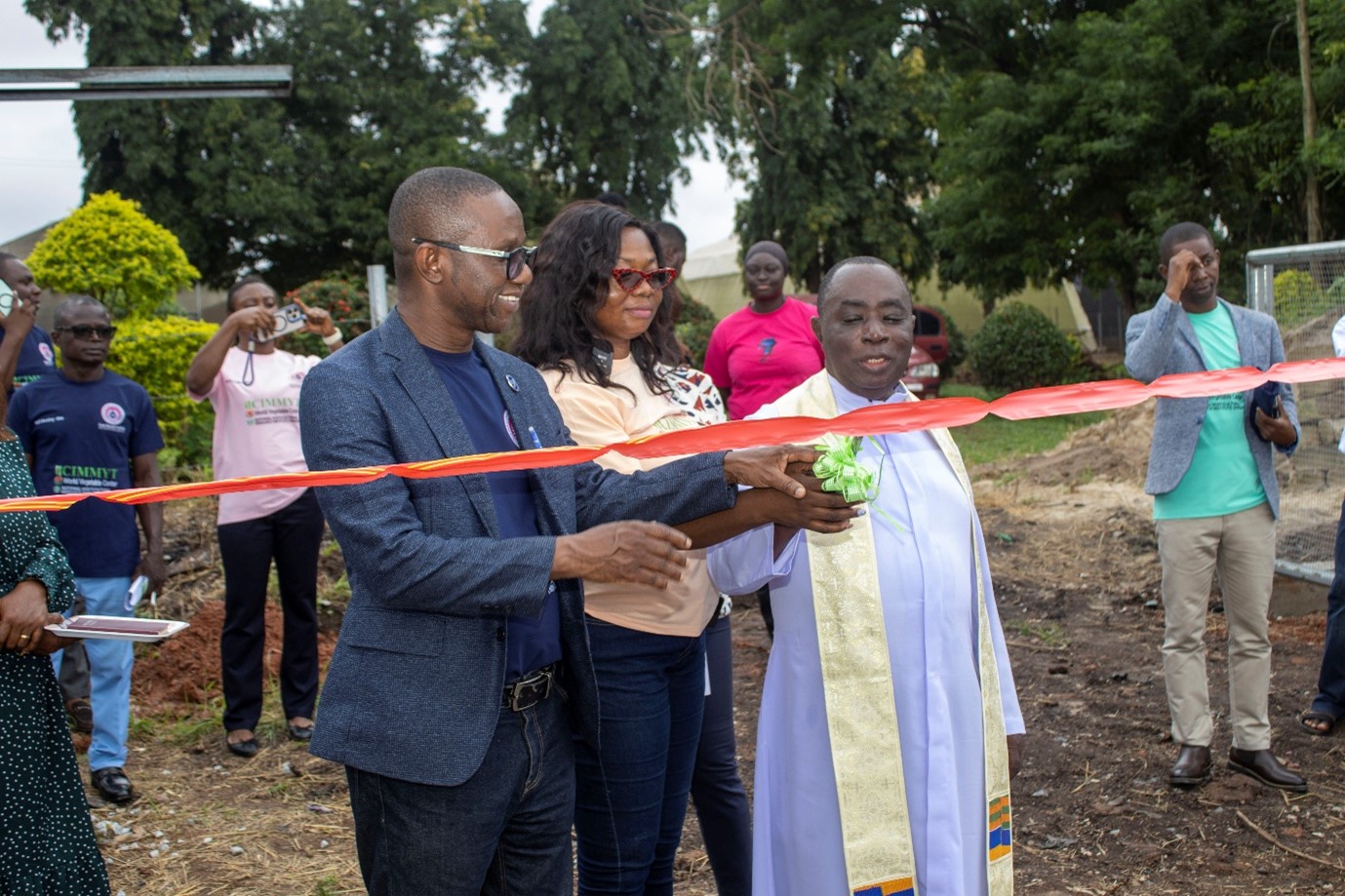
CSIR-CRI COMMISSIONS NEW SCREENHOUSE AND IRRIGATION FACILITY TO STRENGTHEN SEED PRODUCTION UNDER VACS -BREEDING: OKRA
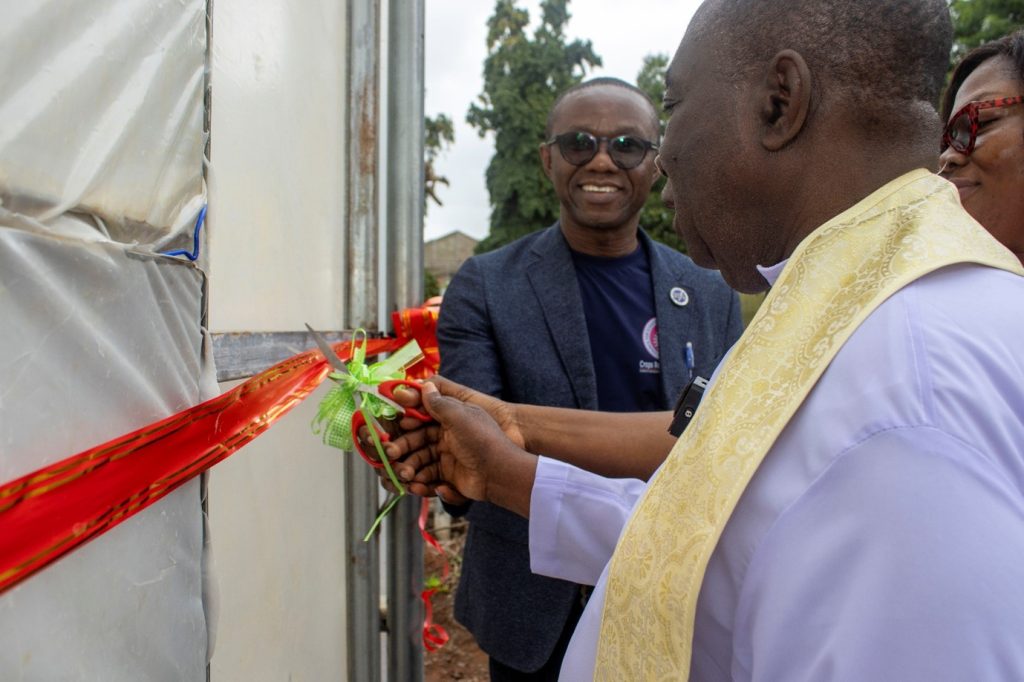
The CSIR-Crops Research Institute (CSIR-CRI) has commissioned a new screenhouse and irrigation facility at its Kwadaso Station in Kumasi, providing additional infrastructure to support the production of high-quality vegetable seed and strengthen Ghana’s seed sector.
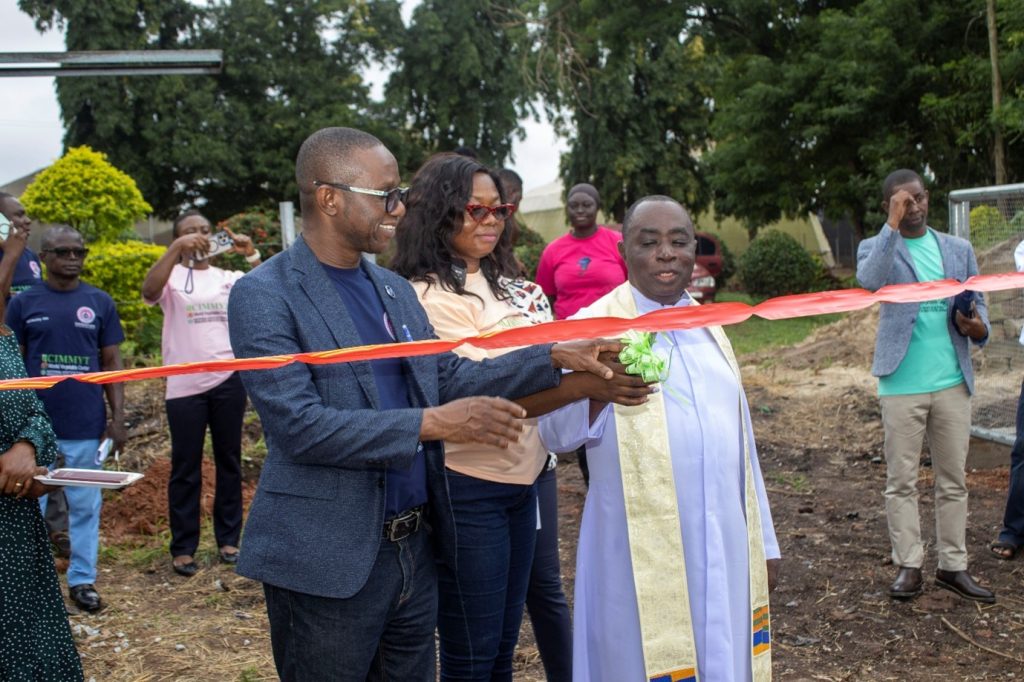
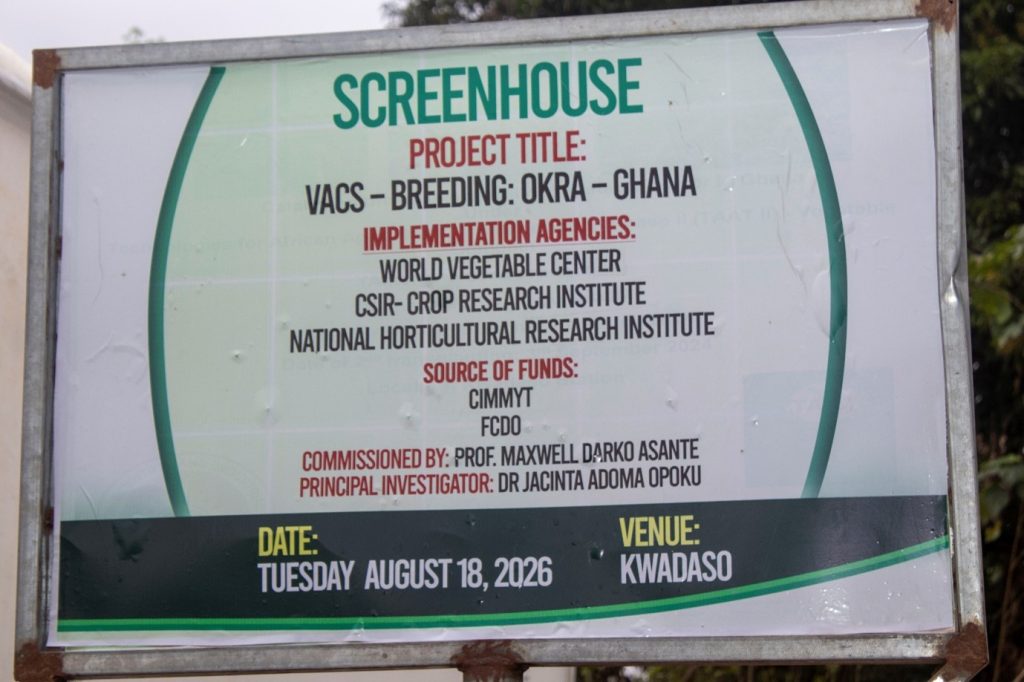
The facility was formally commissioned by the Director of CSIR-CRI, Prof. Maxwell Darko Asante, against the backdrop of a two-day training programme for okra seed producers.
This initiative is implemented by the Vision for Adapted Crops and Soils (VACS) Okra Breeding Program, funded by the CGIAR/CIMMYT–FAO VACS Partnership, hosted at CIMMYT, and supported by a coalition of 10 government donors, 27 non-governmental organizations, private sector champions, and 4 flagship implementing organizations, alongside the Vegetable Compact of the Technologies for African Agricultural Transformation (TAAT) program, funded by the African Development Bank (AfDB). Similar structures are built at World Vegetable Center, Benin and National Horticulture Institute, Nigeria.
Creating a Controlled Environment for Quality Seed Production
The newly commissioned facility responds to one of the major technical challenges associated with okra seed production: Maintaining genetic and varietal purity. Okra flowers are frequently visited by pollinating insects, including bees, butterflies and beetles. The movement of pollen between plants of different varieties can therefore result in unwanted cross-pollination and compromise the genetic purity of seed intended for subsequent production.
The screenhouse provides a controlled production environment that significantly reduces this risk by creating a physical barrier between the crop and external pollinating insects. According to information presented as part of the facility’s commissioning, physical isolation of this nature can push varietal purity to above 99.9 percent, providing an important advantage over relying solely on distance to prevent cross-pollination.
The facility is complemented by a dependable irrigation system, allowing production to continue with greater independence from seasonal rainfall patterns. Together, the screenhouse and irrigation infrastructure provide CSIR-CRI with enhanced capacity to produce breeder and foundation seeds of consistent and certifiable quality throughout the year.
Infrastructure Linked Directly to Producer Capacity Building
The commissioning brought together seed producers, members of seed cooperatives and facilitators who had travelled to Kwadaso to participate in the okra seed production training programme. The occasion therefore provided more than an opportunity to formally inaugurate new infrastructure. It connected the investment directly to the people who are expected to benefit from and apply the principles underpinning the facility.
The screenhouse provided a practical representation of concepts that participants would explore during the training, particularly the importance of isolation, genetic purity and quality assurance in seed production.
Speaking at the event, Prof. Asante highlighted the importance of continuous investments into the seed production space. “CSIR-CRI’s mandate goes beyond developing improved varieties — we must also ensure those varieties reach farmers as high-quality, reliable seed. Investments like this training programme and the screenhouse facility reflect our commitment to building a seed system that Ghana can depend on”, he stressed.
Supporting Ghana’s Local Seed System
The new infrastructure adds to CSIR-CRI’s growing portfolio of facilities dedicated to quality seed multiplication and reflects the Institute’s broader commitment to strengthening Ghana’s agricultural research and seed production capacity.
For the VACS Okra Breeding Project, the facility represents an important link between varietal development, breeder and foundation seed production, and the wider seed delivery system. By creating conditions for more reliable production of genetically pure seed, the investment can contribute to improving the availability and quality of seed for subsequent multiplication and eventual access by farmers.
Ultimately, the facility forms part of a broader effort to develop a more reliable, locally rooted and sustainable vegetable seed system for Ghana, while strengthening the capacity of local institutions and seed producers to meet the country’s growing demand for quality seed.
About VACS–Breeding: Okra Project
The project aims to accelerate the development and dissemination of adapted, nutritious and climate-resilient okra varieties across Africa by establishing full-fledged okra breeding programmes that apply innovative technologies and methodologies for continuous varietal improvement. It also seeks to deliver market-preferred varieties that enhance livelihoods and nutrition, stimulate greater private-sector investment in okra breeding and seed systems, and strengthen the capacity of seed producers and the next generation of okra breeders.
Focusing on Benin, Nigeria and Ghana, the project seeks to improve the efficiency and effectiveness of okra breeding programmes to routinely develop and deliver market-driven varieties that meet the needs and preferences of farmers and consumers. Ultimately, these efforts will promote wider adoption of improved okra varieties, increase consumer acceptance and strengthen okra value chains across the participating countries.
Contributors: Bernard Sakyiamah. Jacinta Adoma Opoku, Dennis Gyasi Boakye, Enoch Bobie Agyemang
