
WINNING THE WAR BENEATH THE RICE: TRANSFORMING WEED MANAGEMENT AT DAWHENYA
A silent Thief in Ghana’s Rice Fields
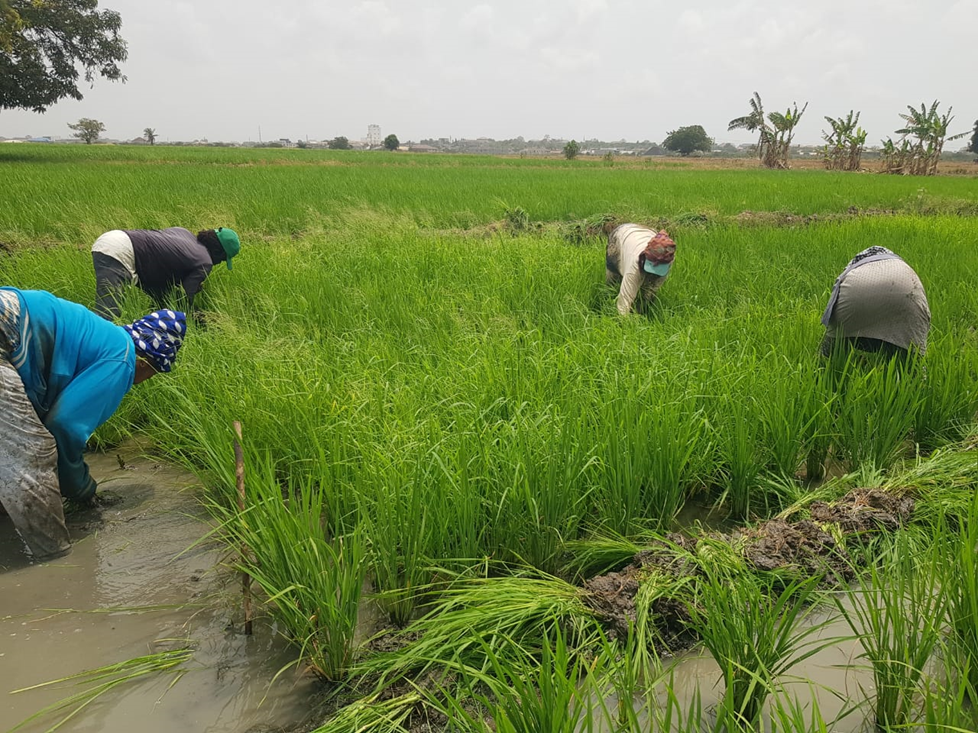
Imagine investing an entire farming season — your labour, your capital, your hope — only to watch up to 84 per cent of your harvest vanish. Not from floods, not from drought, but from weeds. Invasive, fast-spreading, fiercely resilient weeds that have quietly taken hold in the paddies of the Dawhenya Irrigation Scheme (DIS), one of Ghana’s most strategically important rice-producing zones.
This is the daily reality facing rice farmers across the K-Rice Belt. For years, they have fought these weeds with whatever tools they could afford — herbicides, hand-picking teams of ten to twelve workers who may require up to 3 weeks to hand-pick weeds per hectare, repeated tillage passes. The costs are staggering. The results, frustratingly temporary. The weeds keep coming back.
Adding greater urgency to the project’s mandate, the Dawhenya Irrigation Scheme has been formally adopted under the KOPIA project as a certified rice seed production centre for Ghana. The quality of seeds produced here has national significance — making effective weed management not just a local priority, but a matter of food security for the entire country.
That is why, in January 2025, the CSIR-Crops Research Institute (CSIR-CRI) and the Korea Partnership for Innovation of Agriculture (KOPIA), Ghana joined forces to launch the KOPIA Rice Weed Management Project with funding from the KOPIA, Rural Development Administration (RDA) — a focused, three-year, scientific initiative to diagnose the problem, document its full scale, and deliver practical, sustainable solutions directly into the hands of farmers.
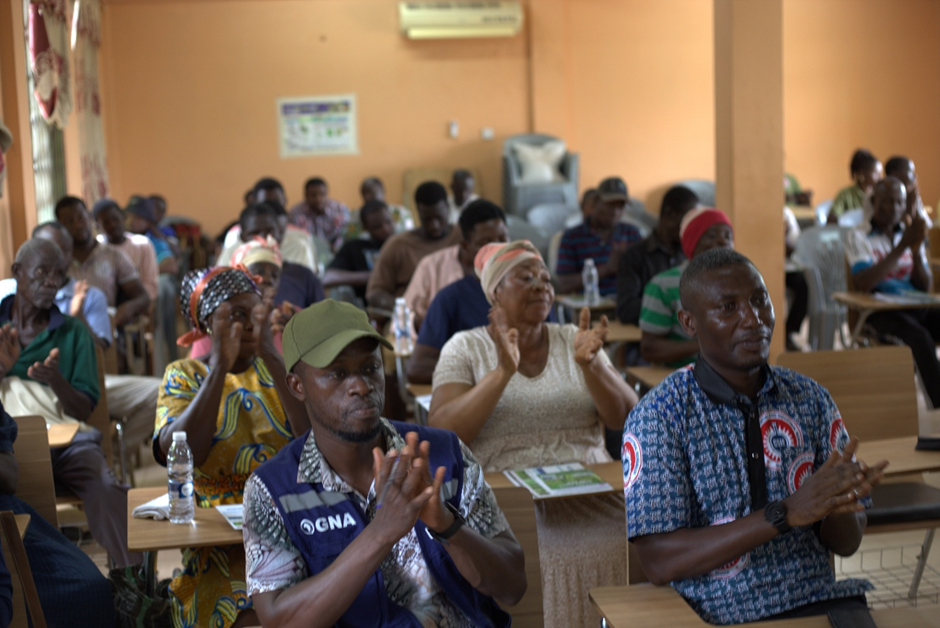
On 16 April 2026, the project team convened over fifty farmers, extension officers, scientists, and stakeholders at the Dawhenya Irrigation Scheme Training Centre for a milestone feedback workshop and field visit. The event marked the close of the project’s first year of intensive field monitoring, with researchers sharing findings from two full seasons of on-the-ground data collection.
The workshop was a follow-up to a previous baseline survey conducted at the irrigation scheme, which sought to monitor and profile weeds of economic importance and their associated pests and diseases within the K-Rice Belt project enclave in Dawhenya. This time, the data spoke for itself — and its message was urgent. The atmosphere was one of urgency and resolve. For the farmers seated in the hall, the data being presented was not abstract research. It was the story of their fields, their livelihoods, and their futures.
The Threat: Five Weeds. Devastating Losses
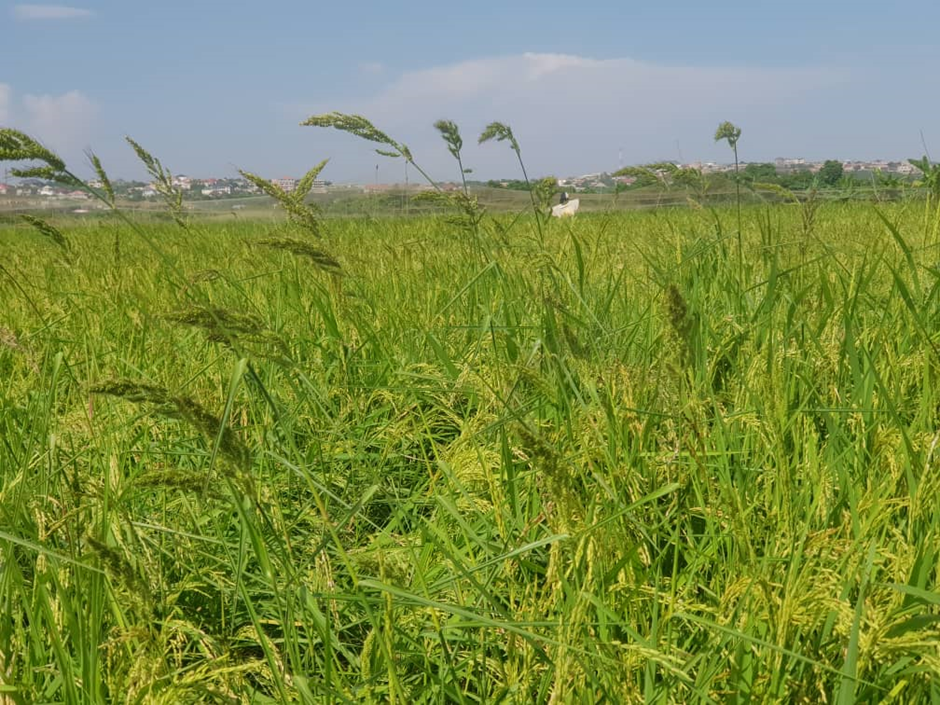
Presenting the findings, Dr. Stephen Arthur, Project Coordinator and Research Scientist at CSIR-CRI, revealed the identification of five major weed species posing serious threats to rice production. Among them were locally known species such as “Ashaiman killer” (Echinochloa spp.), “Black Jerry” (Leptochloa chinensis), “Aguda” (Urochloa humidicola), and “Ogo” (Ischaemum rugosum), all capable of causing yield losses between 60 and 80 percent. Additionally, Cyperus spp., locally called “Atadwe” and widely regarded as one of the world’s most problematic weeds, was documented. This species alone can reduce yields by up to 50 percent while simultaneously hosting multiple rice diseases.
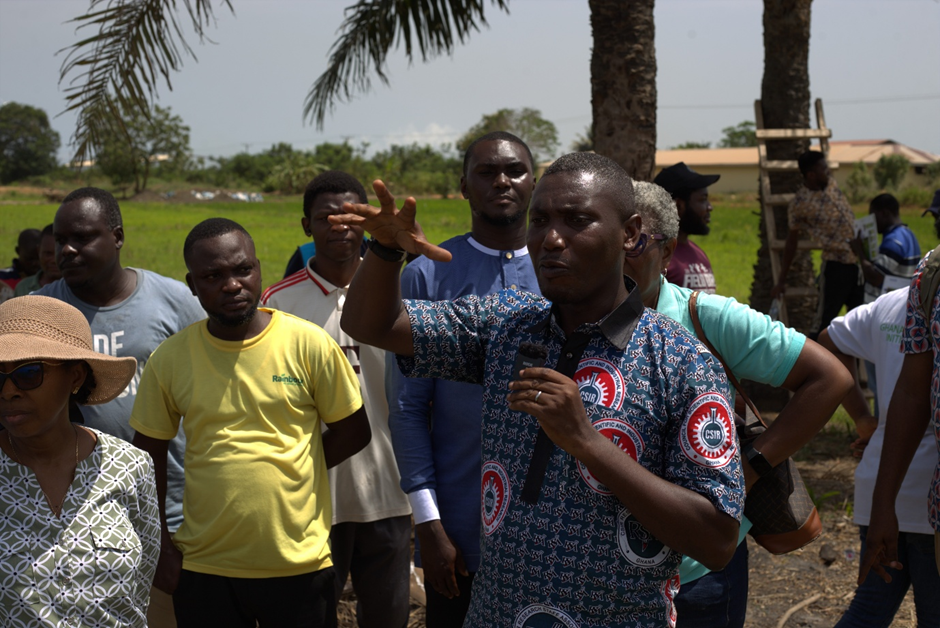
Perhaps most alarming is the origin of these invaders. Several of these species are not indigenous to Ghana — they arrived through contaminated imported seeds, hitching rides across borders and taking root in Ghana’s most productive paddies.
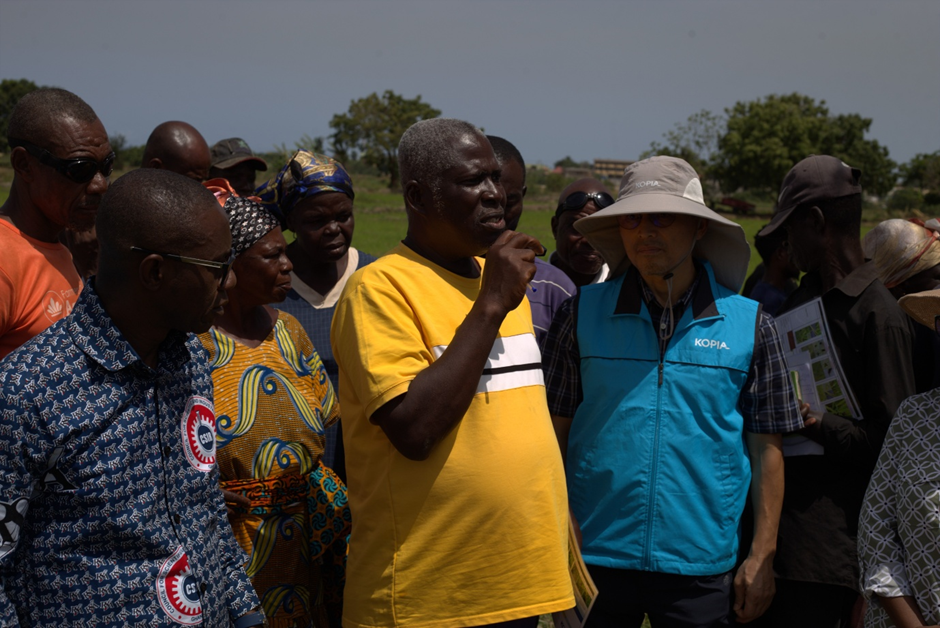
Dr. Arthur stressed the critical importance of weed management practices on rice farms and warned that climate change and related factors have accelerated the spread and intensity of weed infestations across Ghana. He presented findings from two seasons of farmer-field monitoring that tracked the infestation patterns of these noxious species, and shared practical strategies with farmers and stakeholders on preventing herbicide resistance, stopping the spread of invasive species, non-chemical approaches to weed control, and techniques to reduce the heavy labour burden of hand-picking.
The Science: Weeds, Disease and Pests: An Inseparable Problem
The presentations went well beyond identifying the weeds themselves. Experts from CSIR-CRI took turns educating stakeholders on the broader web of consequences that weed infestation sets in motion. Dr. Atta Aidoo, contributing disease surveillance expertise to the monitoring team, documented the direct links between weed presence and the incidence of fungal and viral rice diseases — a connection that fundamentally reframes how weed management must be approached.
“The weed problem in rice fields is not just about competition for nutrients and light. Many of these weed species serve as alternate hosts for devastating rice diseases — blast, sheath blight, brown spot. Managing weeds is therefore also managing disease. You cannot separate the two.”
— Dr. Atta Aidoo — Pathologist, CSIR-CRI
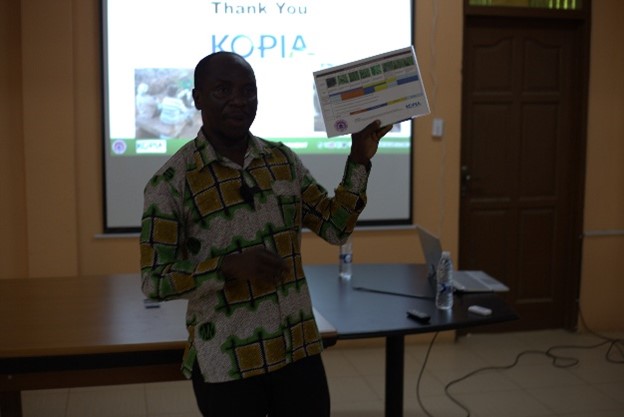
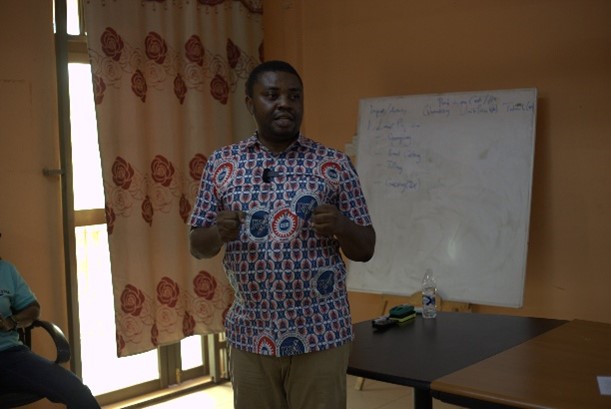
Dr. Kofi Frimpong-Anin, an entomologist, presented evidence on the associations between weed infestation levels and insect pest dynamics across different crop growth stages and field types while Mr. Kofi Lelabi Kota, an agronomist, examined the crop-weed competition dynamics, the timing and economics of current weed control practices, and their implications for the integrated management strategies the project will recommend.
A Call for Commitment and Action
Senior officials and partners used the platform to issue strong calls to action, underscoring how much is at stake for Ghana’s rice sector.
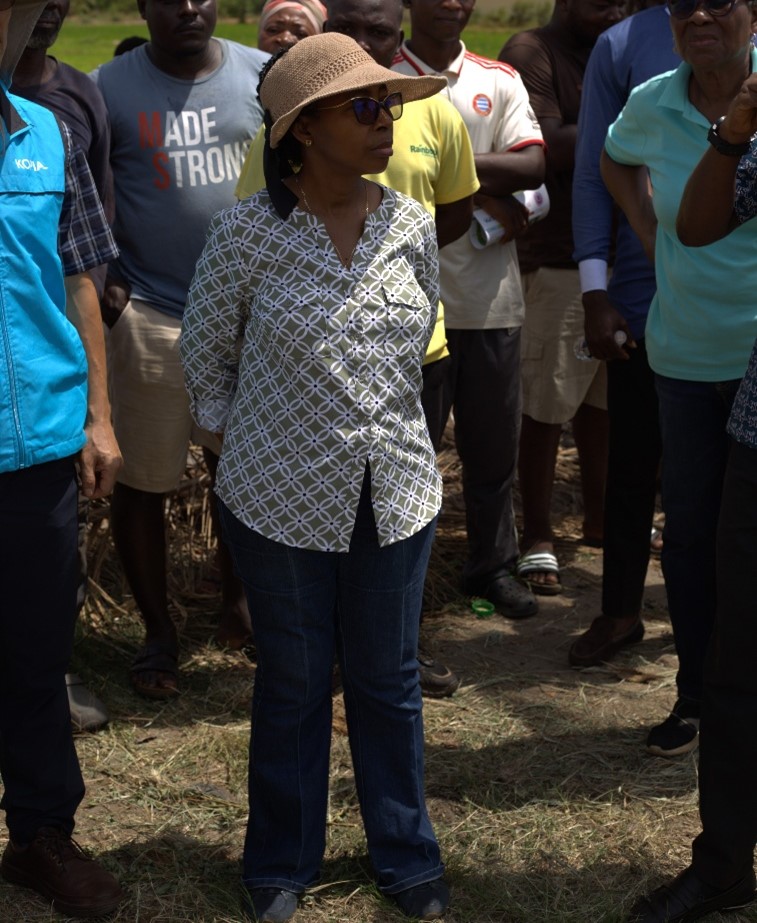
Prof. Marian Dorcas Quain, Deputy Director-General of the CSIR, acknowledged KOPIA’s vital funding support and stressed the importance of weed management for sustainable rice production. She called on the Ghanaian government and all project partners to sustain their commitment through the project’s remaining phases.
“Weeds are a major challenge in rice production. This project has revealed that some of the weeds that usually confront our farmers are not even from here. They mostly come along with imported seeds from other countries. This is the more reason why we need to support the local seed production efforts to reduce importation.”
— Prof. Marian Dorcas Quain, Deputy Director-General, CSIR
Prof. Maxwell Darko Asante, Director of CSIR-CRI and himself a rice breeder, shone a spotlight on the national dimension of the Dawhenya scheme’s importance. He called directly on the National Food Buffer Stock Company to purchase the grains produced by local farmers in Dawhenya, warning that the progress made must not be allowed to slip.
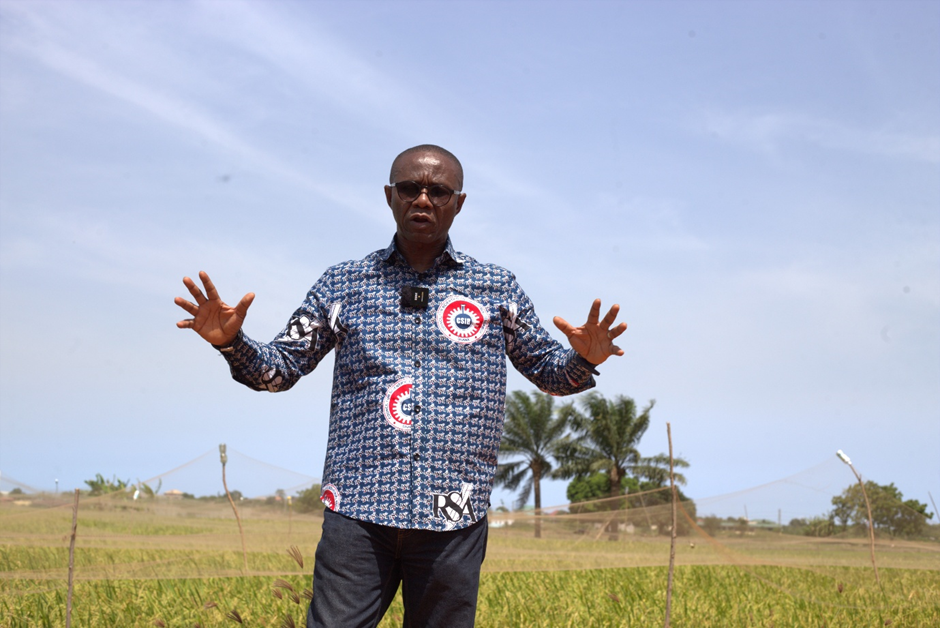
“We need to do this so that all the progress we’ve made over the years does not retrogress.”
— Prof. Maxwell Darko Asante, Director, CSIR-CRI
Dr. Young Jin Kim, Director of the KOPIA Ghana Centre, reaffirmed KOPIA’s unwavering commitment to the project and highlighted the broader significance of Korea–Ghana agricultural collaboration in tackling food security challenges across West Africa.
“Korea has walked this path before — building rice systems that are resilient and productive. Through KOPIA, we bring that experience to Ghana, not to impose solutions, but to work side by side with Ghanaian scientists and farmers to find what truly works here.”
— Dr. Young Jin Kim, Director, KOPIA Ghana Centre
From the Classroom to the Field-Ready to Act
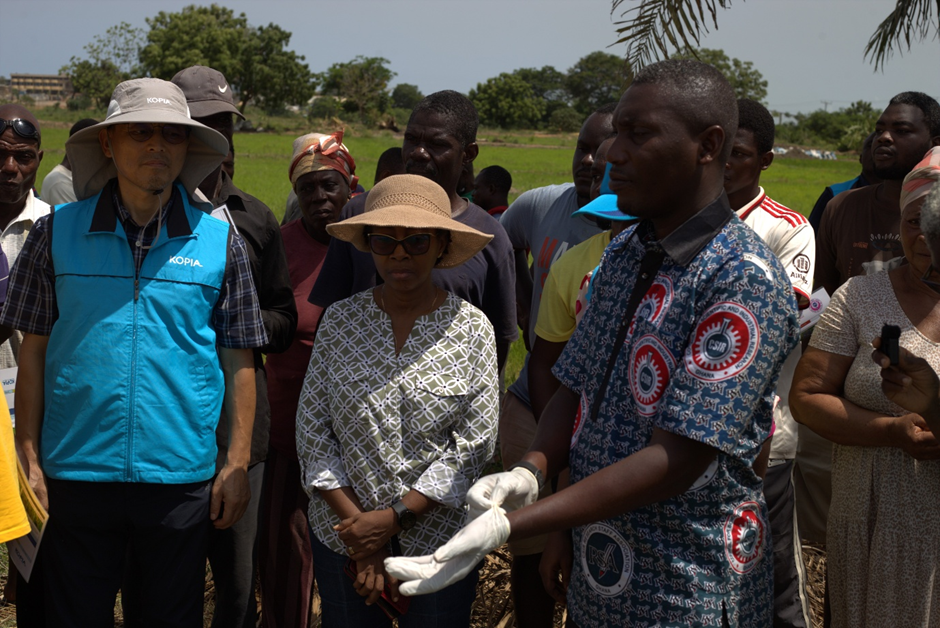
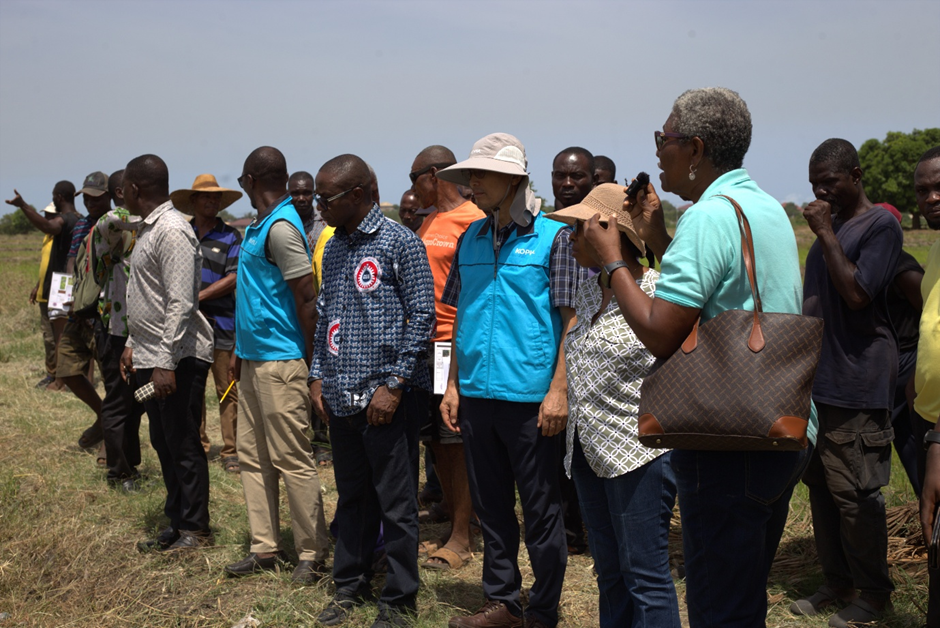
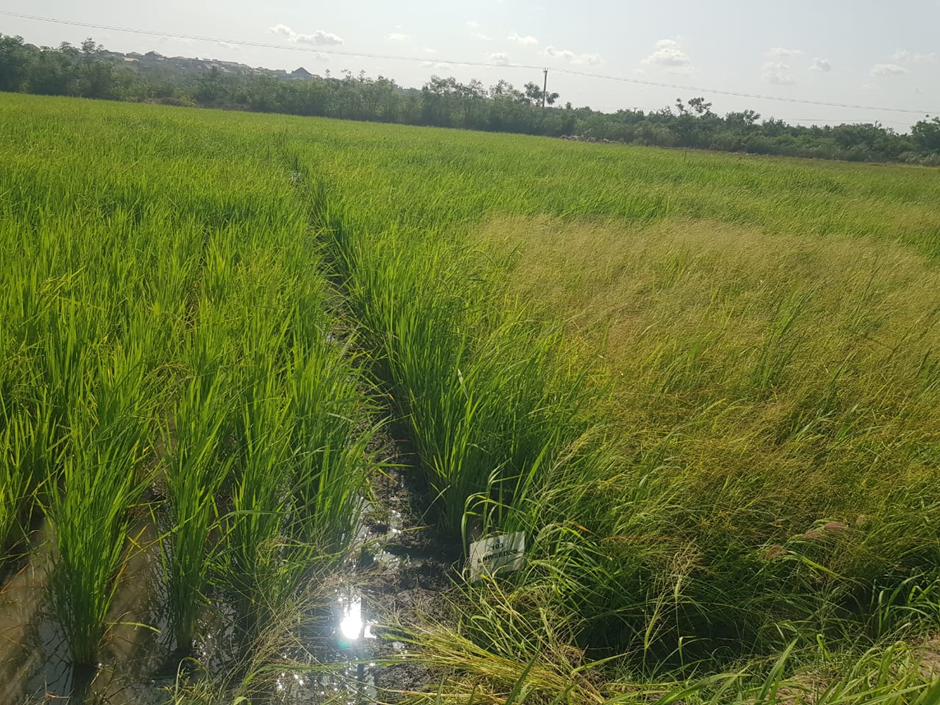
Following the indoor presentations, participants moved to the fields for a live demonstration visit, guided by the project team and lead farmers including Mr. Gabriel Appertey. The field visit transformed abstract data into vivid, tangible reality — participants could see firsthand the difference between managed and unmanaged plots, and the conditions that allow weed species to establish and spread.
The response from farmers was immediate and enthusiastic. Mr. Richard Affleh, a lead farmer at DIS, spoke for many when he expressed both gratitude and determination: “I am ready to adopt all the strategies that have been taught here today. “What we have seen and heard is exactly what we needed.”, he stated.
Farmers across the scheme pledged to implement the recommended practices in the upcoming season — a commitment that the project team will monitor and document as part of the ongoing research cycle.
As the KOPIA Rice Weed Management Project moves into its next phase, it carries with it a renewed sense of purpose — to turn the tide against weeds, restore productivity, and secure a more resilient future for rice farming in Ghana. Ghana’s rice farmers deserve fields free from the silent siege of invasive weeds. Through science, partnership, and community commitment, the KOPIA Rice Weed Management Project is making that future possible
Contributors: Bernard Sakyiamah, Stephen Arthur, Grace Bolfrey-Arku, Atta Kwesi Aidoo Snr, Kofi Frimpong-Anin, Ernestina Narveh Awarikabey, Kofi Lelabi Kota, Enoch Bobie Agyemang
