ACE4ES Project and CSIR-CRI Showcase Char-Derived Innovations and Regional Policy Guide at the World Agroecology Fair, Côte d’Ivoire
SAN PEDRO, Côte d’Ivoire, April 2026
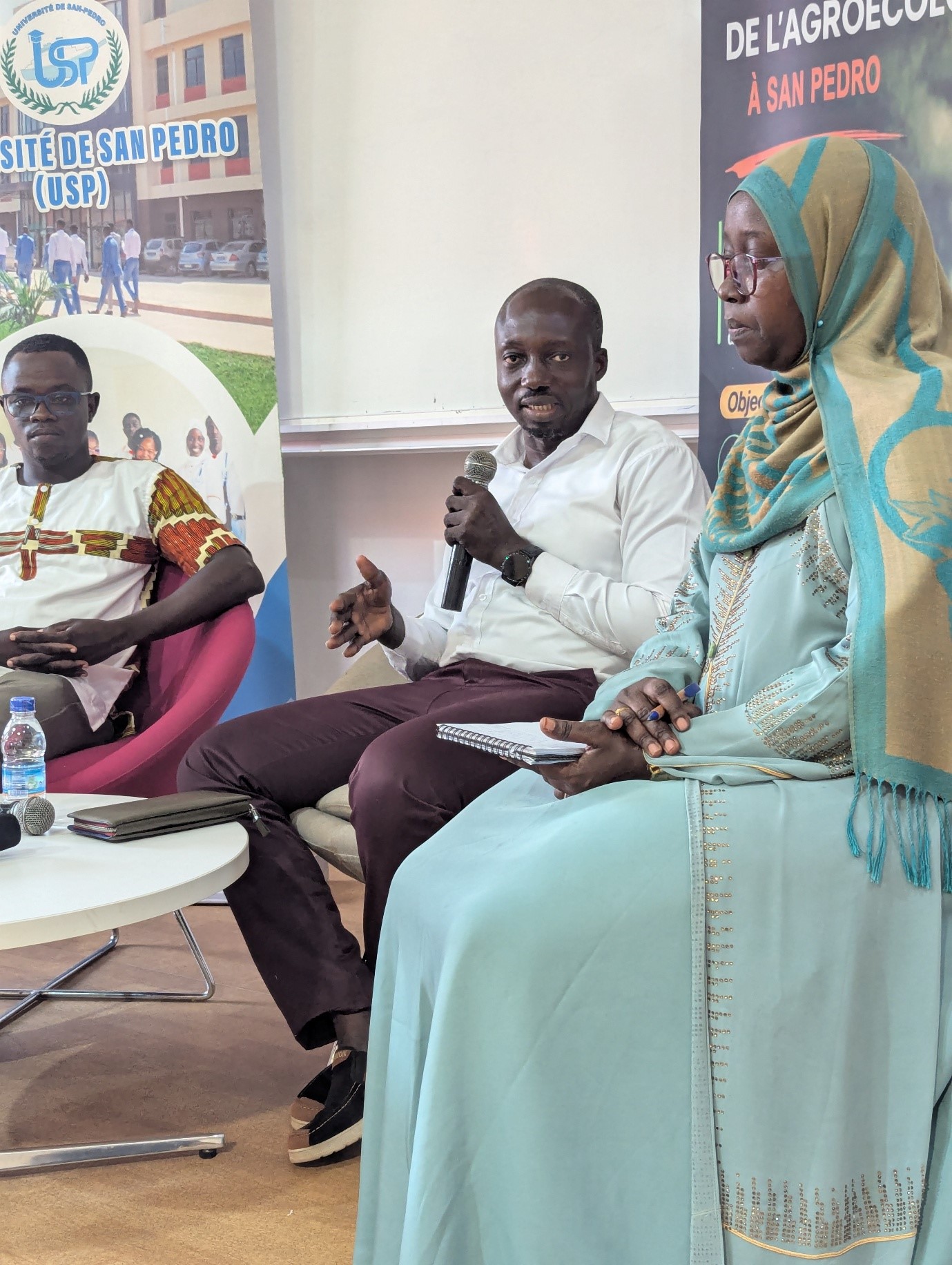
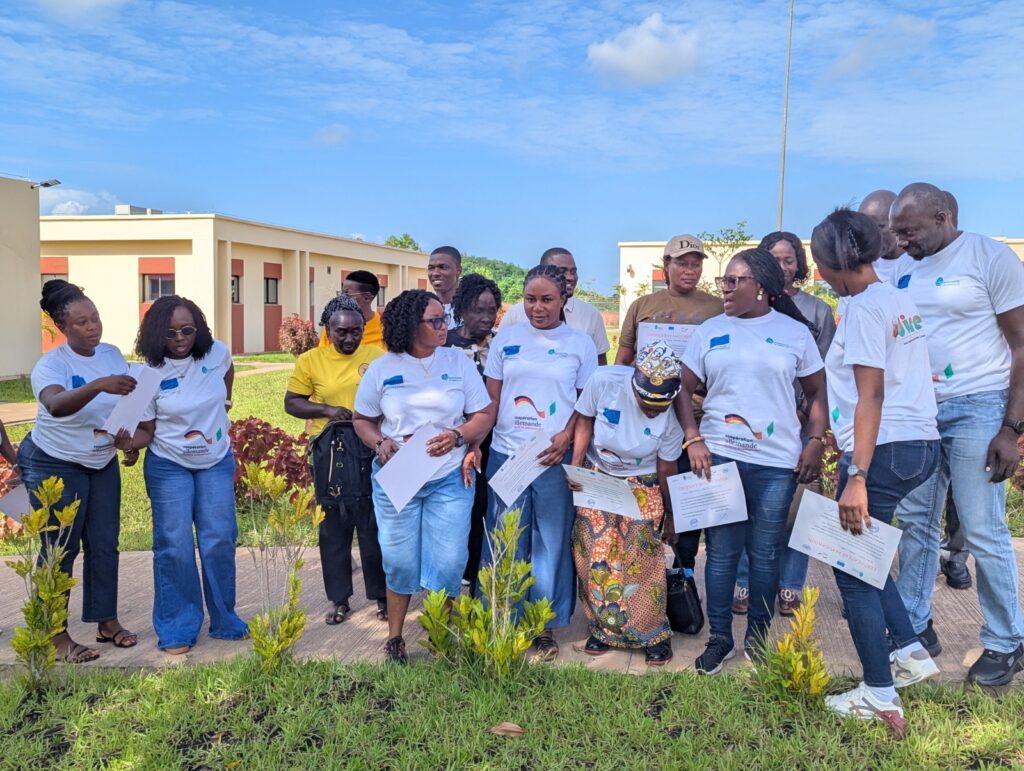
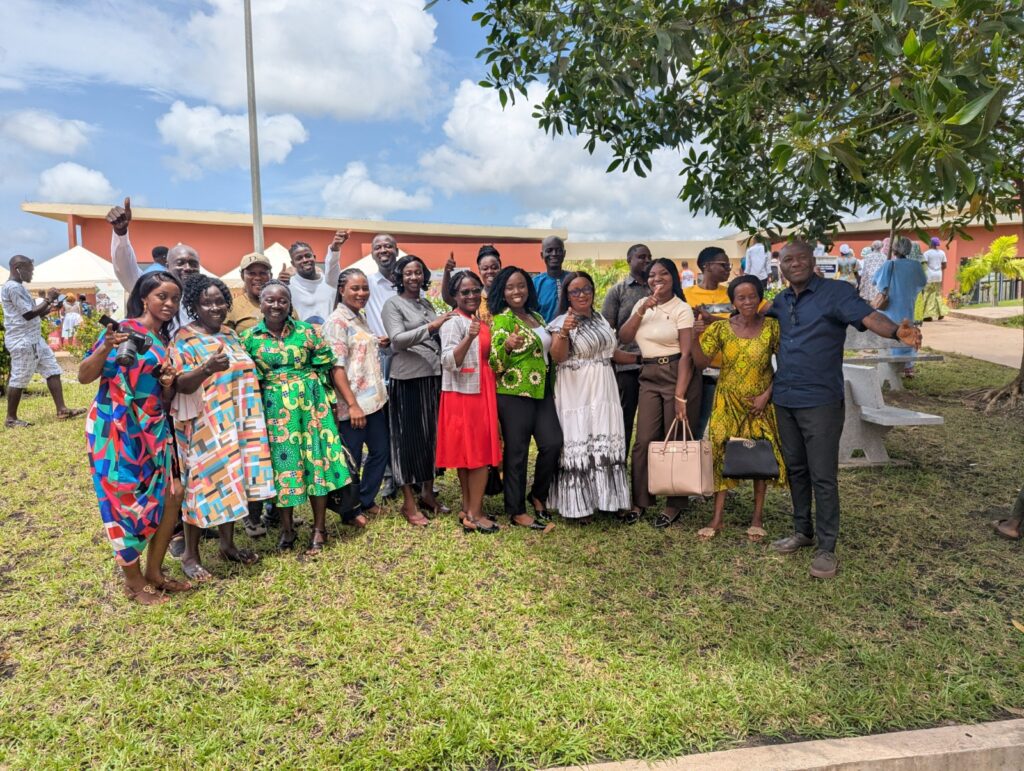
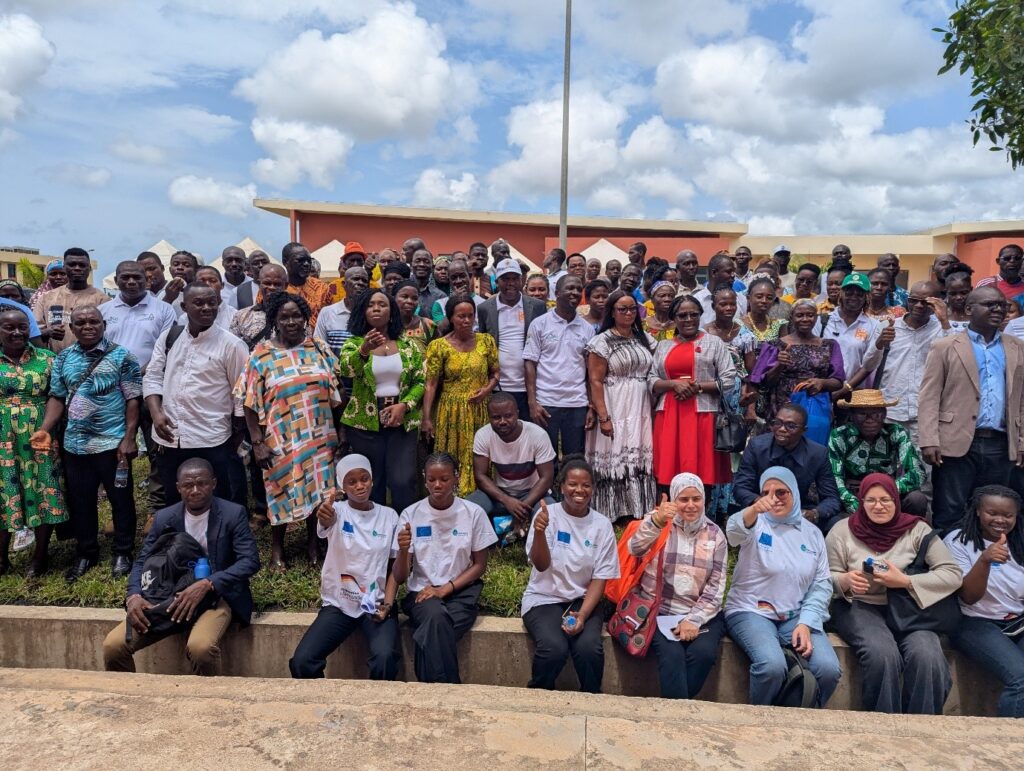
The inaugural Salon Mondial de l’Agroécologie (SMAE 2026)- the World Agroecology Fair -convened from 7 to 10 April 2026 in San Pedro, Côte d’Ivoire, bringing together farmers, researchers, cooperatives, policymakers, and development partners from more than 15 countries across Africa, Europe, and North America to advance sustainable food and farming systems in West Africa. The ACE4ES Consortium and the Council for Scientific and Industrial Research – Crops Research Institute (CSIR-CRI), Ghana, were represented by Dr. Kwaku Onwona-Hwesofour Asante, Principal Investigator of the ACE4ES Project and Research Scientist at CSIR-CRI with Ms. Sarah Odame Afari and Dr. Benjamin Sarfo of the Peasant Farmers Association of Ghana. Dr. Asante attended as part of Ghana’s 19-member delegation, led by Mr. Douglas Annor, with support from GIZ Côte d’Ivoire and GIZ Ghana.
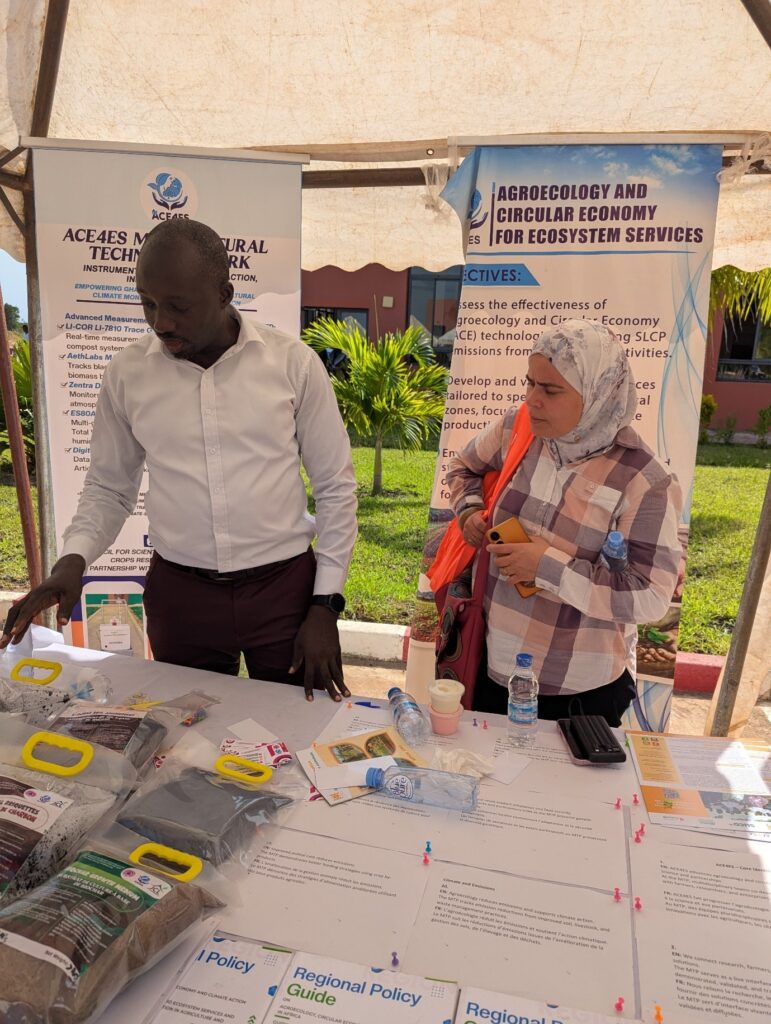
Innovations on Display: Char-Derived Products for Climate-Smart Agroecology At a dedicated exhibition stand, Dr. Asante showcased a suite of char-derived innovations developed under the ACE4ES project -all supported by the Climate and Clean Air Coalition (CCAC), a global initiative dedicated to reducing short-lived climate pollutants:
• Biochar -a high-stability carbon amendment produced from agricultural residues, used to improve soil health, sequester carbon, and reduce the need for synthetic fertilisers
• Briquettes -clean-burning biomass briquettes that provide a low-emission, affordable energy alternative to open-field burning
• Biochar enriched with organic and inorganic fertilisers -a value-added product that combines biochar’s soil-conditioning properties with targeted nutrient delivery, offering smallholder farmers a practical, cost-efficient alternative to conventional chemical inputs.
These innovations directly address the challenge of agricultural biomass burning – a widespread land management practice in West Africa that contributes significantly to short-lived climate pollutants, greenhouse gas emissions, and soil degradation. The ACE4ES project, supported by CCAC, offers science-based, farmer-accessible solutions that transform what is typically burned into high-value agricultural inputs.
Regional Policy Guide Distributed to African Delegations
Alongside the product exhibition, Dr. Asante distributed the ACE4ES regional policy guide on agroecology, circular economy, and climate action to representatives of African countries present at the fair — ensuring that evidence-based policy recommendations reach decision-makers across the continent.
Technical Contributions: Biomass Burning and Associated Pollutants
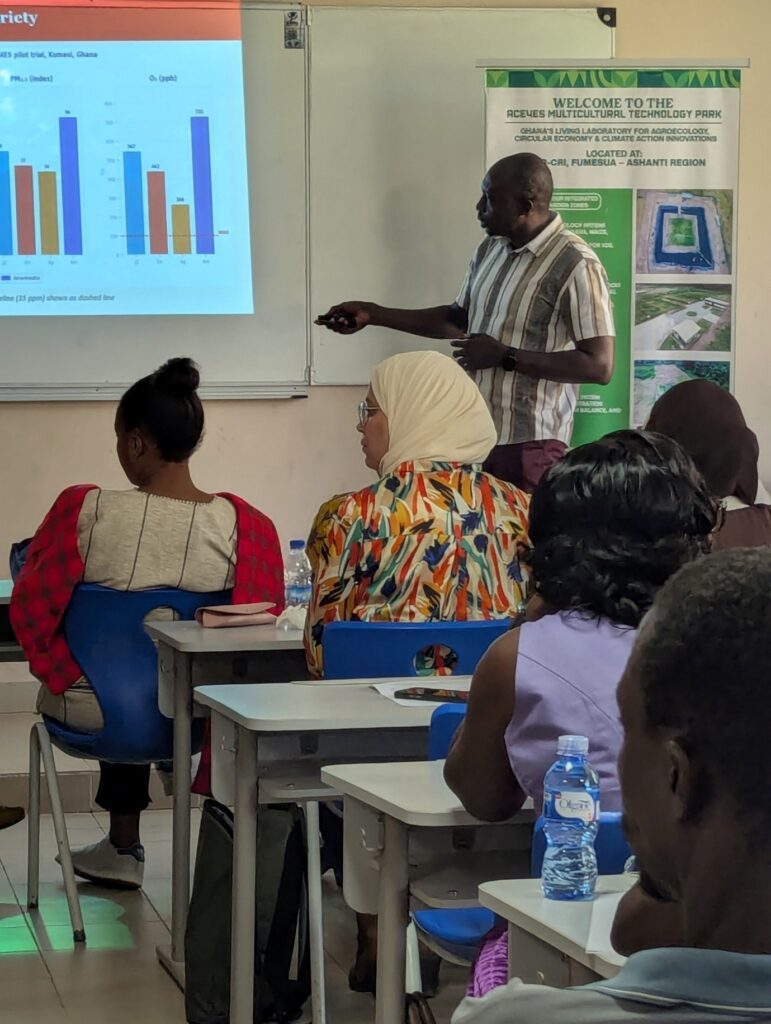
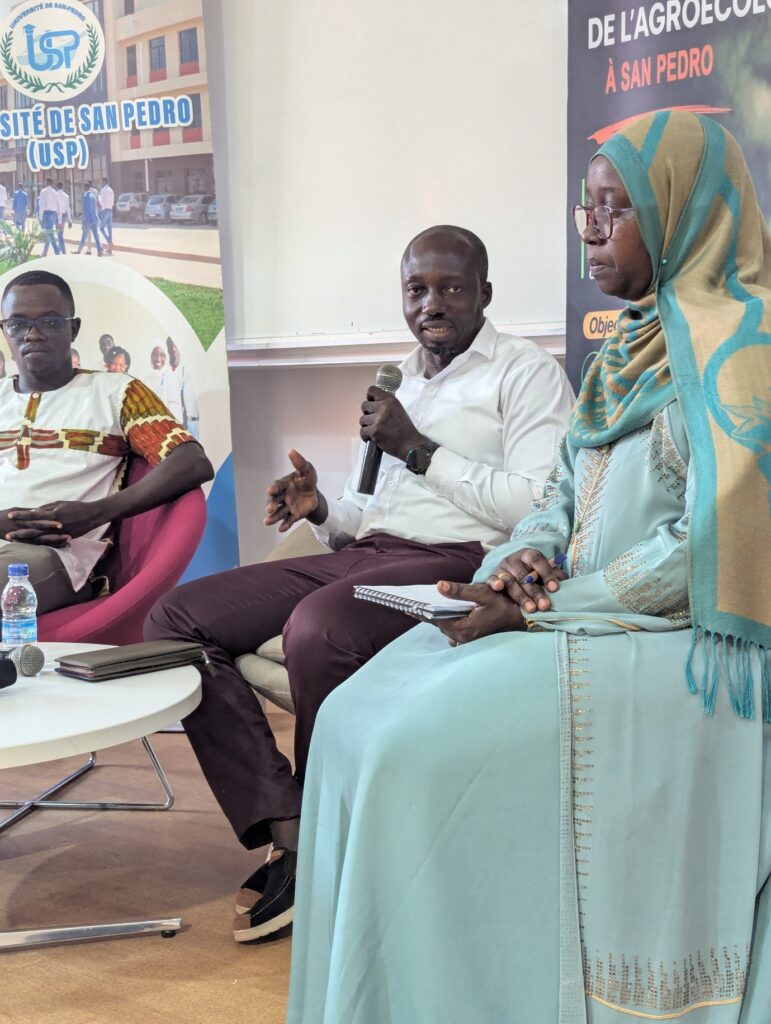
Dr. Asante also participated in key technical sessions on biomass burning and associated pollutants, presenting research findings on emission patterns, short-lived climate pollutant profiles, and the environmental and health implications for farming communities – linking the science directly to the practical solutions on display at the ACE4ES exhibition stand. The ACE4ES project and its CCAC-supported innovations represent a new generation of integrated solutions that simultaneously address climate change, soil degradation, and food insecurity in Africa.
For further information: asante.kwaku@gmail.com | ACE4ES Consortium | CSIR-CRI, Kumasi, Ghana
