
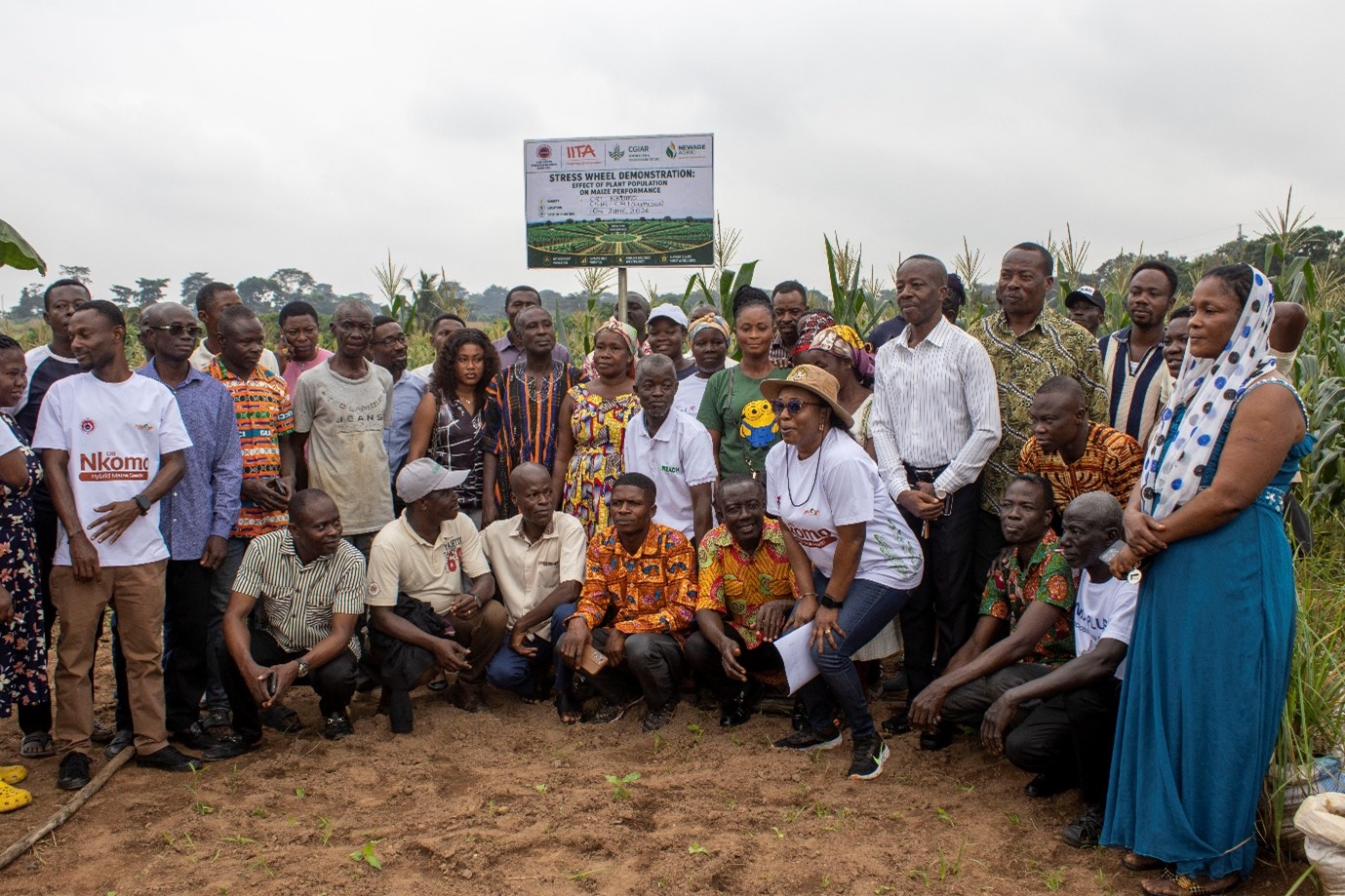
CSIR-CRI FIELD DAY SHOWCASES MAIZE PLANT POPULATION AND HYBRID SEED PRODUCTION TECHNOLOGIES TO FARMERS
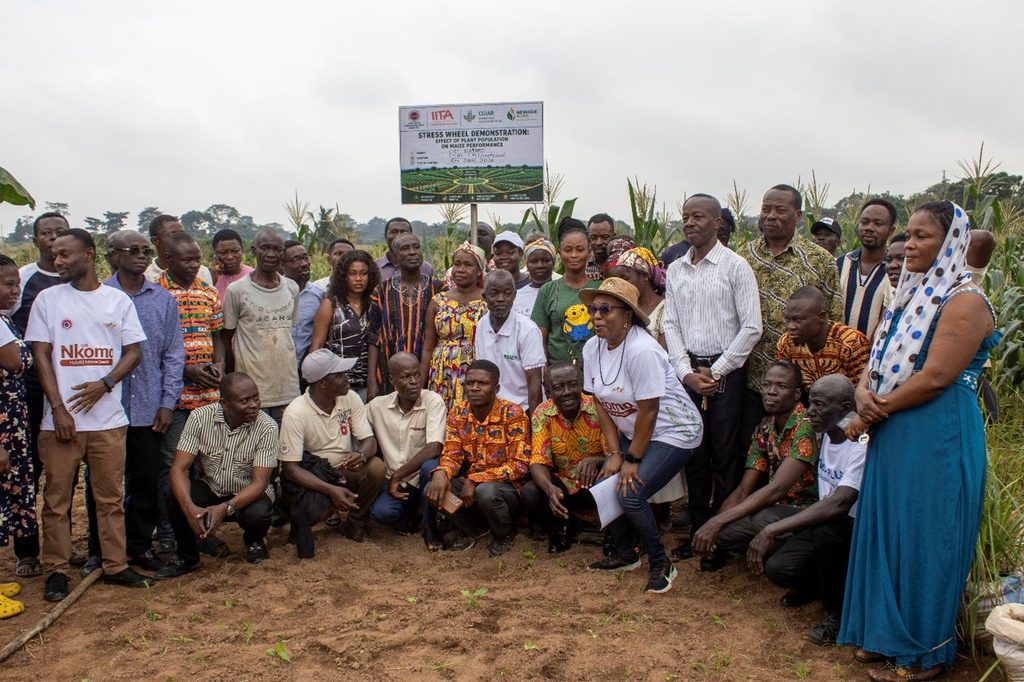
The CSIR-Crops Research Institute (CSIR-CRI), with support from the IITA Breeding for Tomorrow Project, organized a Field Day for 70 farmers to demonstrate improved maize production practices and provide practical knowledge on hybrid maize seed production.
The activity was coordinated by Dr. Priscilla Francisco Ribeiro, Ghana Project Coordinator for the Breeding for Tomorrow Project at CSIR-CRI and Maize Breeder at the Institute. The Field Day formed part of the project’s efforts to bring improved maize technologies and practical knowledge closer to farmers.
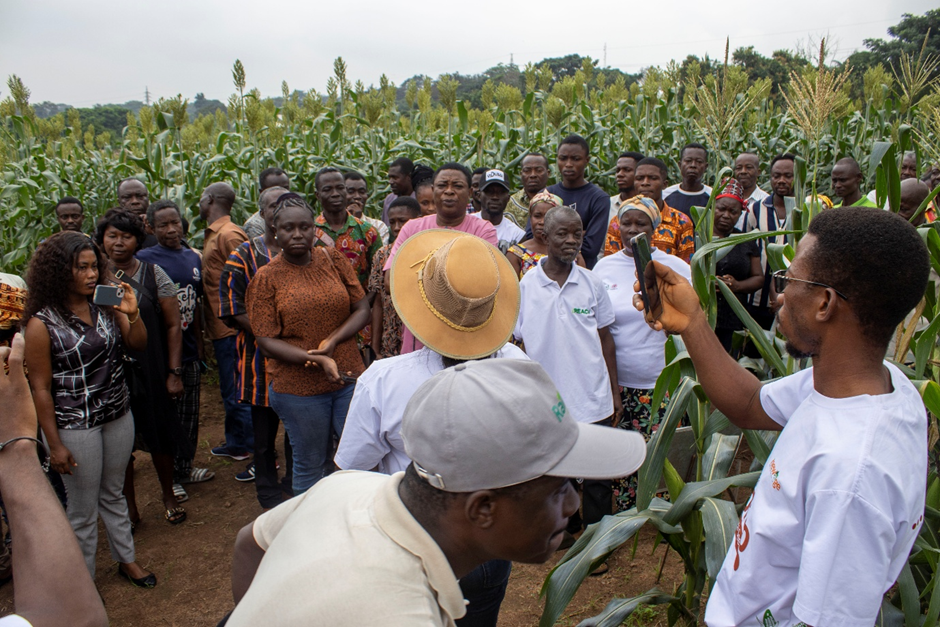
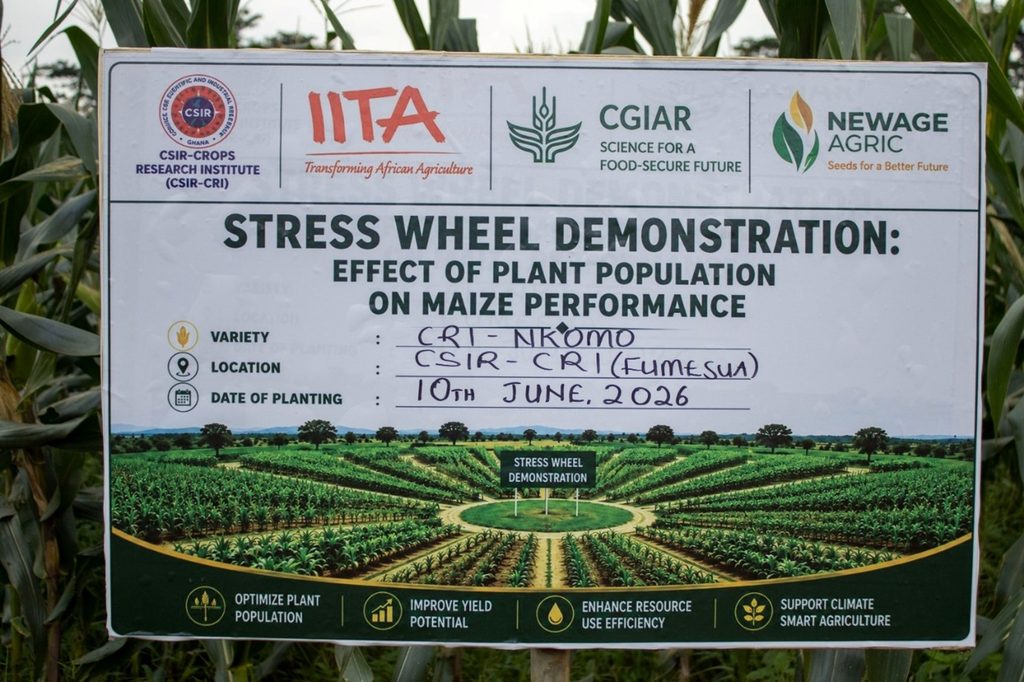
A major highlight was the Stress Wheel Demonstration, which enabled farmers to observe maize grown at different planting distances and plant populations. CSIR-CRI researchers explained how plant population influences competition for nutrients, water and sunlight, and consequently crop growth and grain yield. Farmers were able to visually compare the different treatments and appreciate the importance of appropriate spacing and optimum plant population for improved maize productivity.
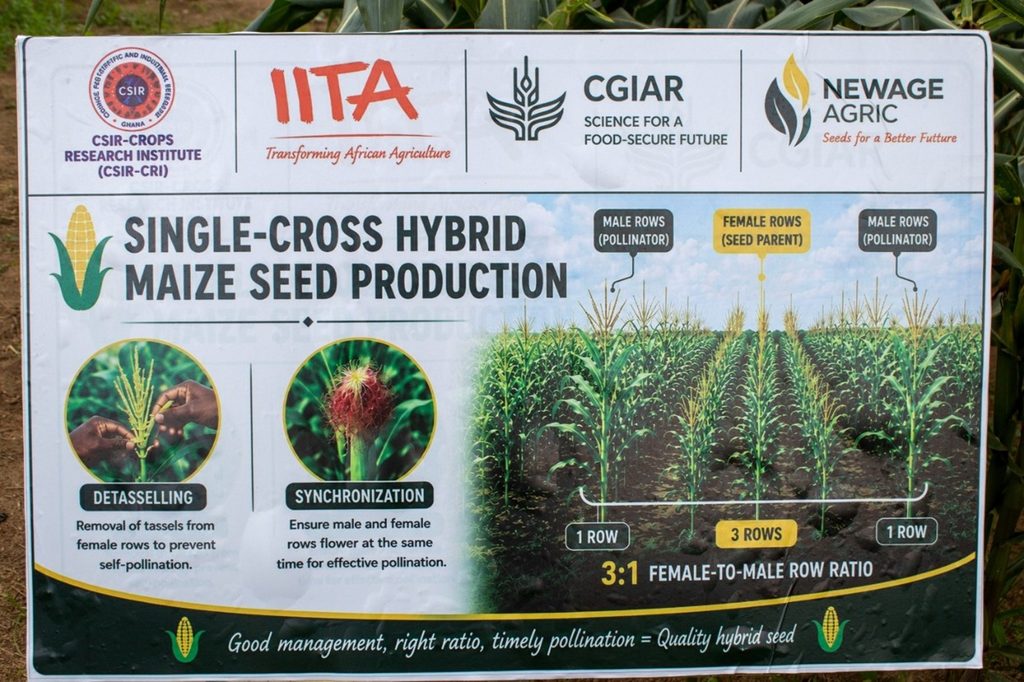
Farmers were also taken through a practical demonstration on how single-cross hybrid maize seed is produced. They were shown the male and female parental lines and introduced to key operations, including the 3:1 female-to-male row arrangement, flowering synchronization, rouging, and timely detasseling of the female parent. The demonstration helped farmers understand how controlled pollination between two parental lines results in the production of hybrid seed.
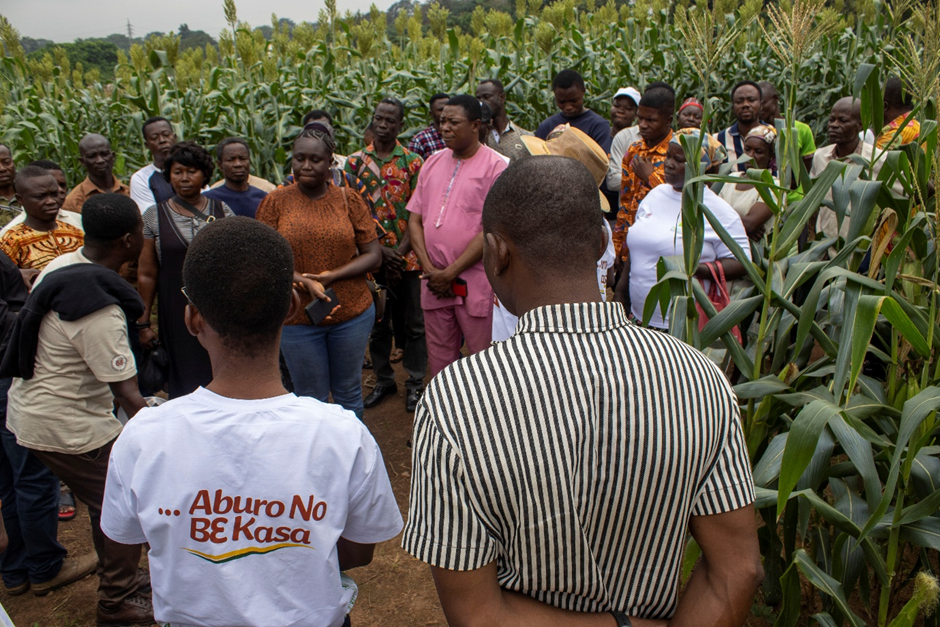
According to Dr. Ribeiro, practical demonstrations are important because they allow farmers to see and understand technologies rather than simply hear about them.
“When farmers see the different planting populations in the field and observe how hybrid seed is actually produced, the science becomes practical and easier to understand. This is an important part of taking breeding innovations from research to farmers.” The Field Day was highly interactive, with farmers asking questions, sharing experiences and engaging directly with CSIR-CRI researchers. It provided an opportunity to translate technical concepts in maize breeding, seed production and agronomy into practical knowledge that farmers can relate to their own production systems.
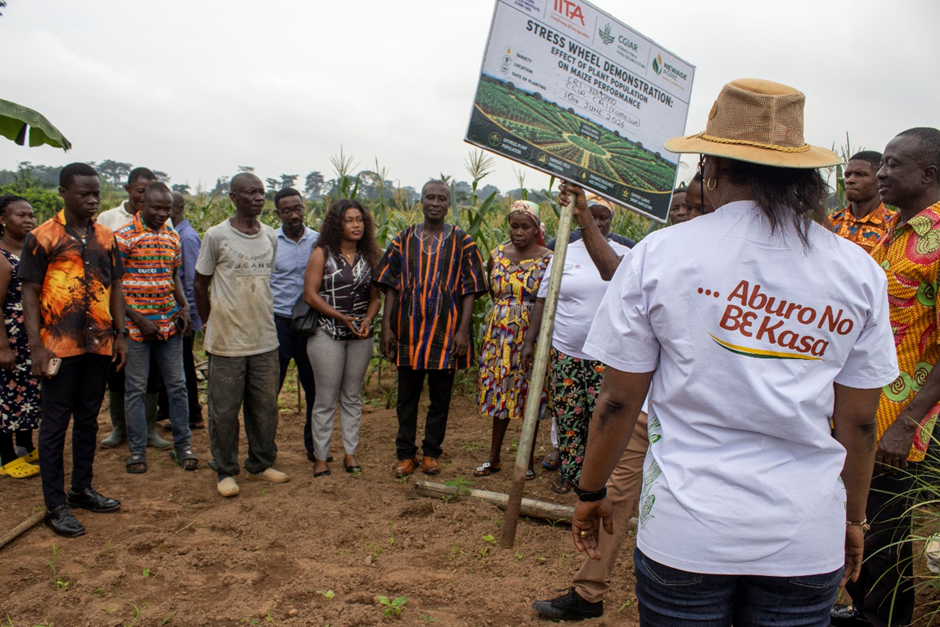
With 70 farmers participating, the Field Day demonstrated strong farmer interest in improved maize technologies. Through the IITA Breeding for Tomorrow Project, CSIR-CRI is helping to bridge the gap between research and farmers by promoting improved seed technologies and appropriate agronomic practices for increased maize productivity and improved livelihoods in Ghana.
