
FROM RESEARCH PLOTS TO FARMERS’ FIELDS: THE NEW OKRA VARIETIES WINNING HEARTS ACROSS GHANA
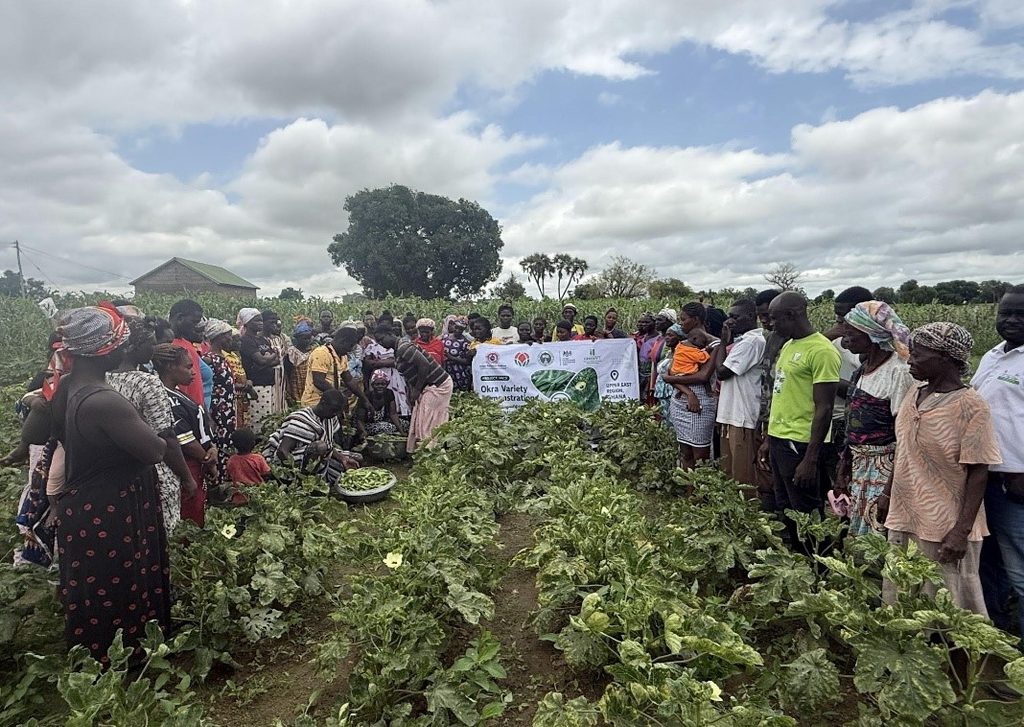
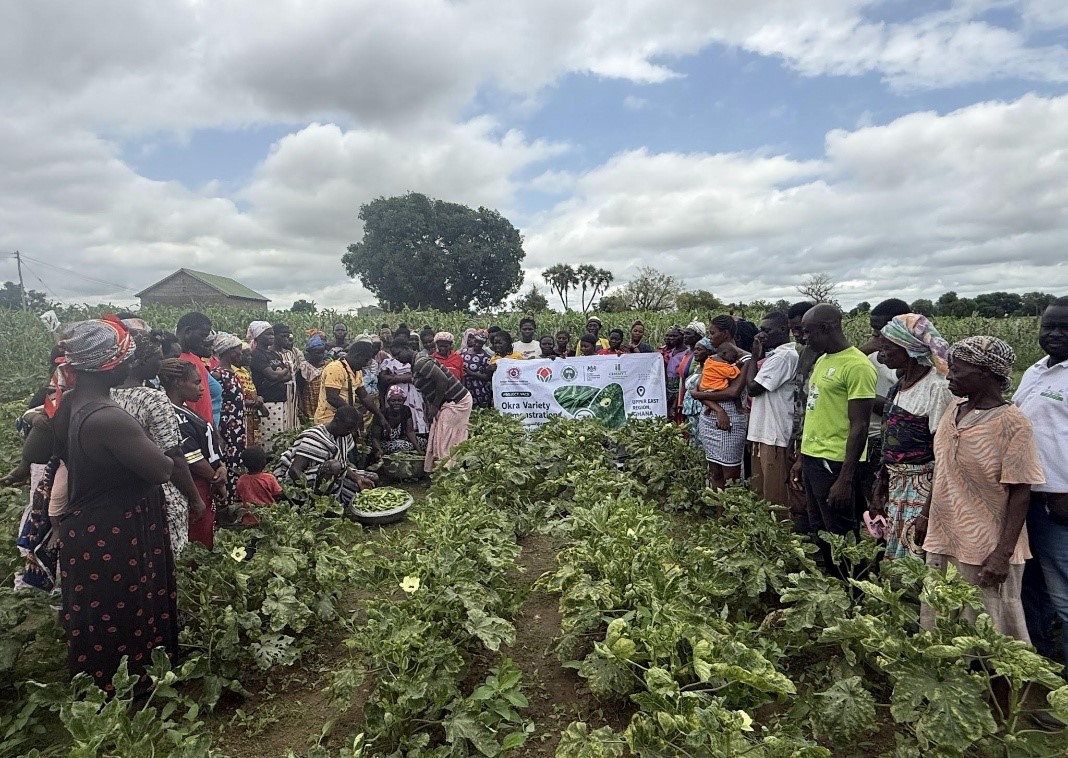
In the sun-baked fields of Boadi in the Ashanti Region, and across Awarodone, Winkogo, Kpatia and Bonia in the Upper East, something quietly exciting has been happening. Farmers have been walking through rows of okra that look a little different – pods a little longer, plants a little sturdier – and asking the same question: where can I get these seeds?
That question is exactly what a new wave of demonstration trials, led by CSIR-Crops Research Institute and the World Vegetable Center (WorldVeg), was designed to spark.
It Started with Listening
Long before any seed hit the soil, the team did something simple but powerful: they listened. A survey across Ghana’s major okra-growing areas, followed by a market segmentation workshop in May 2025, brought farmers, extension agents, and processors into one room to say plainly what they wanted from an okra plant – the pod shape, color, the yield, the resilience to disease. That feedback became the blueprint guiding every variety now being tested.Three Varieties, One Big Question: Will They Thrive Here?
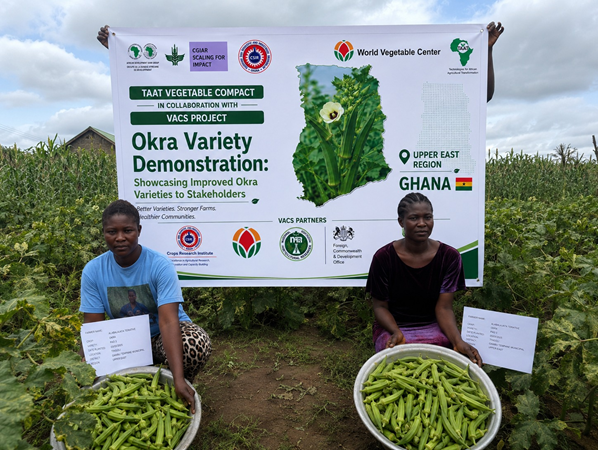
Two of the stars of the demonstration, AVOK1504 (BENGO3) and AVOK1502 (BENGO6), are long-pod varieties recently released in Benin – proven elsewhere, but never before put to the test in Ghanaian soil. Joining them is CRIOFK, a promising medium-pod line that hasn’t been released anywhere yet. All three now face the ultimate exam: Ghana’s growing conditions and Ghana’s farmers.
“We want farmers to see and assess the varieties under their own production conditions,” explains Dr. Paul Zaato, Research Associate at WorldVeg, “while giving extension officers and private seed companies an opportunity to understand their performance and acceptability.” That, he says, is how demand gets created—and how better seed eventually finds its way into more hands.
Why This Matters Beyond the Farm
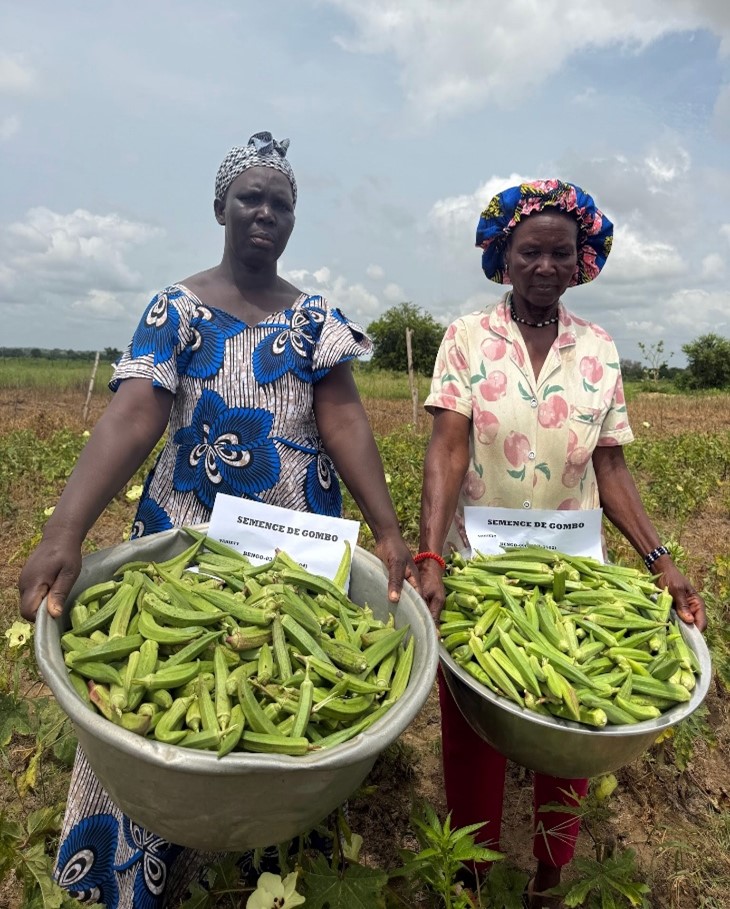
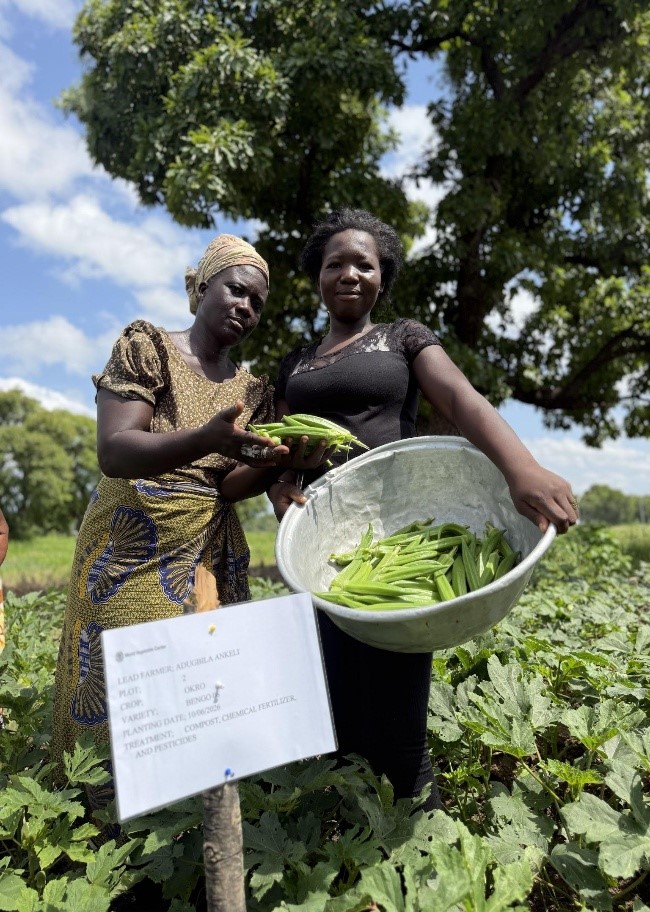
Okra isn’t just another crop in Ghana—it is a nutritional staple and a livelihood for thousands of rural households. Yet for years, low-yielding, disease-prone local varieties have capped what farmers could earn and grow. Closing that gap means giving people access to seed that performs—and proving performance takes exactly the kind of on-the-ground trial now unfolding in these four regions.
Dr. Jacinta Opoku, Research Scientist at CSIR-CRI, puts it simply: “The views and experiences of farmers, extension officers and other value-chain actors are important in identifying varieties that can meet production, market and consumer needs.”
Seed Companies Are Watching Closely
Perhaps the most telling sign of momentum: private seed companies have been showing up to these demonstrations too—walking the fields, talking to farmers, gauging appetite. Dr. Opoku believes this kind of firsthand exposure could be the nudge that motivates companies to invest in multiplying and producing seed of the varieties that prove themselves—once the necessary release and regulatory steps are complete—ultimately putting better seed within reach of more farmers.
Extension officers are getting something valuable too: hands-on familiarity with the new varieties, so they can guide farmers on how to grow and manage them once they’re available.
What’s Next
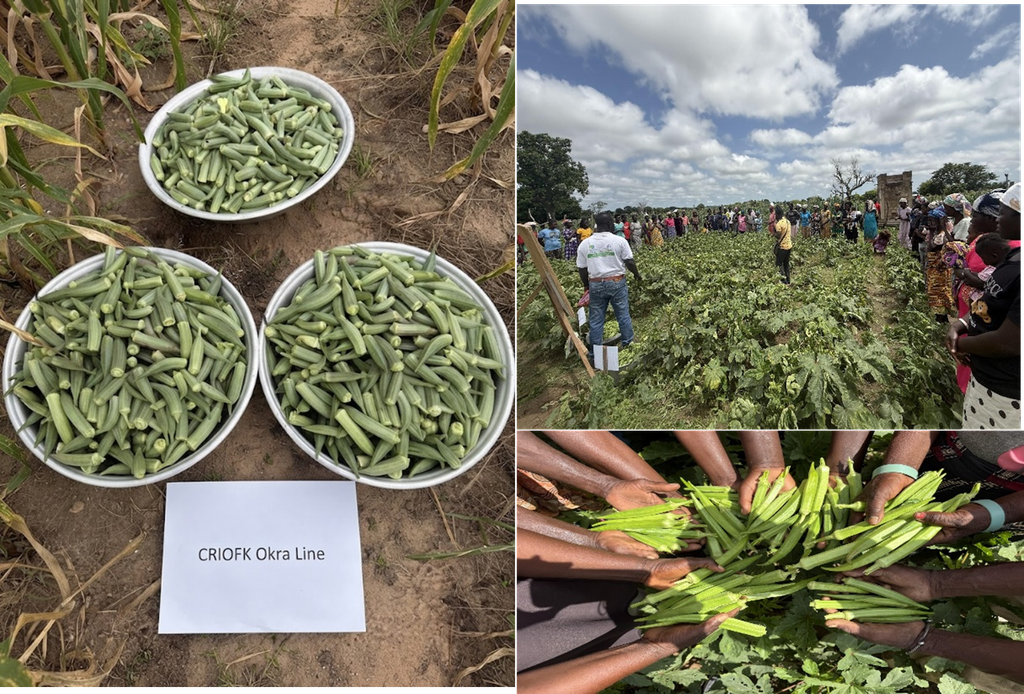
The story doesn’t end in the field. The team is now turning its attention to the qualities that matter after harvest—dehydration suitability, mucilage content, color retention, and shelf life—data that will shape how well these varieties hold up for processing, storage, and cutting down post-harvest losses.
As Dr. Zaato frames it, the goal was never just a better plant. It’s a stronger value chain—one that benefits farmers, seed companies, extension officers, processors, traders, aggregators, and consumers alike.
The evidence gathered from these demonstrations will help determine whether CRIOFK earns its release in Ghana, and how widely BENGO3 and BENGO6 can be promoted across the country’s different growing regions.
The trials and field days are still underway—stay tuned as the story continues to unfold.
This initiative is implemented by the Vision for Adapted Crops and Soils (VACS) Okra Breeding Program, funded by the CGIAR/CIMMYT–FAO VACS Partnership, hosted at CIMMYT, and supported by a coalition of 10 government donors, 27 non-governmental organizations, private sector champions, and 4 flagship implementing organizations, alongside the Vegetable Compact of the Technologies for African Agricultural Transformation (TAAT) program, funded by the African Development Bank (AfDB).
Contributors: Jacinta Adoma Opoku, Paul Zaato and Mathieu Ayenan
