Ghana Takes the Measure of Its Own Rice Fields
CSIR-CRI and MIT launch the country’s first national Tier 2 rice methane mapping Programme — catalyzed by CCAC investment in ACE4ES, and carried to national scale through a Global Methane Hub-funded partnership with MIT
By Communications Unit | CSIR-Crops Research Institute, Fumesua, Kumasi, Ghana
Kumasi, Ghana · June 2026
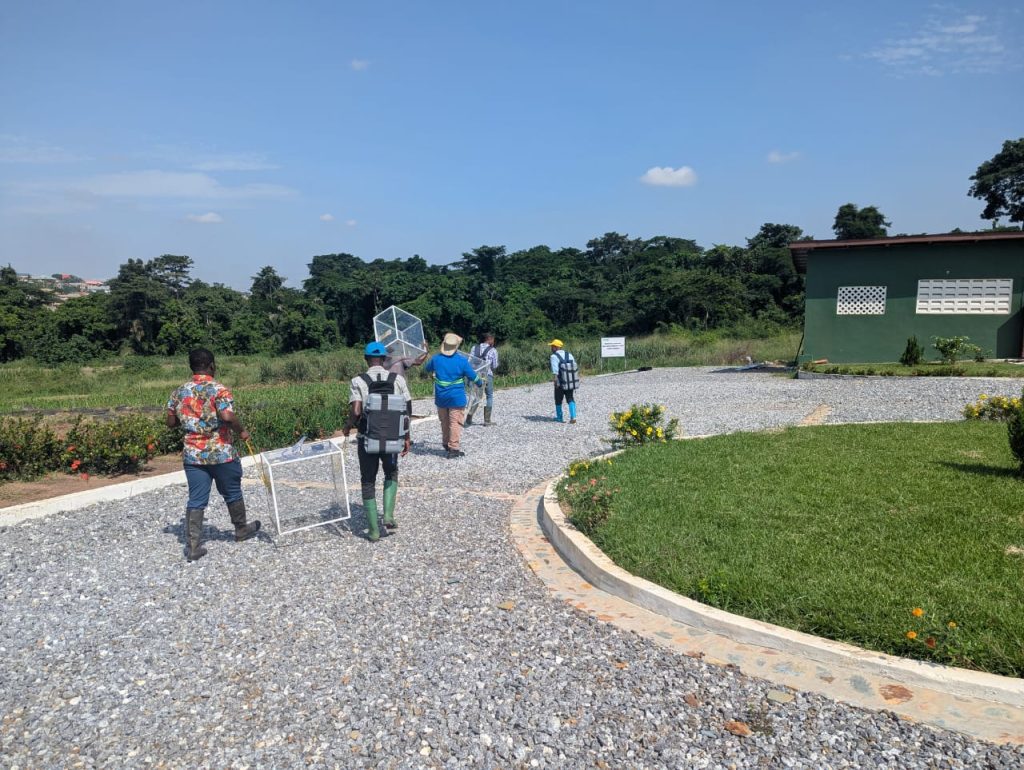
FUMESUA, KUMASI — For the first time in Ghana’s history, a national scientific Programme is measuring rice paddy methane emissions using internationally recognized field methodology — not borrowed global averages. The project, led by the Council for Scientific and Industrial Research – Crops Research Institute (CSIR-CRI) in collaboration with the Massachusetts Institute of Technology (MIT), is measuring greenhouse gas fluxes from rice paddies across five agroecological zones, generating the country-specific emission factor dataset that Ghana’s climate reporting and climate finance ambitions urgently need.
The national mapping exercise builds directly on the foundations laid by ACE4ES — the Agroecology and Circularity for Ecosystem Services Consortium — a multi-country Program funded by the Climate and Clean Air Coalition (CCAC) / UNEP from January 2024 to December 2025. During ACE4ES implementation, the consortium established the Multicultural Technology Park (MTP) on Agroecology, Circular Economy and Climate Action at CSIR-CRI’s Fumesua station — a living research platform that enabled the first experimental agroecological trials and, critically, Ghana’s first pilot greenhouse gas measurements in rice paddies. It was this demonstrated measurement capacity that attracted the attention of the Global Methane Hub, which funded MIT to expand the exercise to a full national methane mapping Programme. CSIR-CRI accepted the invitation to partner on the national campaign — embracing it as a direct build-up of what the consortium started at the MTP.
“The technology is not the bottleneck—AWD works in Ghana. What has been missing is the measurement infrastructure to prove it at national scale. This project changes that.”
— Dr. Kwaku Onwona-Hwesofour Asante, Head, Cassava and Related Value Chains Section, CSIR-CRI
Why Tier 2 Measurement Matters
Under the Intergovernmental Panel on Climate Change (IPCC) framework, countries report agricultural methane using one of three tiers of methodological rigor. Ghana, like most sub-Saharan African nations, has historically relied on Tier 1 — the application of default global emission factors to national production statistics. While technically acceptable for initial reporting, Tier 1 estimates are derived from measurements conducted largely in Asia and temperate climates and do not reflect the specific soil types, water management practices, rice varieties, or seasonal conditions that characterize Ghanaian lowland rice systems.
“ACE4ES gave us the platform to ask harder scientific questions—and the MIT partnership gives us the tools to answer them. Ghana’s rice farmers deserve to be counted in the global methane accounting, not estimated.” — Dr. Kwaku Onwona-Hwesofour Asante, CSIR-CRI
Five Zones, One National Picture
The measurement campaign spans five agroecological zones carefully selected to represent the breadth of Ghana’s rice production landscape:
Dawhenya (Greater Accra Region): Coastal lowland irrigated system — one of Ghana’s oldest and most intensively managed rice irrigation schemes.
Donaso-Ejisu / Fumesua (Ashanti Region): Forest-transition zone, home to CSIR-CRI’s Fumesua research station and the ACE4ES Multi-Cultural Technology Park. Represents the forest-savanna transitional belt and its distinct water and soil characteristics.
Kintampo (Bono East Region): Guinea savanna transition — a rapidly expanding rice-producing area with a mix of rainfed and supplementary irrigated production.
Tamale (Northern Region): The heart of Ghana’s northern rice belt — Sudan savanna, seasonal flooding, and a large smallholder rainfed production system.
Navrongo (Upper East Region): Semi-arid conditions, distinct soil carbon dynamics, and proximity to Burkina Faso — providing a West African drylands emission data point largely absent from current literature.
Together, these five zones provide a nationally representative dataset capable of underpinning a Ghana-specific methane emission factor that is both scientifically defensible and practically usable for inventory, carbon project, and policy purposes.
Showcased on the International Stage
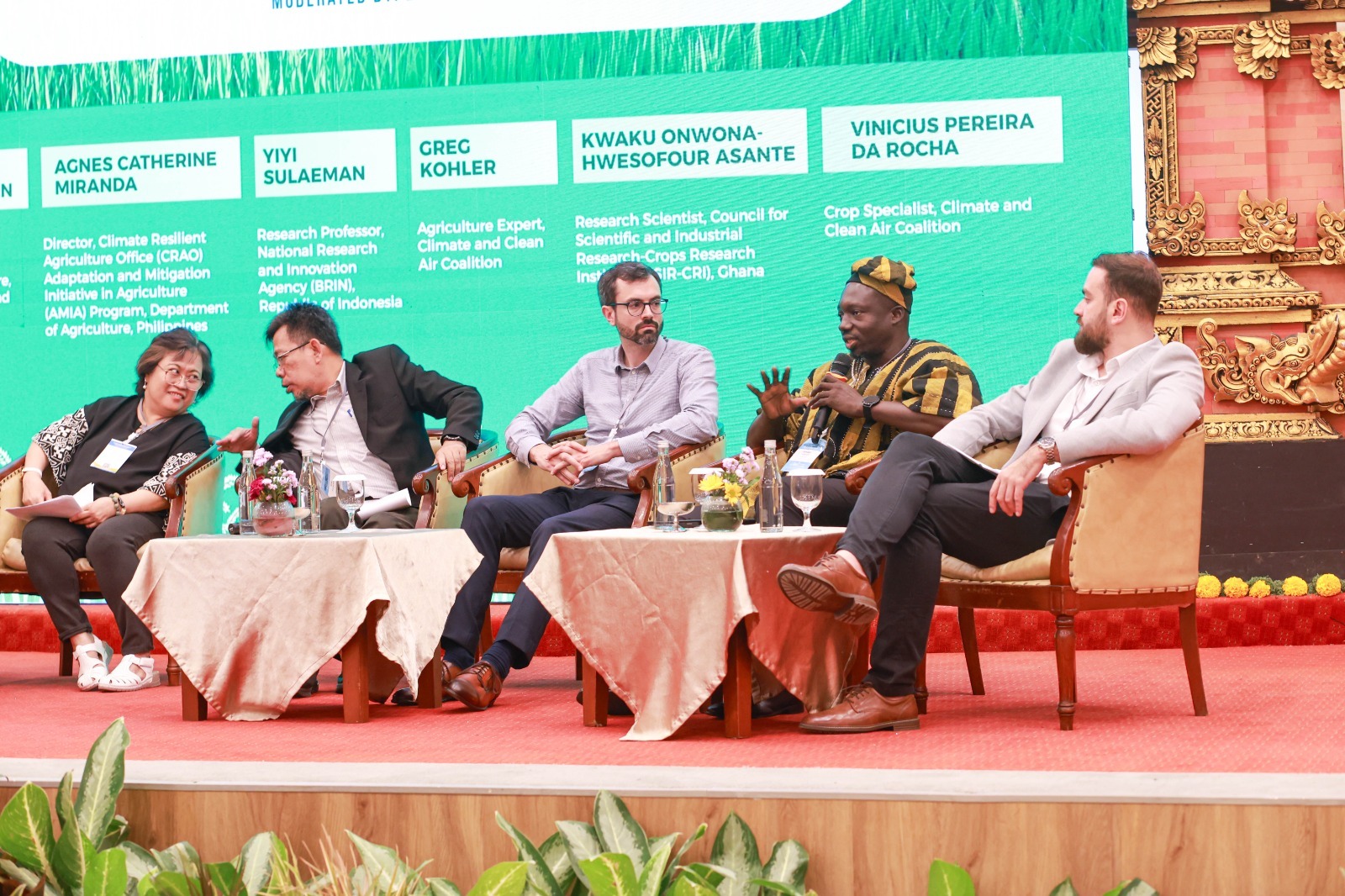
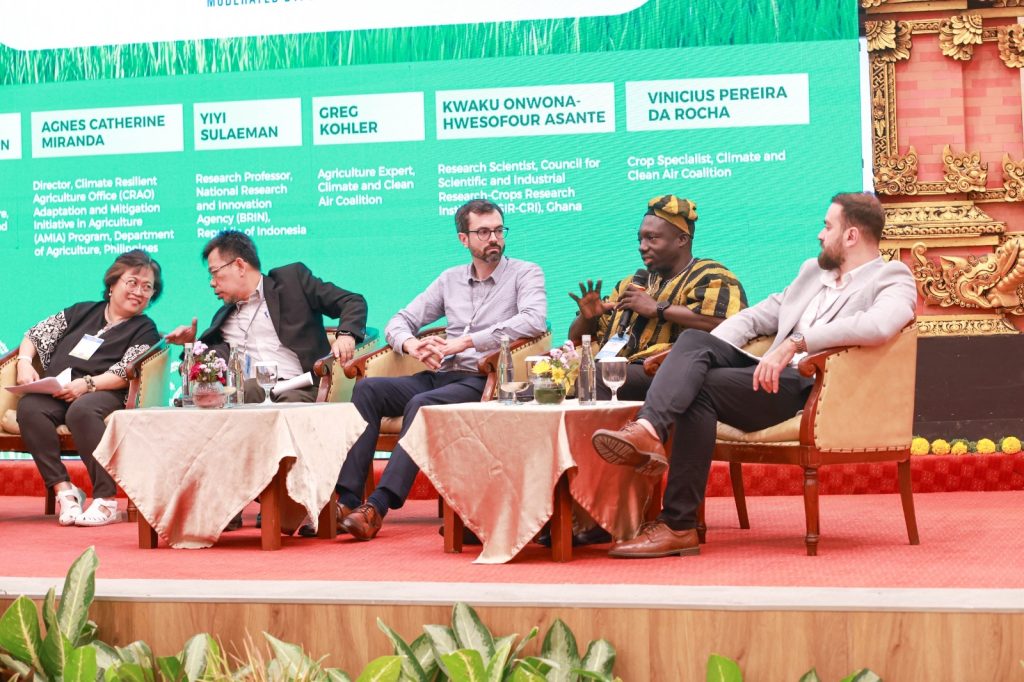
The significance of the work was recognised at the FAO-convened Knowledge Exchange on Frontier Technologies for Low-Emission Rice and Livestock Systems (Bali, Indonesia, 24–26 June 2026), where Dr. Kwaku Onwona-Hwesofour Asante, Head of the Cassava and Related Value Chains Section at CSIR-CRI and Principal Investigator of the ACE4ES Ghana Programmeme, represented Africa in the Country Perspectives panel alongside colleagues from Thailand, Burkina Faso, the Sustainable Rice Platform, and the GEF Food Systems Integrated Programmeme.
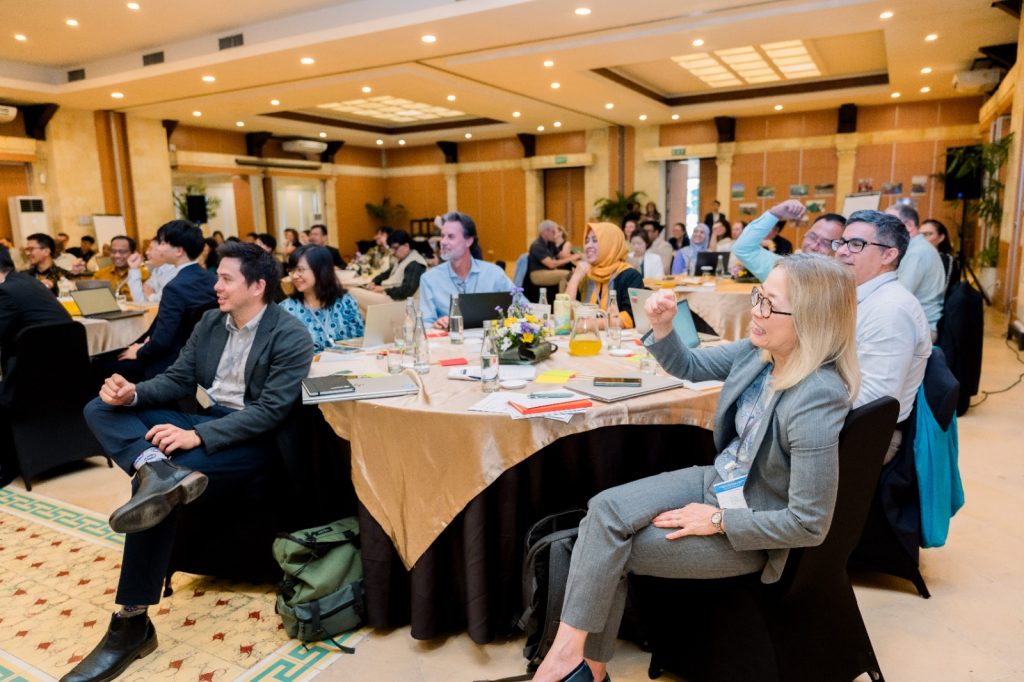
The Bali event — co-organized by FAO RAP, CCAC/UNEP, BRIN Indonesia, the Mekong Institute, GEF FSIP, and Japan’s MAFF MIDORI initiative — brought together governments, research institutions, farmer organizations, technology providers, and climate finance practitioners from across Asia-Pacific and Africa to advance scalable low-emission solutions for rice and livestock systems.
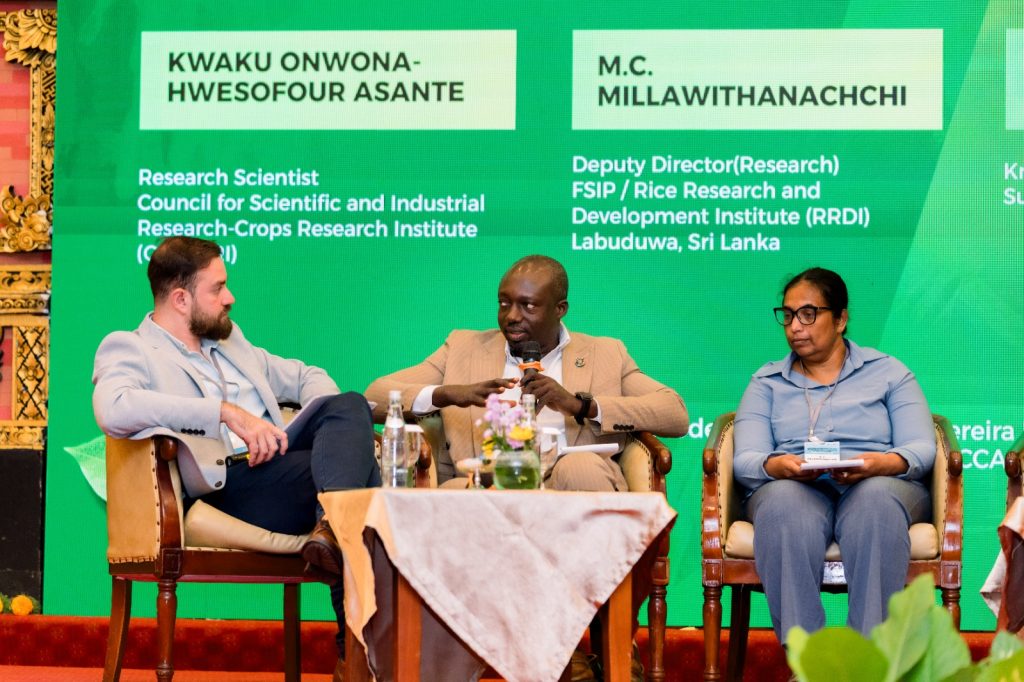
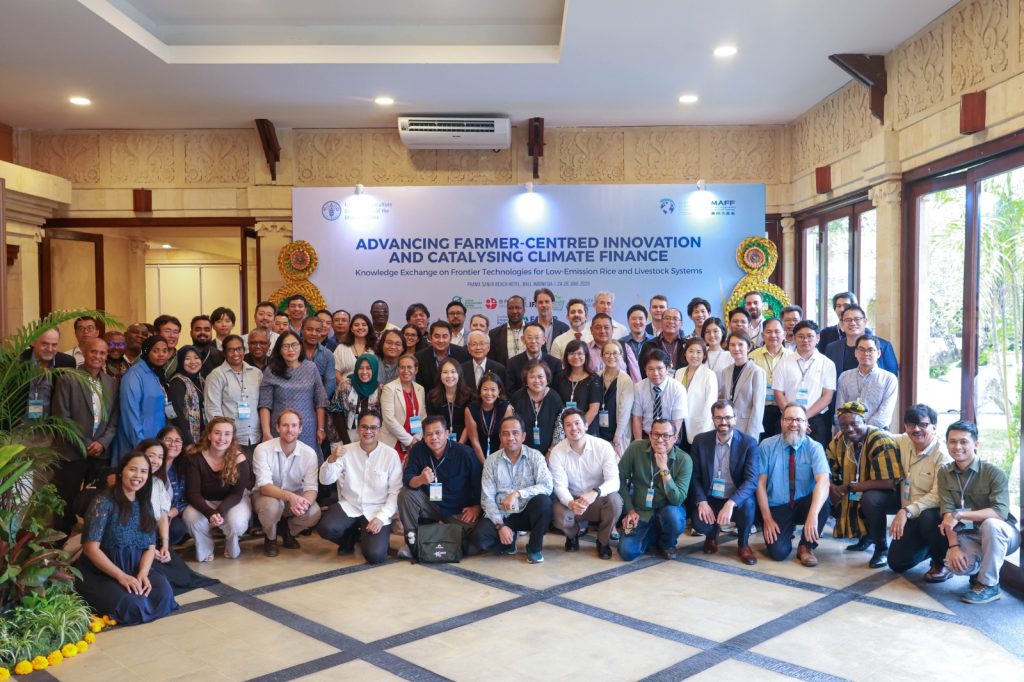
In his intervention, Dr. Asante identified the CSIR-CRI × MIT Tier 2 mapping Programme as Africa’s most concrete answer to a question that dominated the two-day exchange: how do you make Measurement, Reporting, and Verification (MRV) work for smallholders who lack laboratory infrastructure? His argument: invest in national-scale Tier 2 infrastructure as a public good, not a project cost — and embed it in national GHG inventory architecture so it outlasts any single grant cycle.
Dr. Asante also presented the CSIR-CRI and ACE4ES Programme in Session 8 — the event’s closing outcome panel — which established a formal South-South Collaboration Framework between the CCAC FARMERS’ First Network in Africa and the ASEAN Climate Resilience Network, linking the two regions’ farmer communities ahead of COP31.
A Signal for the Region
Ghana’s move to Tier 2 rice methane measurement sends a signal that matters well beyond its borders. West Africa is home to rapidly expanding rice production systems — in Nigeria, Benin, Côte d’Ivoire, and Senegal as well as Ghana — and the region’s absence from high-quality IPCC inventory data has historically resulted in its emissions being both underestimated and undercounted in global climate modeling.
ACE4ES’s multi-country reach across Ghana, Nigeria, Benin, and Tanzania positions the consortium to support a regional harmonization agenda — building on Ghana’s national dataset to develop a West African measurement network that would give the sub-region a unified, credible voice in global methane accounting. At the Bali exchange, Dr. Asante called explicitly for a regional Tier 2 harmonization framework modeled on the approach IRRI has led for Asia-Pacific — adapted for West African soil, climate, and institutional conditions.
“If this exchange produces one thing that travels back to West Africa, it should be a pathway from Tier 1 defaults to Tier 2 data that smallholder systems can actually generate — and a regional framework to make that data count.”
— Dr. Kwaku Onwona-Hwesofour Asante, speaking at FAO Knowledge Exchange, Bali, June 2026
About the Institutions
CSIR-Crops Research Institute (CSIR-CRI) is a public agricultural research institution under the Council for Scientific and Industrial Research, Ghana. Based in Fumesua, Kumasi, CSIR-CRI leads research on cereals, root and tubers, horticultural crops, legumes and soil seeds among others, and hosts the ACE4ES Ghana Programme and its Multi-Cultural Technology Park.
ACE4ES — Agroecology and Circular Economy for Ecosystem Services — is a multi-country consortium funded by the Climate and Clean Air Coalition (CCAC) / UNEP, implemented from January 2024 to December 2025. Operating across Ghana, Nigeria, Benin, and Tanzania, ACE4ES integrated AWD, biochar, bio-inputs, and biomass valorization to reduce short-lived climate pollutants and advance circular-economy food systems. In Ghana, the consortium established the Multicultural Technology Park (MTP) on Agroecology, Circular Economy, and Climate Action at CSIR-CRI’s Fumesua station — a platform for experimental trials and Ghana’s first pilot rice paddy GHG measurements, which catalyzed the subsequent Global Methane Hub-funded national Tier 2 mapping exercise with MIT.
The Climate and Clean Air Coalition (CCAC) is a voluntary partnership of governments, intergovernmental organizations, businesses, scientific institutions, and civil society organizations committed to improving air quality and protecting the climate through actions to reduce short-lived climate pollutants. Hosted by UNEP.
The Global Methane Hub is an international philanthropic organization dedicated to supporting the reduction of methane emissions globally. The Global Methane Hub provided the funding for MIT to design and implement the National Rice Methane Mapping Program in Ghana, which CSIR-CRI joined as a national scientific partner, building on the pilot measurement experience generated through the ACE4ES Multicultural Technology Park.
— END —
MEDIA ENQUIRIES
Dr. Kwaku Onwona-Hwesofour Asante
CSIR-Crops Research Institute, Fumesua, Kumasi, Ghana
Principal Investigator, ACE4ES Ghana Programme
ACE4ES was funded by the Climate and Clean Air Coalition (CCAC) / UNEP (January 2024–December 2025) and implemented by CSIR-CRI in partnership with AfricaRice, PFAG, YILAA, and private-sector partners across Ghana, Nigeria, Benin, and Tanzania. The national Tier 2 rice methane mapping programme is funded by the Global Methane Hub through MIT, with CSIR-CRI as the national scientific partner.
