
CSIR-CRI Trains Youth in Modern Farming Technologies
The Crops Research Institute (CRI) of the Council for Scientific and Industrial Research (CSIR) has organized a two-day training programme for youth on modern agricultural practices, aimed at promoting technology adoption, strengthening seed systems, and enhancing collaboration between researchers and farming communities.
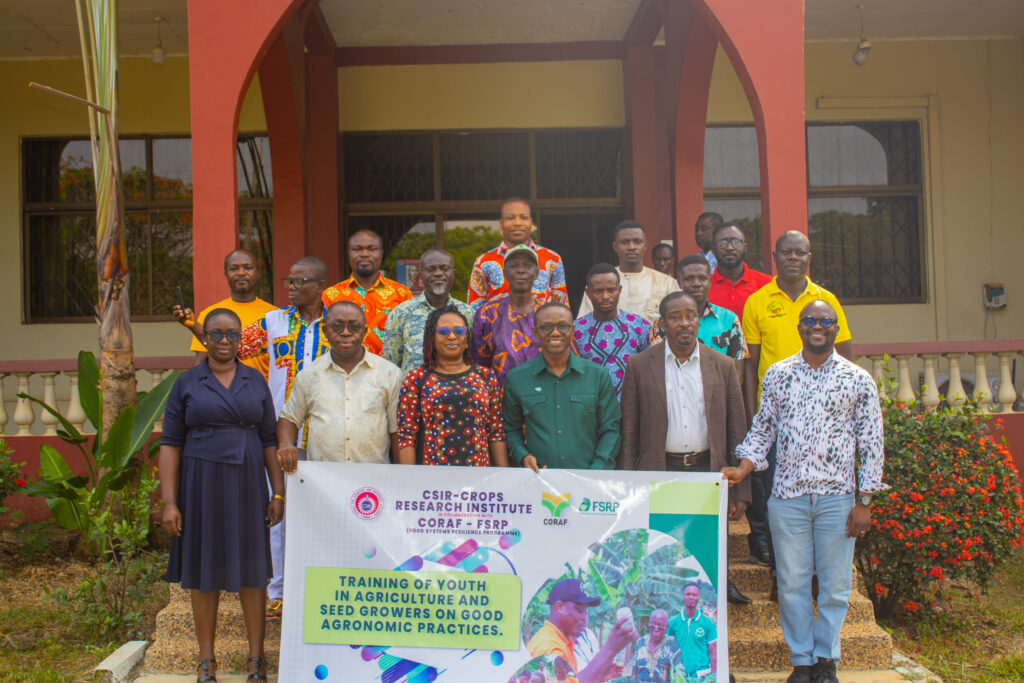
The training was held from 3rd to 4th February 2026 at the CSIR-CRI Training Centre, Fumesua, with support from the Food System Resilience Program (FSRP) through the West and Central African Council for Agricultural Research and Development (CORAF).
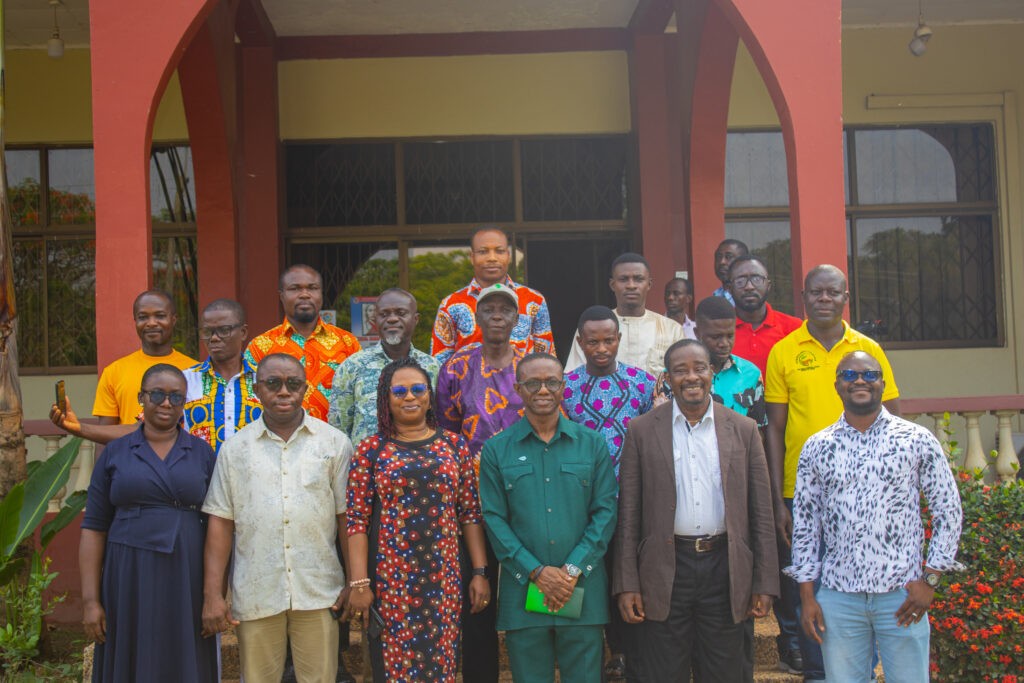
In his welcome address, the Director of CSIR-CRI, Professor Maxwell Darko Asante, emphasized that the Institute’s research mandate can only achieve impact when improved crop varieties and technologies are adopted by farmers. He stressed that modern scientific farming practices, combined with investment and supportive government policies, are essential for improving productivity and reducing dependence on food imports.
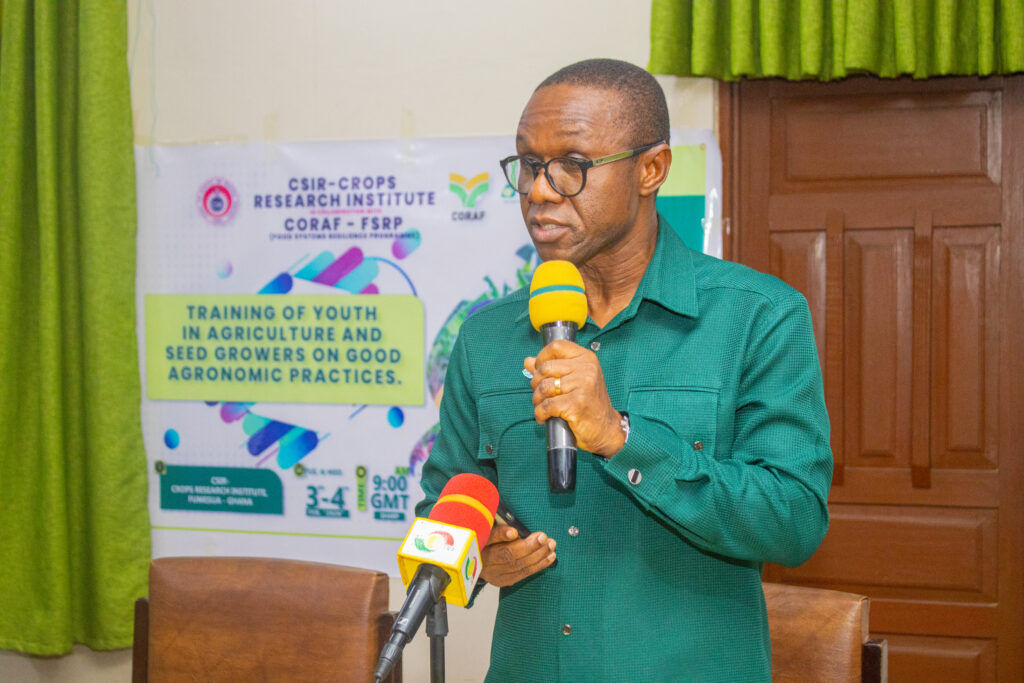
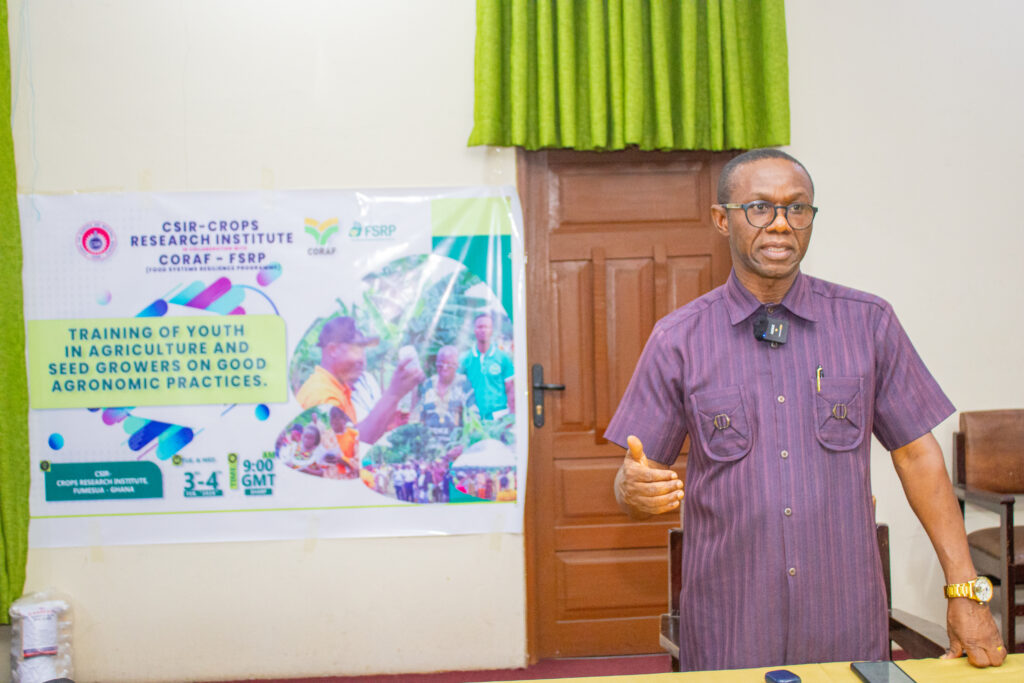
The Director encouraged participants to partner with the Institute by cultivating improved varieties on their farms and sharing the benefits with other farmers in their communities. Professor Asante urged participants to serve as ambassadors of CSIR-CRI by demonstrating the performance of improved technologies through their own farming activities. He reaffirmed the Institute’s commitment to working closely with farmers and the youth to improve productivity and promote sustainable agriculture.


An overview of the CORAF–FSRP programme was presented by the Coordinator of FSRP, Professor Emmanuel Otoo, who highlighted its role in supporting agricultural research and development in the sub-region. He stressed the importance of collaboration between research Institutions and farmers to ensure effective transfer and adoption of agricultural technologies.
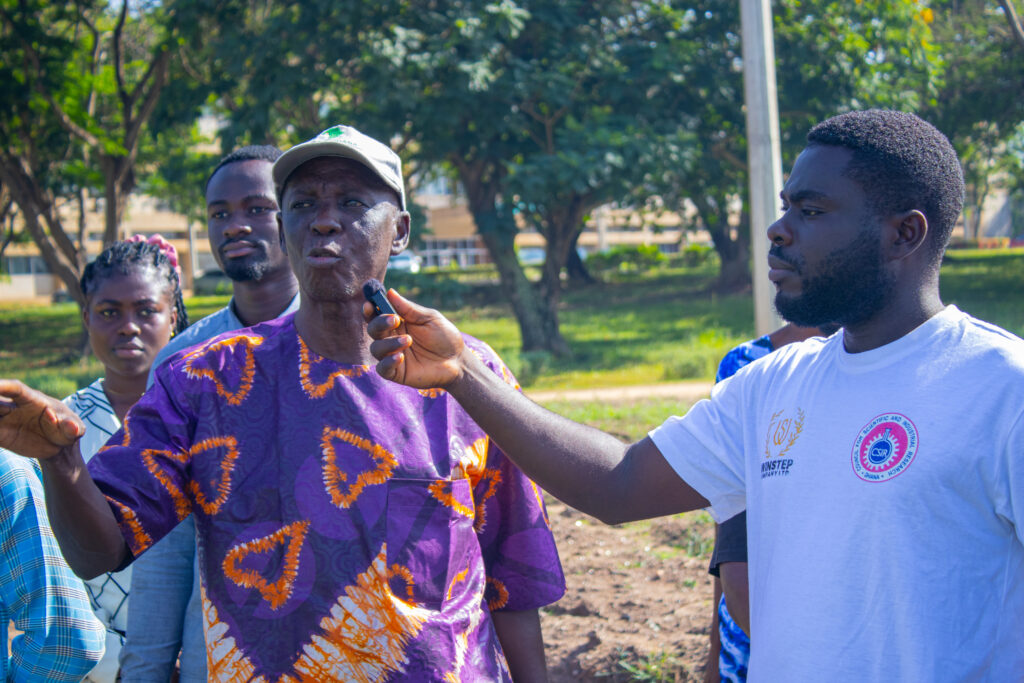
Speaking on the importance of partnership, Dr. Jonas Osei-Adu, Principal Research Scientist at the Institute noted that while CSIR-CRI has generated valuable research outputs, farmers play a critical role in extending the reach of these innovations. He explained that farmers act as conduits for transferring improved seeds and technologies to other farmers, and encouraged proper record-keeping to document progress and success stories.
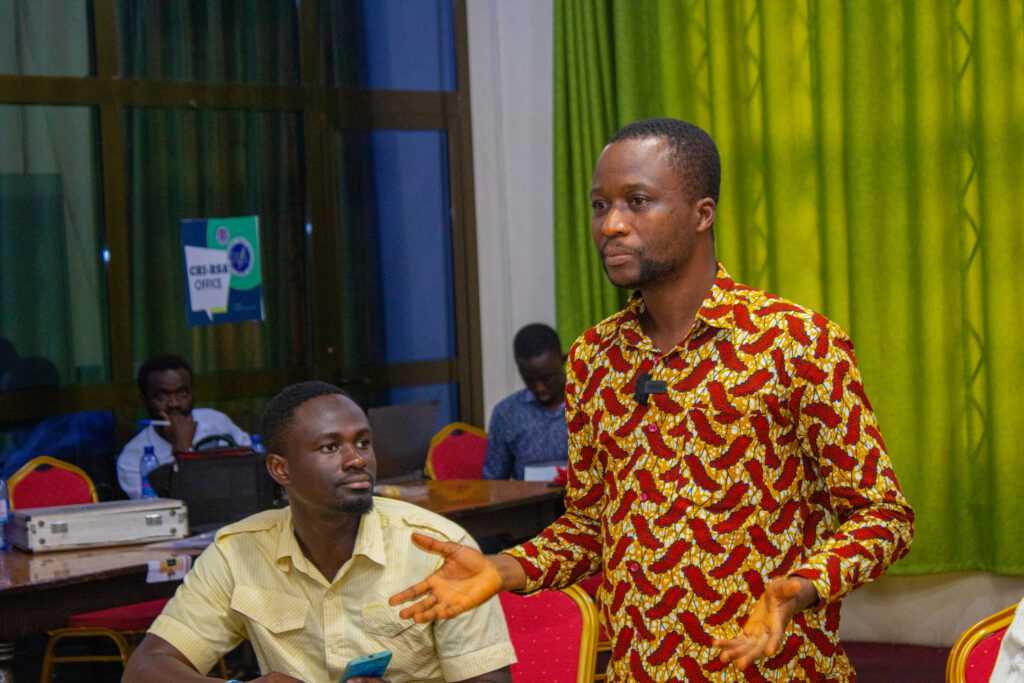
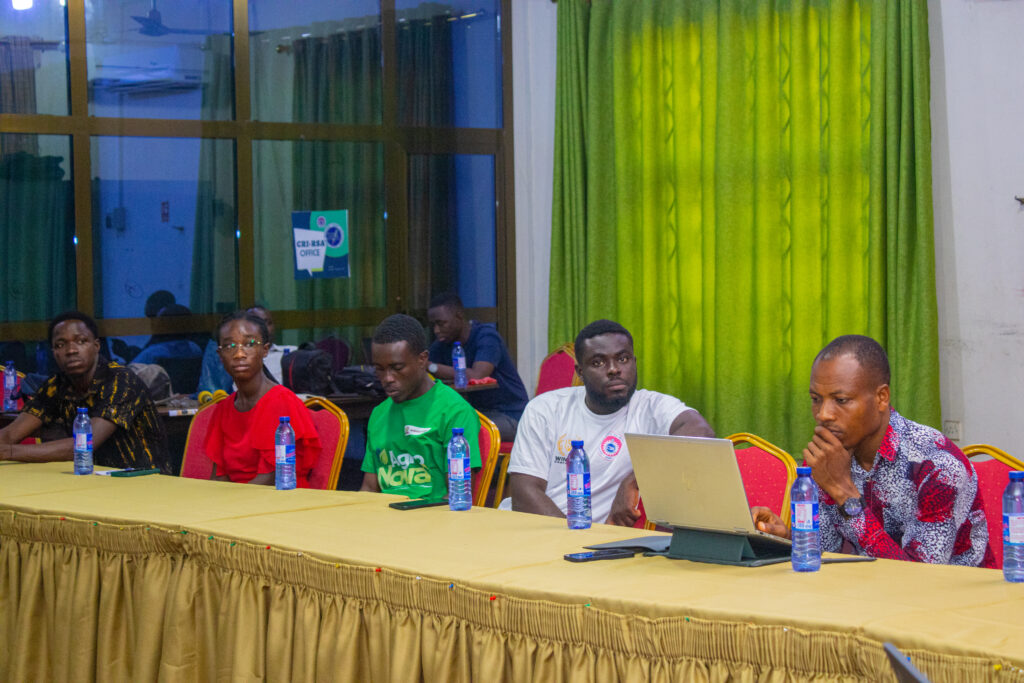
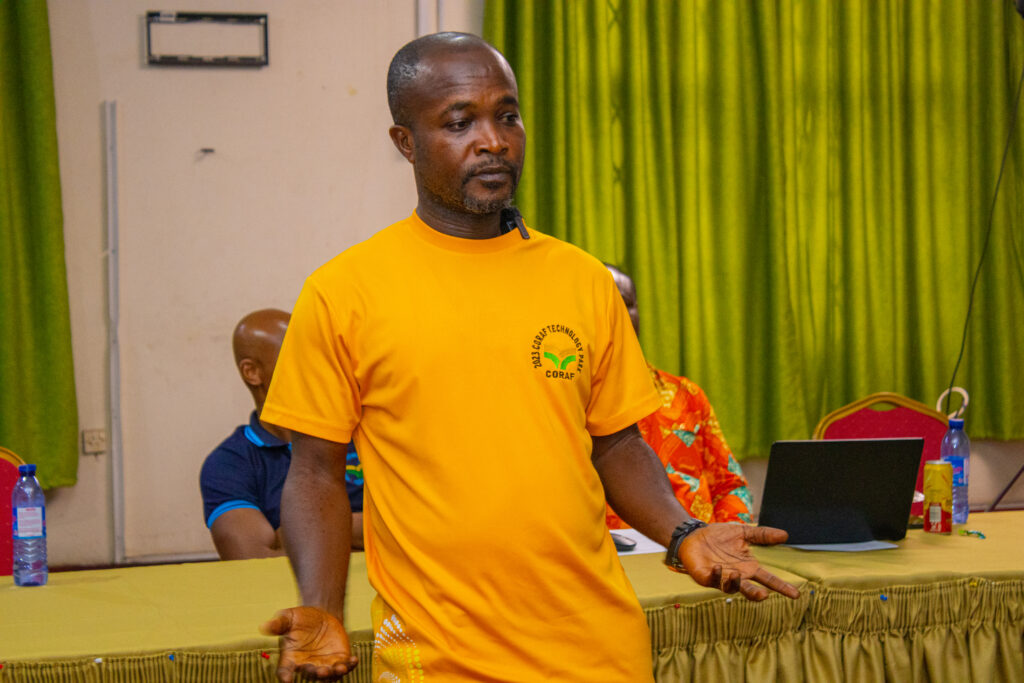
The training featured technical presentations on modern crop production and seed multiplication practices. Professor Emmanuel Otoo delivered a comprehensive presentation on modern yam production, introducing innovative and cost-effective seed yam multiplication methods using yam vines. He also discussed land preparation, soil fertility management, harvesting, storage, and marketing.
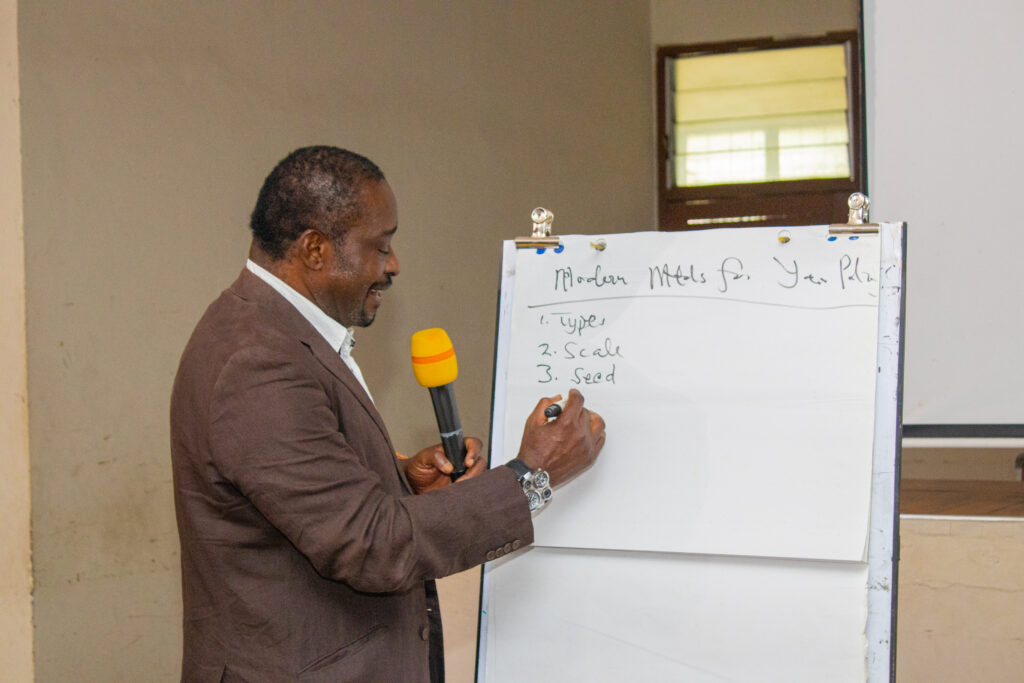
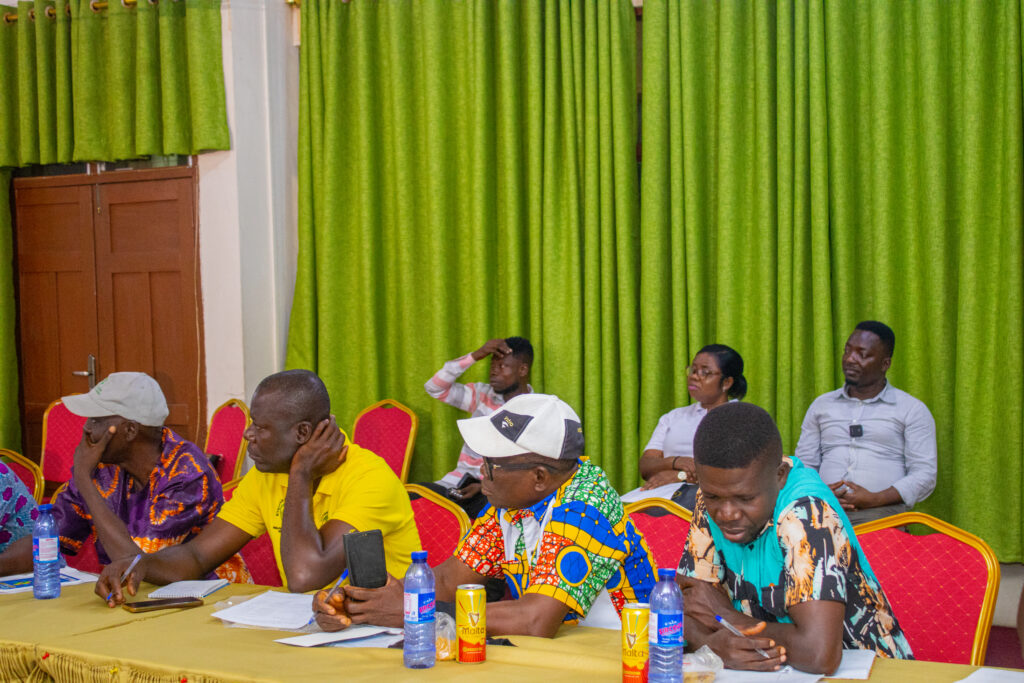
Dr. Priscilla F. Ribeiro presented modern maize production practices and introduced improved hybrid maize varieties developed by CSIR-CRI, including CRI-Paired, EWOOL, Harvest Plus, CRI-Nkomo, and Tangambie. She emphasized mechanized land preparation, row planting, integrated soil fertility management, and conservation agriculture practices.
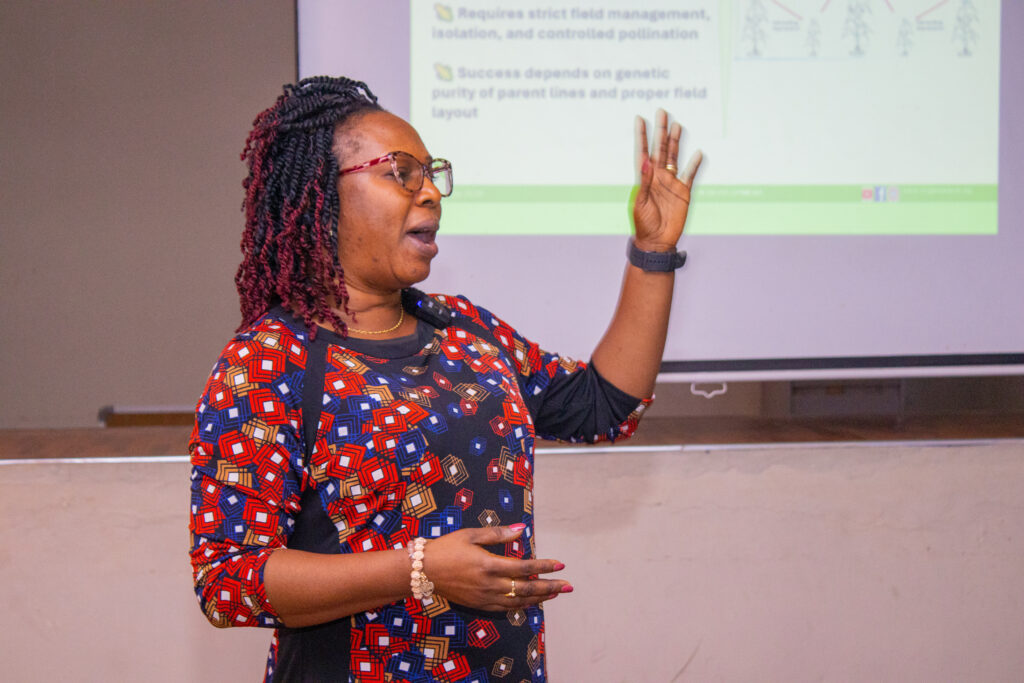
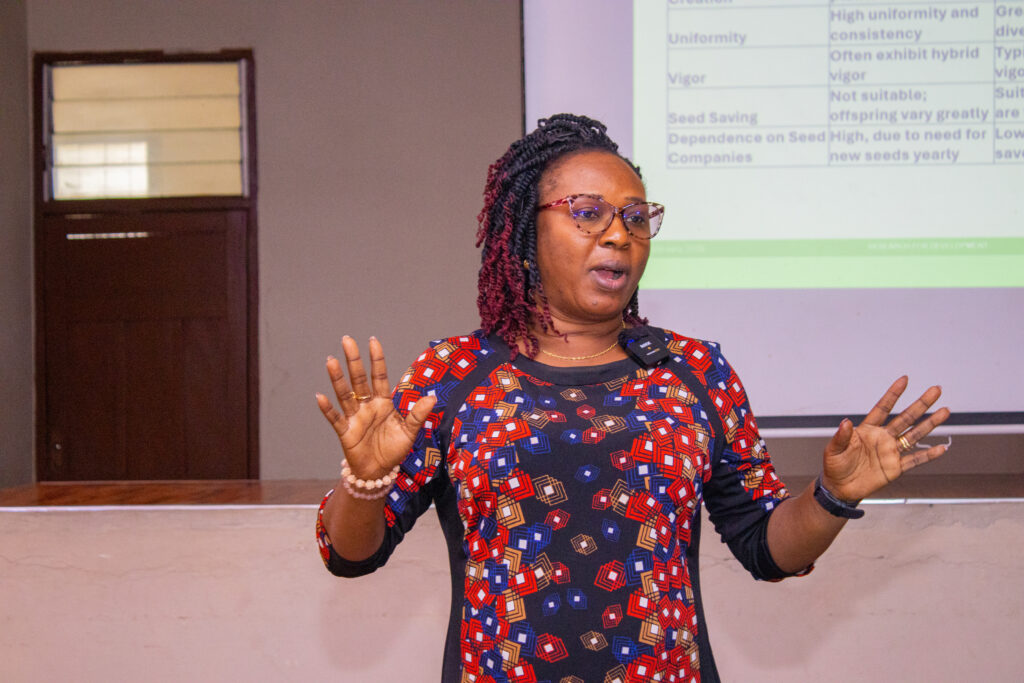
Modern rice production practices were discussed by Dr. Felix Frimpong, who highlighted proper land preparation, field levelling, water management, and the use of compost and basal fertilizers to enhance yield. Dr. Agbesi Keteku presented on rapid multiplication of cassava planting materials, focusing on the use of healthy cuttings, two-node multiplication techniques, and simple nursery establishment methods.
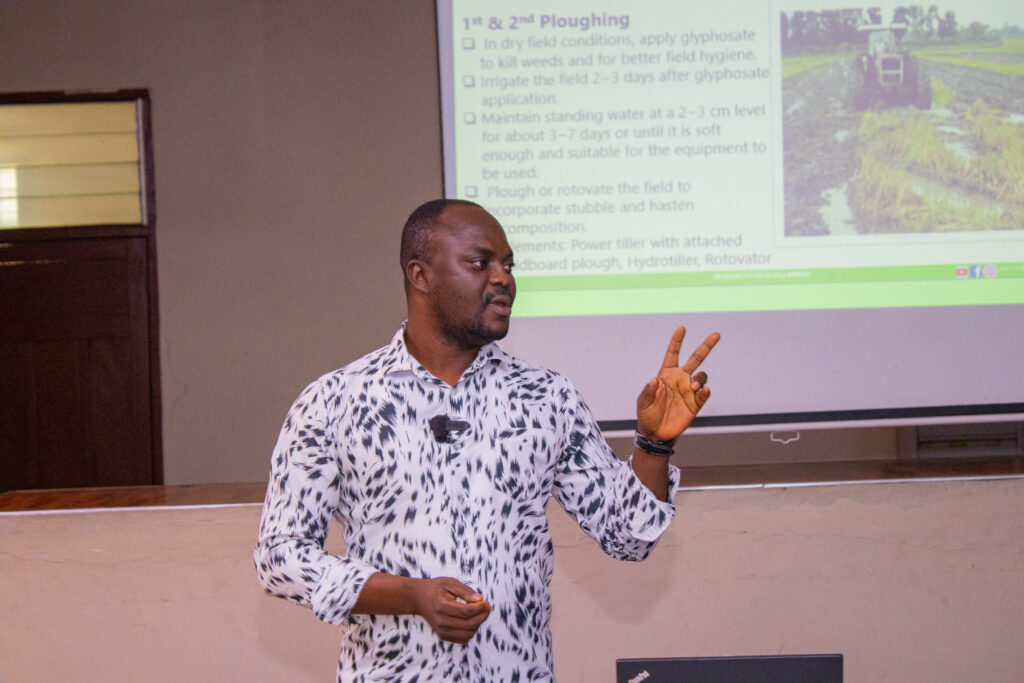
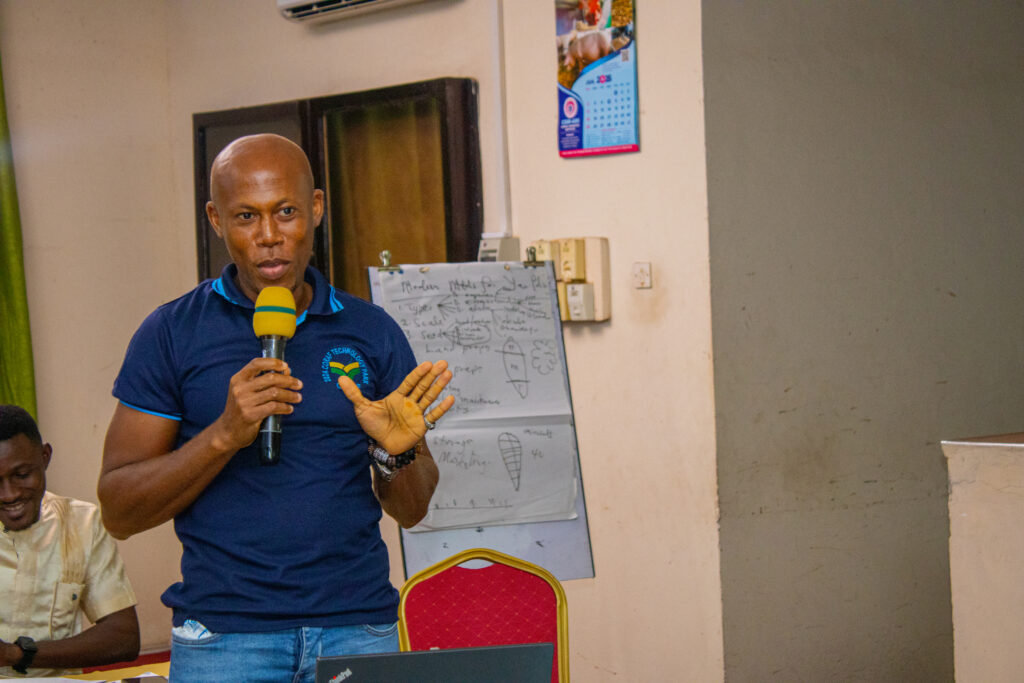
Mr. Paul Marno discussed modern soybean production and introduced improved varieties such as Tondana and CRI-Anigye, noting their high yield potential and soil fertility benefits. Dr. Keteku also spoke on climate-smart cowpea production, highlighting improved varieties such as Zamzam with shorter maturity periods, higher yields, and better tolerance to drought and pests.
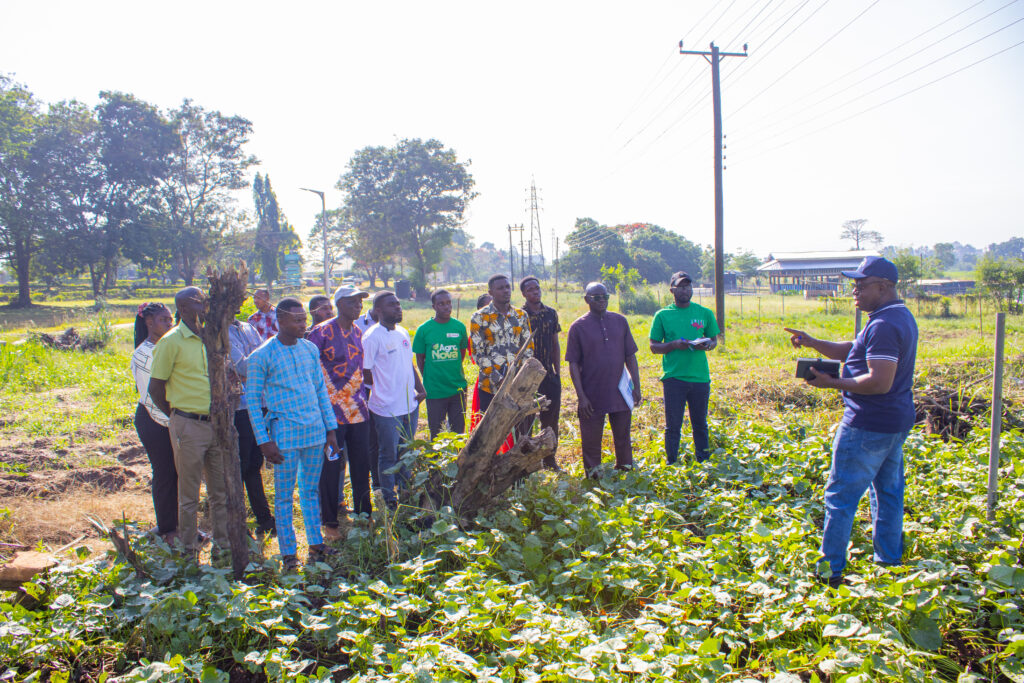
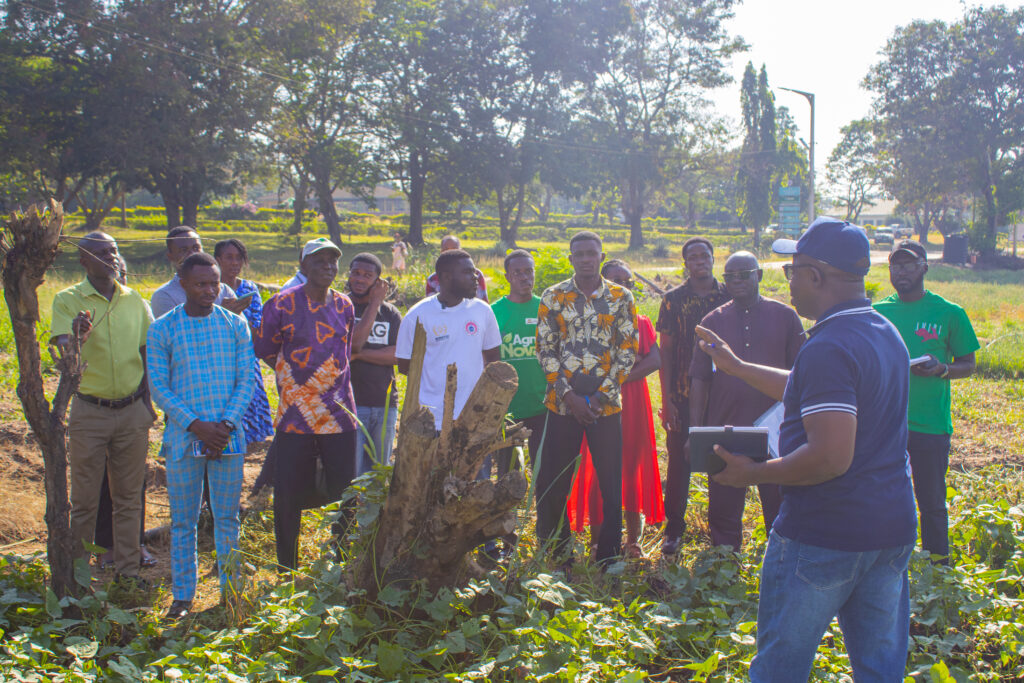
The second day of the programme featured a practical field visit to sweetpotato demonstration fields at CSIR-CRI, facilitated by Dr. Kwadwo Adofo. Participants observed improved varieties and received hands-on guidance on land preparation, spacing, and field management. A presentation on modern sweetpotato production highlighted the crop’s nutritional value, short maturity period, and the importance of market planning due to its short shelf life.
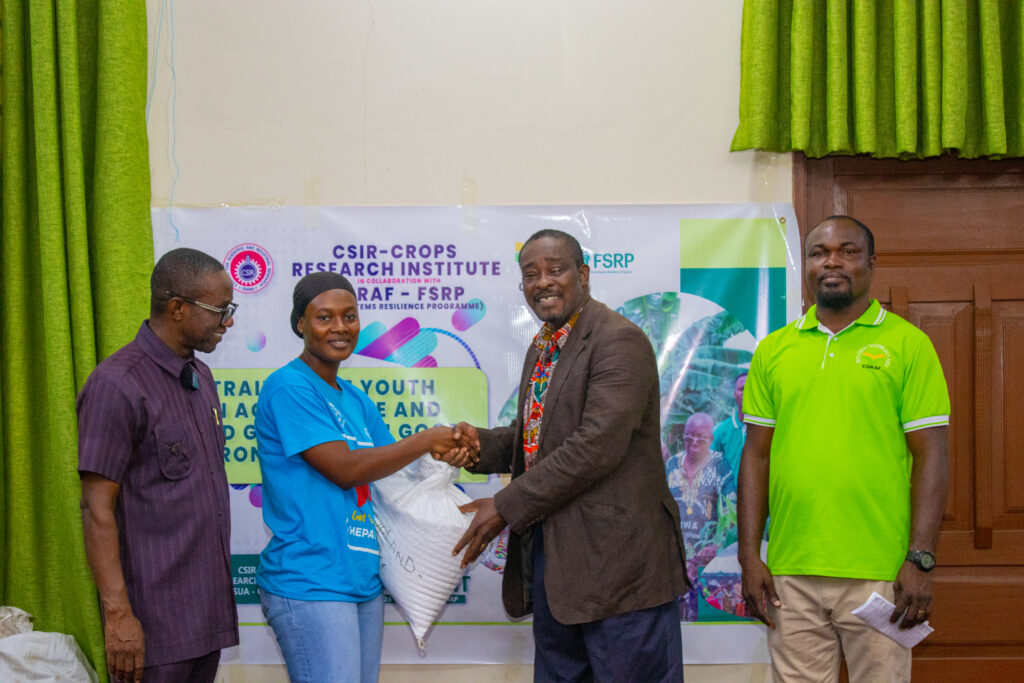
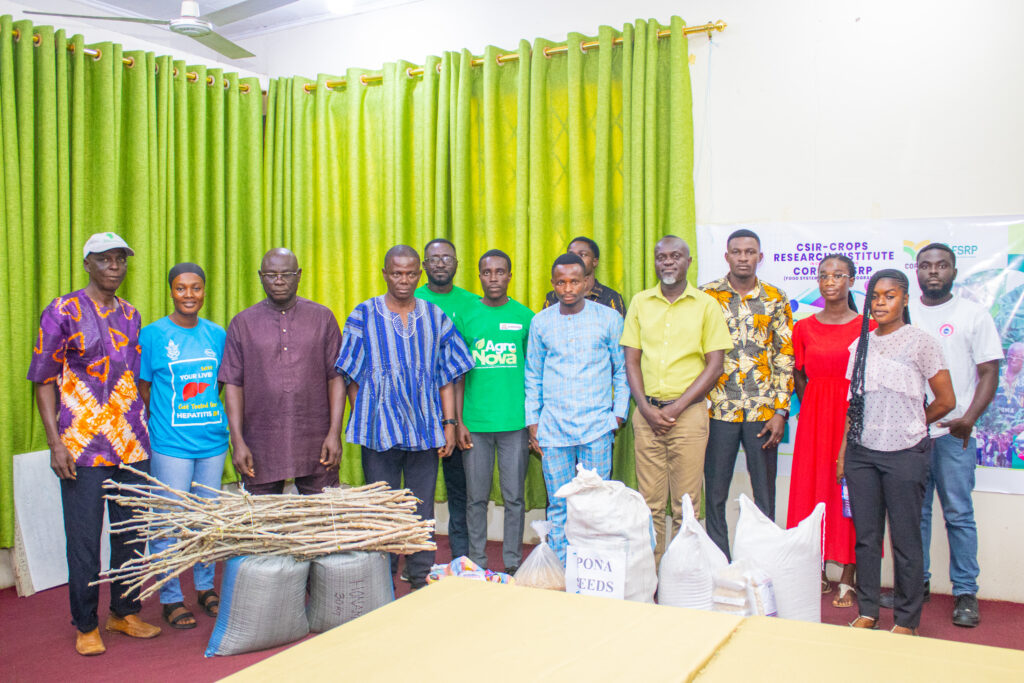
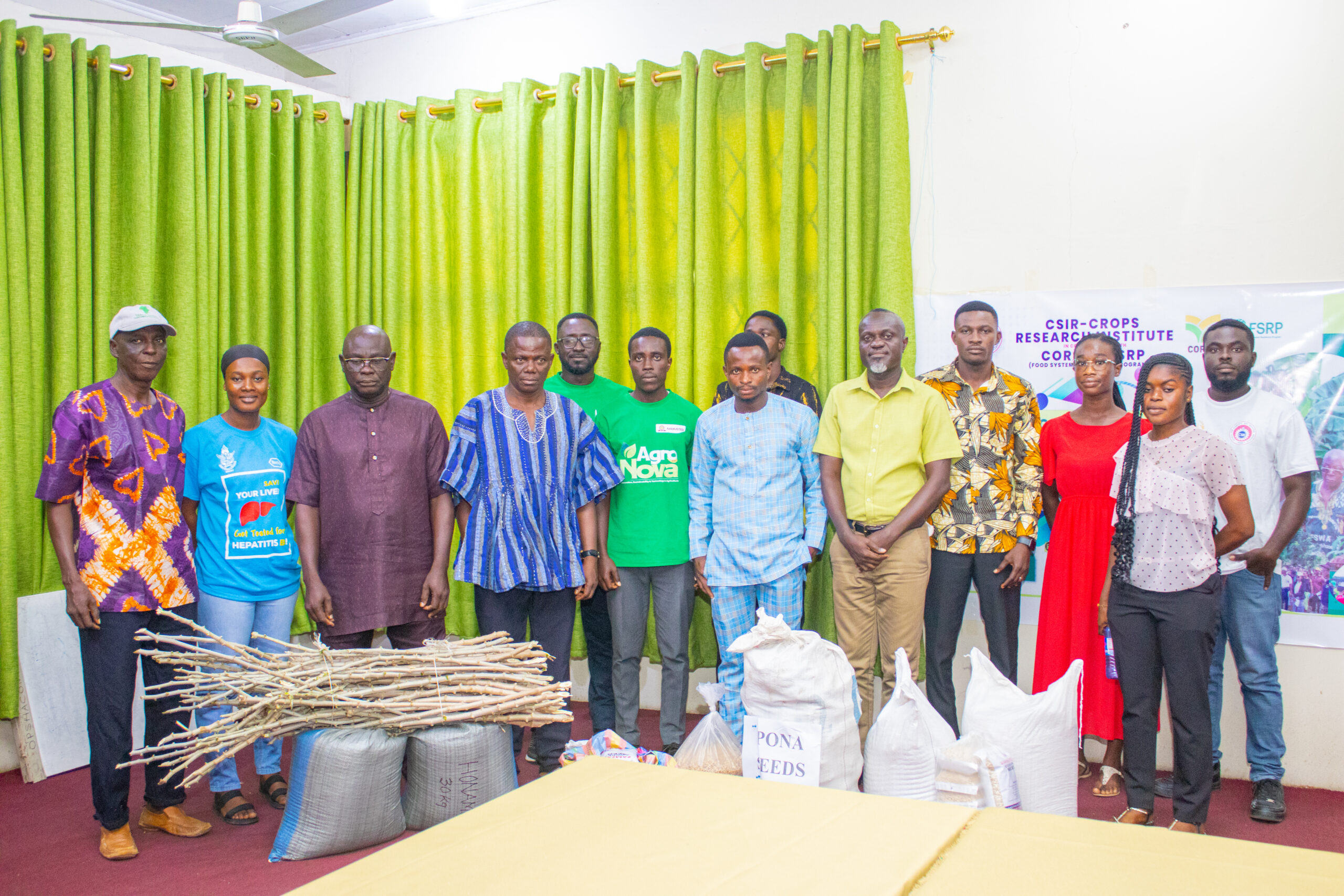
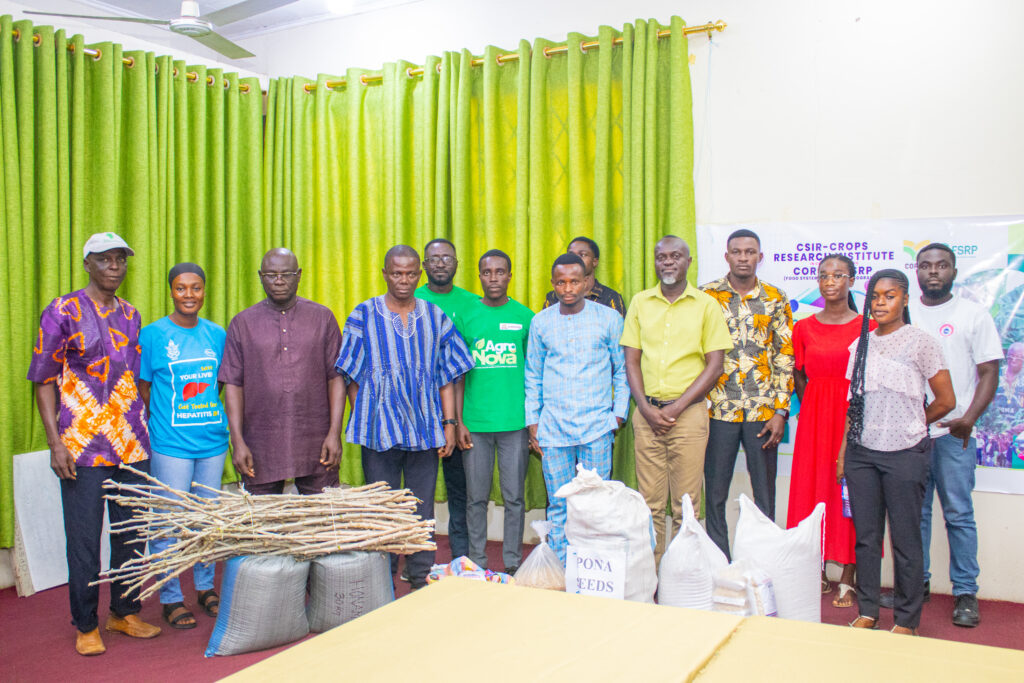
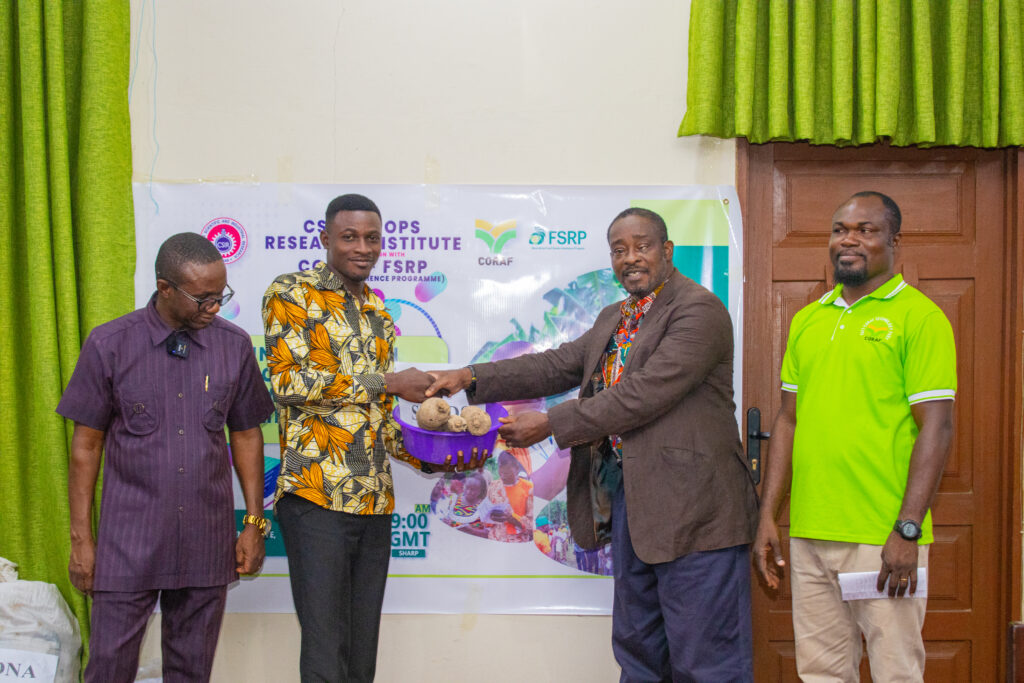
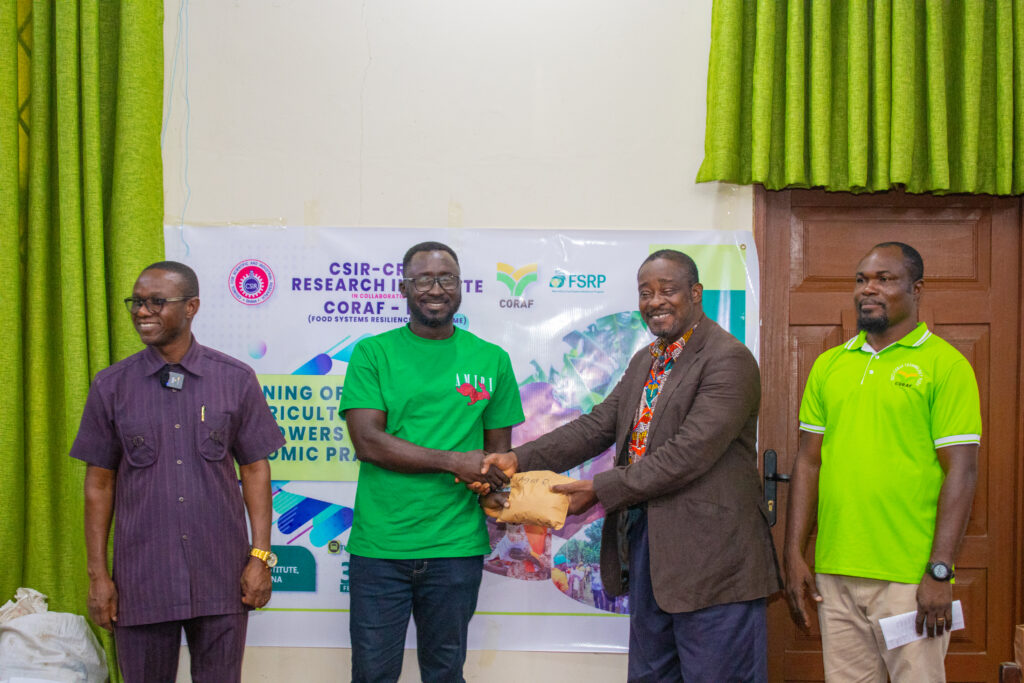
To support participants in establishing and expanding their farms, planting materials were distributed, including maize, rice, soybean, and cowpea seeds, as well as sweetpotato vines, cassava cuttings, and yam planting materials. Participants were encouraged to apply the knowledge gained and serve as seed growers in their communities.
Feedback from Participants
Mr. Yeboah Richard, an Agricultural Extension Officer and farmer, expressed his appreciation for the training, noting that it had strengthened his knowledge of improved and treated cassava planting materials from the Crops Research Institute. He highlighted that the session clarified concerns often raised by large-scale farmers regarding the quality of cassava cuttings. He also indicated that learning about planting yam on ridges to maximize land use and increase yields was particularly valuable. Mr. Richard described the training as highly beneficial and recommended it to other farmers.
Mr. Stephen Osei Sarfo, a cowpea and rice farmer, also commended the programme, stating that he gained significant new insights. He was especially enlightened on the practice of cutting cassava stems into smaller nodes to produce more planting sets. Additionally, he learned that soybean can be cultivated in various locations, provided there is adequate water and sunlight, and that water-logged areas should be avoided.


Closing the programme, Professor Asante thanked participants and development partners for their support and active participation. He acknowledged the strong partnership with CORAF, FSRP, and the Technology Park, and reaffirmed CSIR-CRI’s commitment to supporting participants beyond the training through follow-up visits and technical guidance. He encouraged participants to put into practice what they had learned and to take advantage of opportunities to become seed entrepreneurs, particularly in root and tuber crops, to improve access to quality planting materials and strengthen national food security.
Authors: Linda Agyeman, Riis Andreas Asare
Publisher: Enoch Bobie Agyemang
