RICOWAS PROJECT TRAINS FARMERS ON SUSTAINABLE RICE PRODUCTION PACKAGES
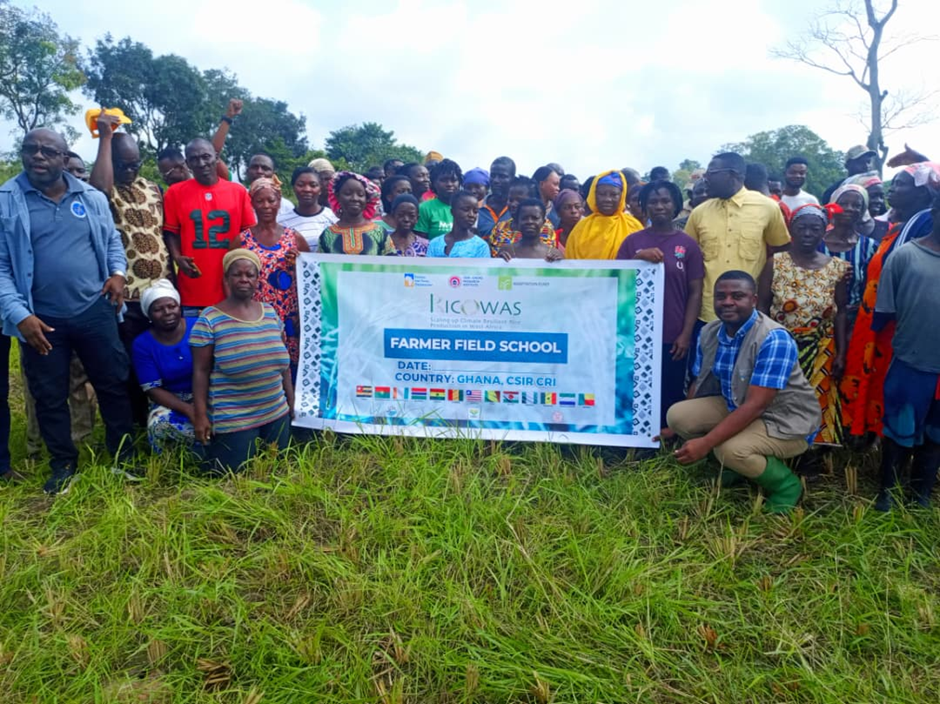
The Scaling up climate-resilient rice production in West Africa (RICOWAS) project at the CSIR-Crops Research Institute (CSIR-CRI) has taken a significant step toward transforming rice production by training over one hundred (100) stakeholders in cutting-edge, climate-smart agricultural practices. The capacity-building exercise, held at Nsuta in the Oti region of Ghana, brought together farmers, extension agents, and local stakeholders to enhance knowledge and improve productivity across the rice value chain. It was a comprehensive hands-on training program to equip rice farmers with practical knowledge on the System of Rice Intensification (SRI) package—a climate-smart approach designed to improve rice yields while conserving water and enhancing soil health.
The SRI package embodies the use of improved rice varieties, transplanting of 12-14-day seedlings, row planting, use of organic manure and less inorganic inputs, bonding, Alternate Wetting and Drying (AWD), the 4R fertilizer principle and early harvesting to achieve at least 30% more yield.
The RICOWAS project is a major initiative backed by ECOWAS and funded by the Adaptation Fund, implemented by the Sahara and Sahel Observatory (OSS) (OSS) and partners like Cornell University. The project aims to boost food security and reduce rice deficits in 13 West African countries by training farmers in advanced, climate-smart techniques like the System of Rice Intensification (SRI), sustainable water/soil management, and organic farming to make rice production more productive and resilient to climate change.
The training forms part of the project’s broader agenda to strengthen rice self-sufficiency in West Africa by equipping farmers with proven technologies that boost yields, reduce production costs, and promote environmental sustainability. Participants were introduced to a comprehensive package of modern rice production techniques tailored to local conditions.
Welcoming the stakeholders to the event, Mr. Aneka Moses, the District Director of the Ministry of Food and Agriculture (MOFA), highlighted the importance of research and technology to agricultural development in the region. He was grateful to the RICOWAS project and CSIR for organizing such a program to impart knowledge to farmers.
Dr. Stephen Yeboah, the Southern Zone Coordinator of the RICOWAS project, who facilitated the training, explained the purpose of the RICOWAS project and highlighted its benefits and impact in Ghana and other countries. He urged the farmers to embrace and adopt the SRI package as it can increase yields by up to 50% and reduce their production costs. He reiterated the package’s ability to conserve soil water, reduce water wastage, and reduce greenhouse gases (GHGs).
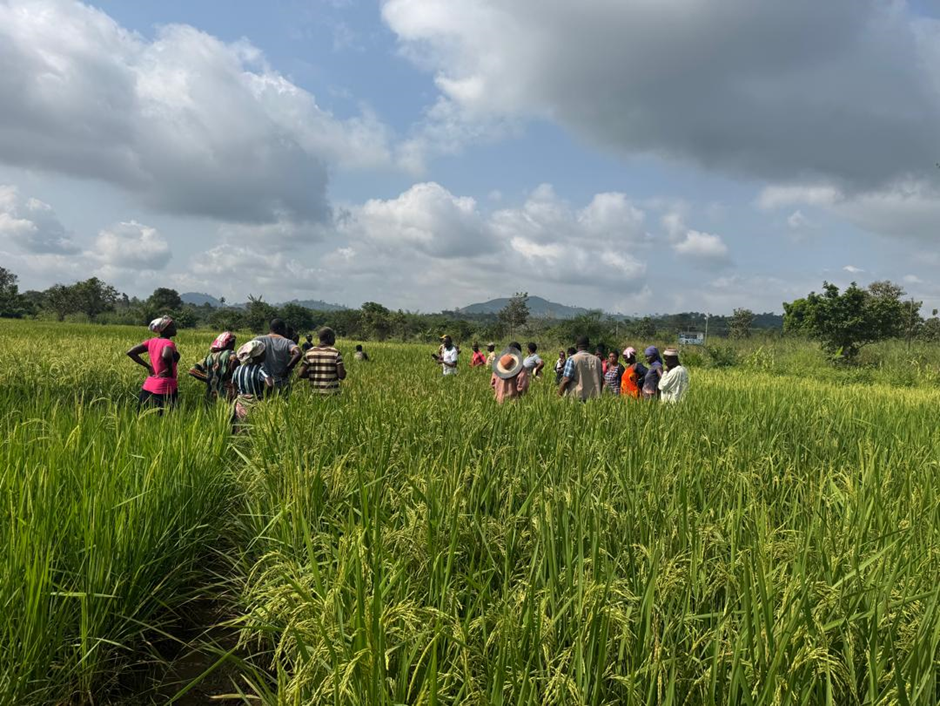
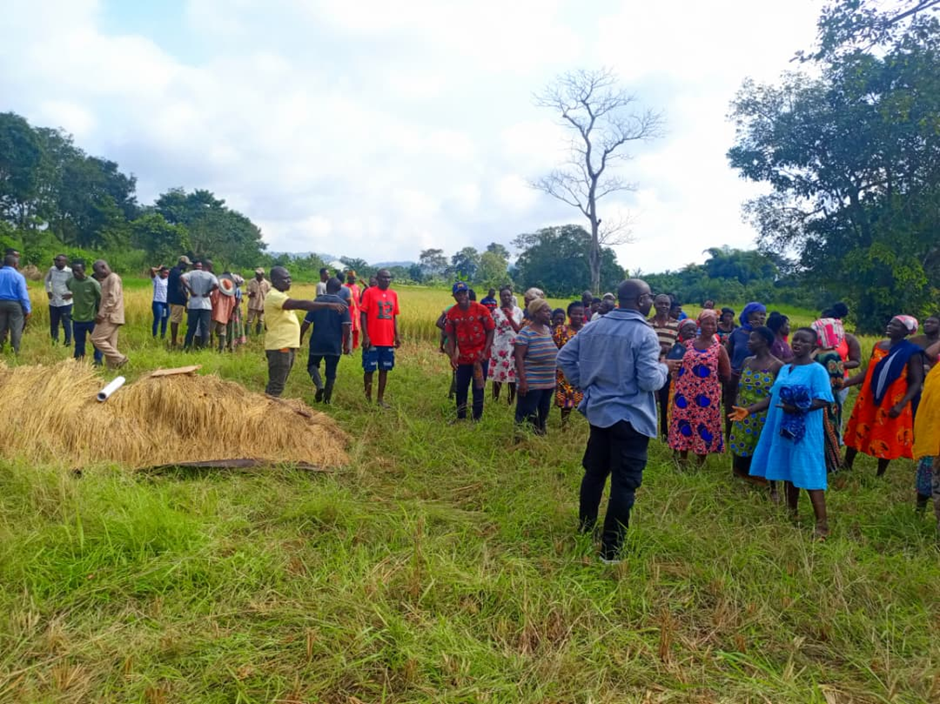
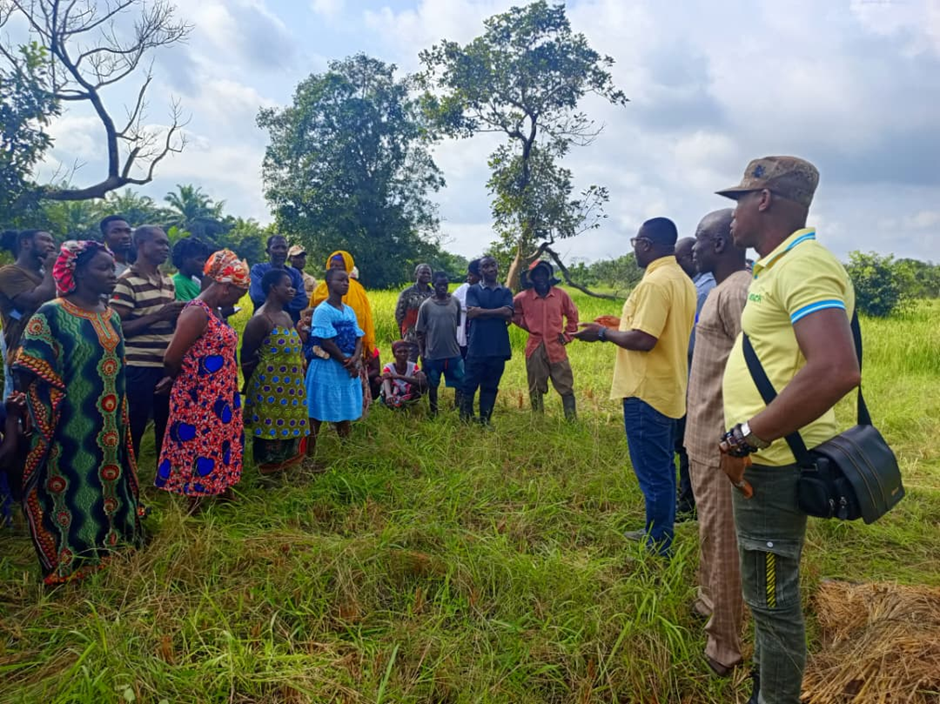
Dr. Agbesi K. Keteku and Mr William Lelabi Kota, agronomists from the CSIR-CRI, facilitated the field training and introduced participants to the SRI production package as well as climate-smart rice production techniques. They demonstrated improved land preparation methods, precise seed selection, and best practices in nursery establishment and transplanting. Farmers also received hands-on training on seedlings production, 4R fertilizer application, AWD, bond maintenance, weed management and harvesting. The practical approach of the training ensured that participants not only understood the concepts but could confidently apply them on their farms.
Farmers expressed enthusiasm for the knowledge gained, highlighting that the training addressed key challenges they face during the cropping season. Many participants committed to adopting the new technologies to increase their productivity and improve their livelihoods
A major highlight of the event was a participatory varietal selection process where farmers were guided through the plots with support from researchers recording their preferences based on observable characteristics like plant height, tillering ability, maturity period, yield, panicle size, grain quality, drought and aroma.
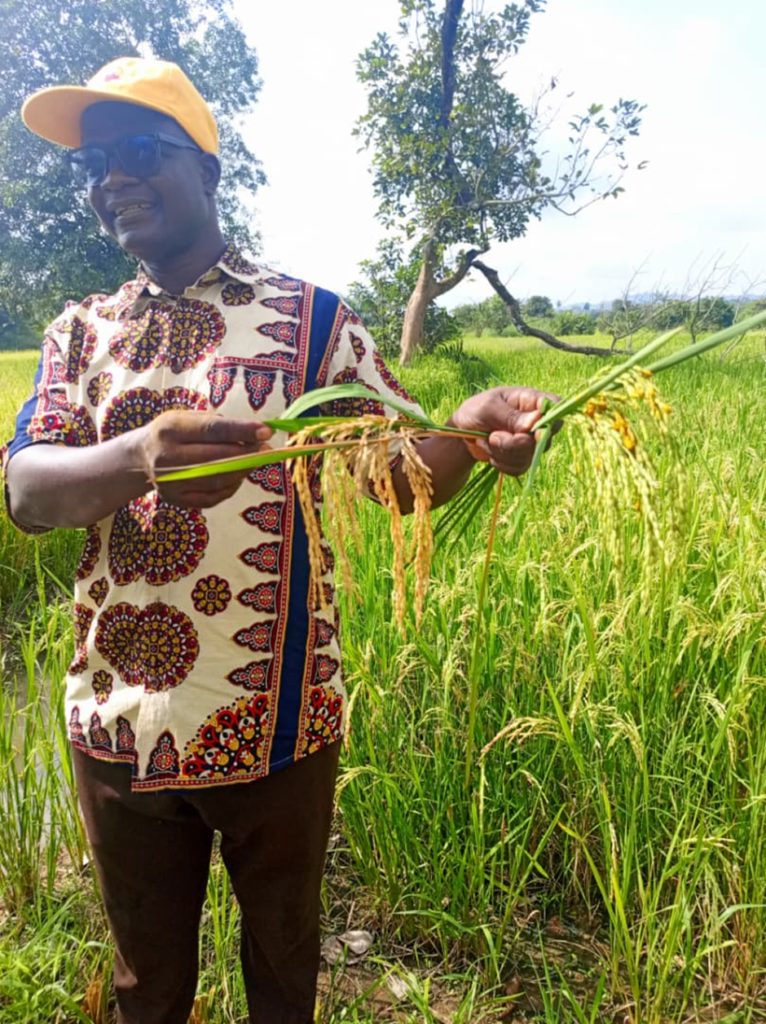
At the end of the event, project facilitators emphasized the need for farmers to adopt innovative and science-based approaches to sustain production in the face of climate change. They noted that modern rice production packages have been tested across West Africa and have consistently shown impressive results in yield improvement and resource-use efficiency.
Dr. Issah Sugri, coordinator of the RICOWAS project at the CSIR-SARI, encouraged farmers to pay particular attention to details in their farming venture. He admonished them to promptly report any problems they would encounter to the offices of the Ministry of Food and Agriculture (MOFA) for immediate redress. The Municipal Chief Executive of the area, Mr. Park-Davis Magyigbe thanked the RICOWAS project and CSIR for the initiative and pledged the municipal’s support for the project. He emphasized the importance of farmer cooperative societies to help access equipment and credit from the Government.
The RICOWAS project will extend its outreach through follow-up visits, farmer field schools, and additional demonstration plots. The goal is to ensure widespread adoption of SRI and strengthen the resilience of rice farming systems across West Africa.
Authors: Bernard Sakyiamah, Dr. Stephen Yeboah, Enoch Bobie Agyemang, Dennis Gyasi Boakye
