
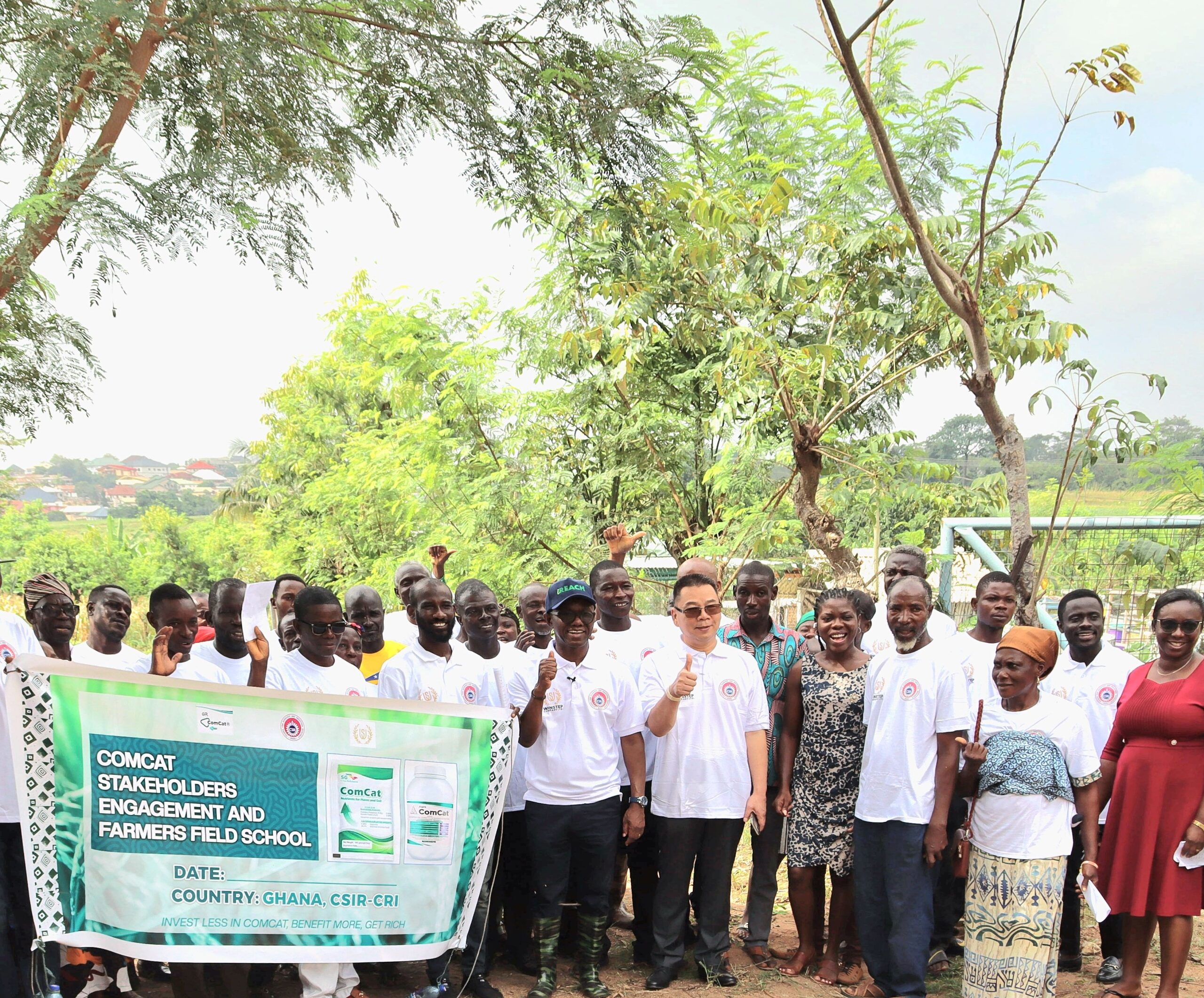
CSIR-CRI and WINSTEP Company Ltd Partner to Promote ComCat Biostimulant in Ghana.
Fumesua, Ghana – 12 December 2025 — The Council for Scientific and Industrial Research (CSIR)–Crops Research Institute (CRI), in partnership with WINSTEP Company Ltd, has successfully hosted a stakeholders’ engagement and Farmer Field School to demonstrate the performance of ComCat Biostimulant on key food crops in Ghana.
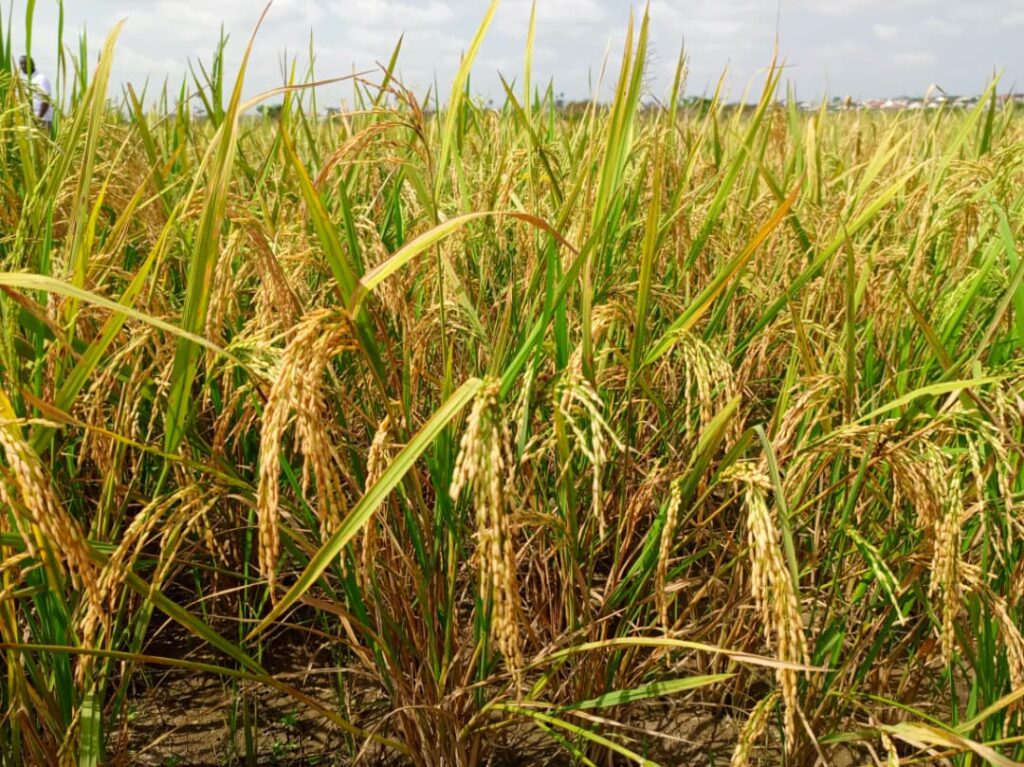
The event, held at CSIR-CRI, Fumesua, showcased ongoing evaluation trials on maize, rice, soybean, and tomato, with demonstration plots established at Fumesua, Donaso, and Kwadaso in the Ashanti Region. The trials form part of a two-season scientific evaluation to generate data required for regulatory approval and future commercialization of the product in Ghana.
Welcoming participants, the Director of CSIR-CRI, Prof. Maxwell Darko Asante, highlighted the importance of science-based evaluation in introducing new agricultural technologies. He noted that ComCat Biostimulant is currently under assessment to confirm its safety, effectiveness, and suitability for Ghanaian farming systems, and encouraged farmers to observe the field results firsthand.

Representing WINSTEP Company Ltd, the Vice Chairman/Secretary General, Winstep Company Limited, Mr. Liu Yaw Nana, and General Manager, Mr. Randy Amankwa, described ComCat Biostimulant as an innovative agricultural biotechnology product designed to stimulate plant growth, improve nutrient-use efficiency, increase yields, and enhance crop resilience to abiotic stresses.
During guided field demonstrations, CSIR-CRI scientists presented preliminary results from the trials. Dr. Agbesi K. Keteku explained that ComCat promotes extensive root development, improves nutrient and water uptake, and enables farmers to reduce fertilizer use without compromising yields. Dr. Philip Ghanney highlighted improvements in maize cob weight, stem girth, root development, and grain yield. In rice, Dr. Stephen Yeboah and Mr. Alhaji Yameem Huss Cole demonstrated positive effects on tillering, panicle formation, and grain yield. Tomato trials also showed improvements in fruit number, size, weight, and quality (°Brix).


The Coordinator of the program, Mr. Abdul Manaf, emphasized the economic benefits of ComCat Biostimulant, noting its potential to reduce production costs through lower fertilizer and agrochemical requirements while improving farm profitability.
Key highlights from the demonstrations indicated that ComCat Biostimulant can reduce fertilizer application by 30–50%, enhance crop growth and yield, and support climate-resilient agriculture across major food crops.

Participants expressed optimism about the product’s potential while recognising the need for further validation in the next cropping season. CSIR-CRI and WINSTEP Company Ltd reaffirmed their commitment to ongoing collaboration with farmers, regulators, and stakeholders to support the successful evaluation and responsible introduction of the ComCat Biostimulant, contributing to food security, sustainable agriculture, and improved livelihoods in Ghana.
Contributors: Lynda G.S. Nsafoah, Clara Boateng, Riis Andreas Asare
